What if one quiet weekend in October could save your garden for a whole year?
Most gardeners miss this small window and pay for it later in spring. I almost did too.
Then I wrote an October Garden Checklist and everything changed. Today I am giving you my full October Garden Checklist with 30 simple, easy jobs.
A few will surprise you, and one might sound a bit odd. Keep reading. The best job comes near the end.
October Garden Checklist for Fall Cleanup and a Tidy Yard
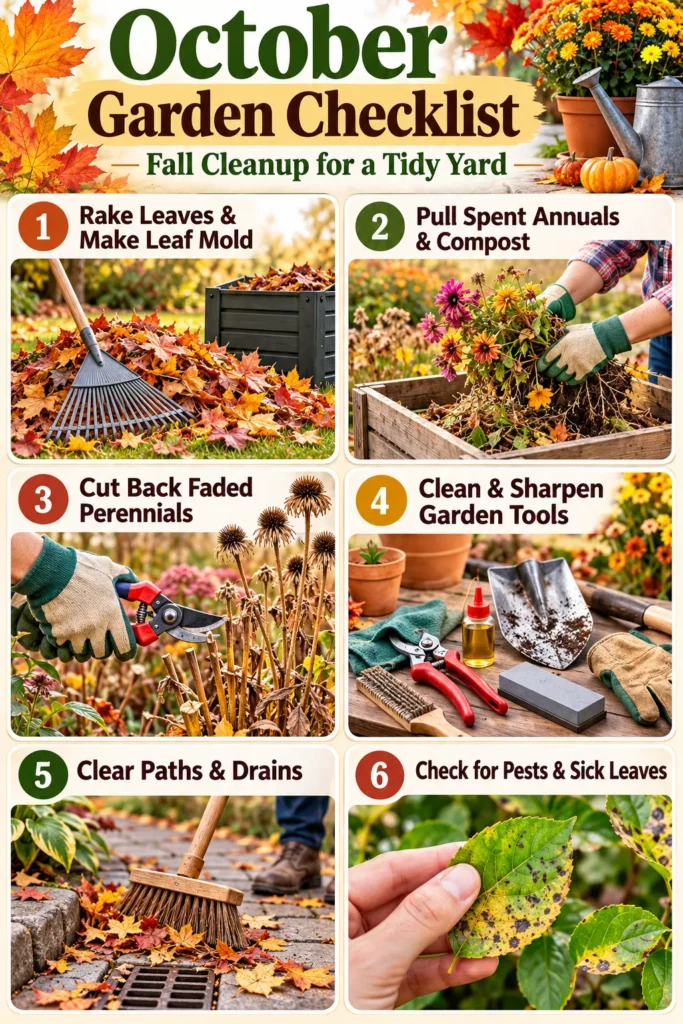
Start with the easy wins. This part of the October Garden Checklist clears the mess and tidies your yard fast.
1. Rake Leaves and Make Leaf Mold
Fallen leaves are free gold for your garden. Rake them into a pile and wet them a little. Put them in a mesh bag or a simple wire ring and leave them for a year. They turn into dark, crumbly leaf mold that your soil loves. Never leave thick,k wet leaves on your lawn because grass will suffocate. I rake a small patch every weekend. It is truly free.
2. Pull Spent Annuals and Compost Them
Those tired summer flowers have done their job. Pull out marigolds, petunias, and zinnias that look sad and brown. Shake off the soil and toss healthy plants onto the compost pile. Collect a few dry seed heads first if you want free flowers next year. Your beds will look open and fresh right away. It feels like clearing a messy desk, and it brings real calm. Very satisfying.
3. Cut Back Faded Perennials but Leave Some
Cut back plants that have turned mushy or moldy to stop disease from spreading. Trim them down to a few inches above the soil. But leave stems of coneflowers and sedum standing. Birds eat their seeds and insects hide in the hollow stems all winter. I always leave a few, and my garden is busier in spring because of it. A little mess helps wildlife. Nature will thank you.
4. Clean and Sharpen Your Garden Tools
Dirty tools carry disease from plant to plant. Wash blades with soapy water and dry them well. Rub a thin layer of oil on metal parts to stop rust. Use a sharpening stone on pruners and shovel edges. Sharp tools cut cleanly and make work easier on your wrists. This one takes thirty minutes on a rainy afternoon,n and the October Garden Checklist feels lighter after it.
5. Clear Paths and Drains Before Heavy Rain
Wet leaves make paths slippery and block drains. Sweep your garden paths and steps first. Then check drains and gutters and pull out leaves and twigs. Water that cannot leave will sit in your beds and rot roots. I once lost a whole row of lettuce to a clogged drain. Now this job sits near the top of my list every single year. Trust me on this.
6. Check Plants for Pests and Sick Leaves
Pests love to hide for winter in old leaves. Walk slowly through your garden and look under leaves and along stems. Pick off leaves with black spots or white powder. Do not put them in compost. Bag them and throw them in the trash so the disease dies with them. A few minutes now saves you from the same trouble next summer. Be gentle and patient. Stay alert.
October Garden Checklist for Fall Bulb Planting and Spring Color
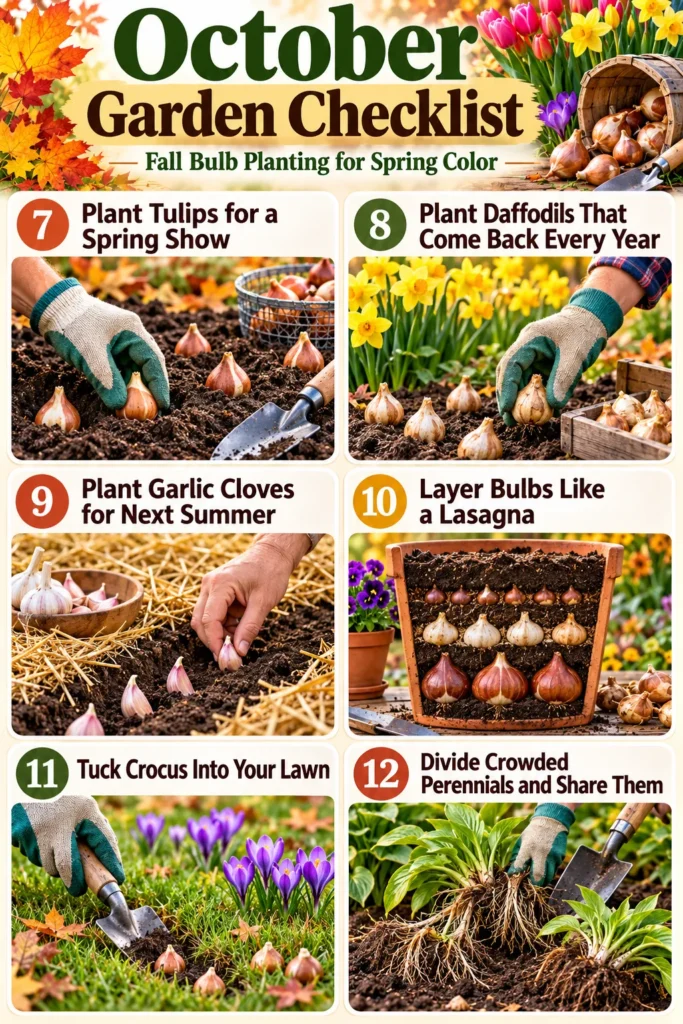
Spring color starts now. Here, the October Garden Checklist shows which bulbs and cloves to plant before the cold arrives.
7. Plant Tulips for a Spring Show
Tulips need a cold winter to bloom well. Plant them about three times as deep as the bulb is tall. Point the pointy end up. Space them a hand’s width apart. Water once and then forget them. Squirrels love tulips, so cover the soil with a bit of wire mesh or sprinkle chili flakes. Next April you will thank yourself when the first petals open. Easy and lovely.
8. Plant Daffodils That Come Back Every Year
Daffodils are the gift that keeps giving. Squirrels and deer leave them alone because they taste bad. Plant them in groups of seven or more for a full look. Put them in sunny spots with soil that drains well. I planted fifty on a bare slope, and now they cover it like yellow waves every spring. Plant once and enjoy them for many years. It feels like magic.
9. Plant Garlic Cloves for Next Summer
Garlic is surprisingly easy and so rewarding. Break a bulb into single cloves and plant each one with the pointy end up about two inches deep. Space them six inches apart. Cover with straw for warmth. They sleep all winter and wake up in spring. Next July, you dig up your own fat bulbs. Nothing from a shop tastes as good as the ones you grow. Try it once.
10. Layer Bulbs Like a Lasagna
Here is a clever trick for small spaces. Dig one deep hole or fill a big pot. Put large bulbs like tulips at the bottom. Add soil, then place smaller bulbs like crocus above. Add more soil and water well. Each layer blooms at a different time, so the same spot gives color for weeks. I did this in a pot on my porch, ch and everyone asked for the secret.
11. Tuck Crocus Into Your Lawn
Imagine tiny purple flowers popping up in your grass before winter ends. Toss a handful of crocus bulbs on the lawn and plant them right where they land. Use a small trowel and press each bulb in a few inches deep. Mow the lawn after the leaves turn yellow in late spring. This is the most playful item on my October Garden Checklist and bees adore it.
12. Divide Crowded Perennials and Share Them
If your hostas or daylilies look crowded in the middle, then it is time to divide them. Dig up the whole clump and cut it into pieces with a sharp spade. Replant a piece in the same spot and plant the extras elsewhere. Give some to a neighbor too. New plants settle in nicely during cool fall weather and bloom strongly next year. Your wallet will love it.
October Garden Checklist for Your Fall Vegetable Garden
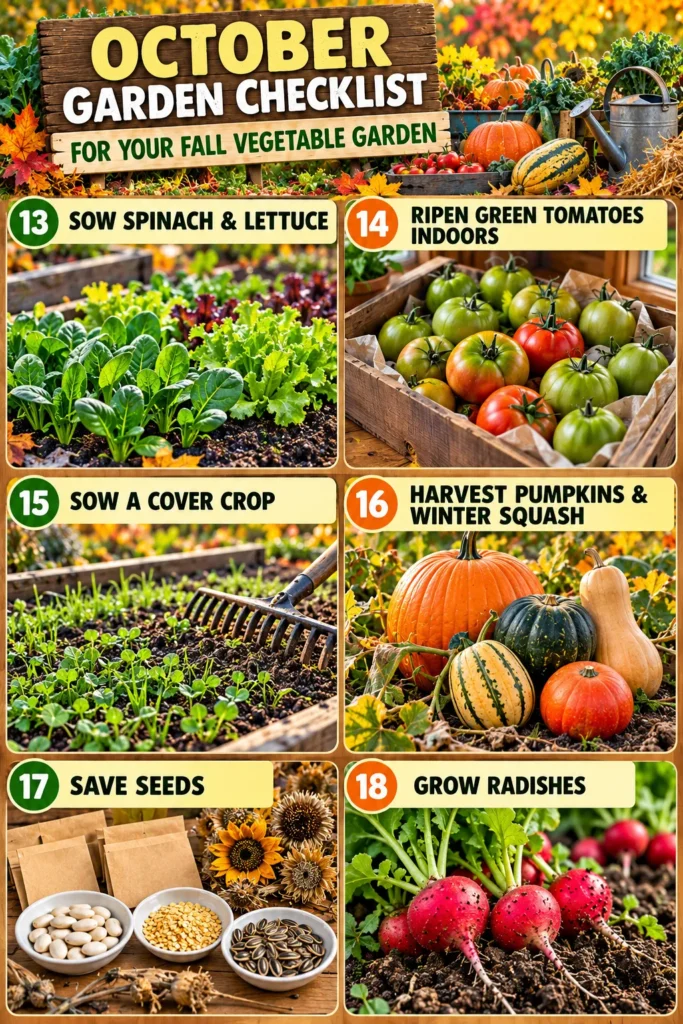
Your vegetable patch is not finished yet. This October Garden Checklist section shares quick tasks for harvest and fresh sowing.
13. Sow Spinach and Lettuce for Cool Season Greens
Cool weather makes spinach and lettuce sweet and tender. Sow seeds in rows about half an inch deep and keep the soil damp. They sprout in a week. Cover with a light cloth if nights get very cold. You can pick fresh leaves for salads through the cooler months. I love stepping outside in a sweater and picking my own breakfast greens. It feels like a small secret.
14. Ripen Green Tomatoes Indoors
Do not let frost steal your last tomatoes. Pick every green tomato that is full-sized before cold nights arrive. Wrap each one in paper and place them in a box in a dark room. Check them every few days. Most turn red in two weeks. Put one ripe apple in the box to speed things up. I love fried green tomatoes too. Try it this year.
15. Sow a Cover Crop in Empty Beds
Bare soil loses nutrients in rain and wind. Sow a cover crop like clover or winter rye in empty beds. Scatter the seeds, then rake lightly and water. The green carpet protects the soil and feeds it all winter. In spring, cut it down and dig it in. Your soil becomes soft and rich with almost no extra work from you. Nature does the work. I love that.
16. Harvest Pumpkins and Winter Squash Before Frost
Pumpkins and squash need to come in before hard frost damages them. Cut each one with a few inches of stem left on. Do not carry them by the stem because it can snap. Wipe them clean and let them sit in a sunny spot for a week so the skin hardens. They store for months in a cool, dry place. Fun for kids too. Handle them gently.
17. Save Seeds From Your Best Plants
Saving seeds is free and feels magical. Pick seeds from your healthiest bean,d flowers, and peppers. Let them dry on a paper plate for a week. Store them in paper envelopes and write the name and date on each. Keep the envelopes in a cool, dry drawer. Of all the October Garden Checklist jobs, this one makes me feel most connected to my garden. Share extras with friends.
18. Grow Radishes for Quick Wins
If you want fast results, then grow radishes. Sow seeds a half inch deep in a sunny spot and water gently. They are ready in about four weeks. Pull them when they are the size of a small marble or bigger. They add crunch to salads and tacos. Kids enjoy this because they can eat what they grew in a month. Little effort and big joy.
October Garden Checklist for Frost Protection and Winter Prep
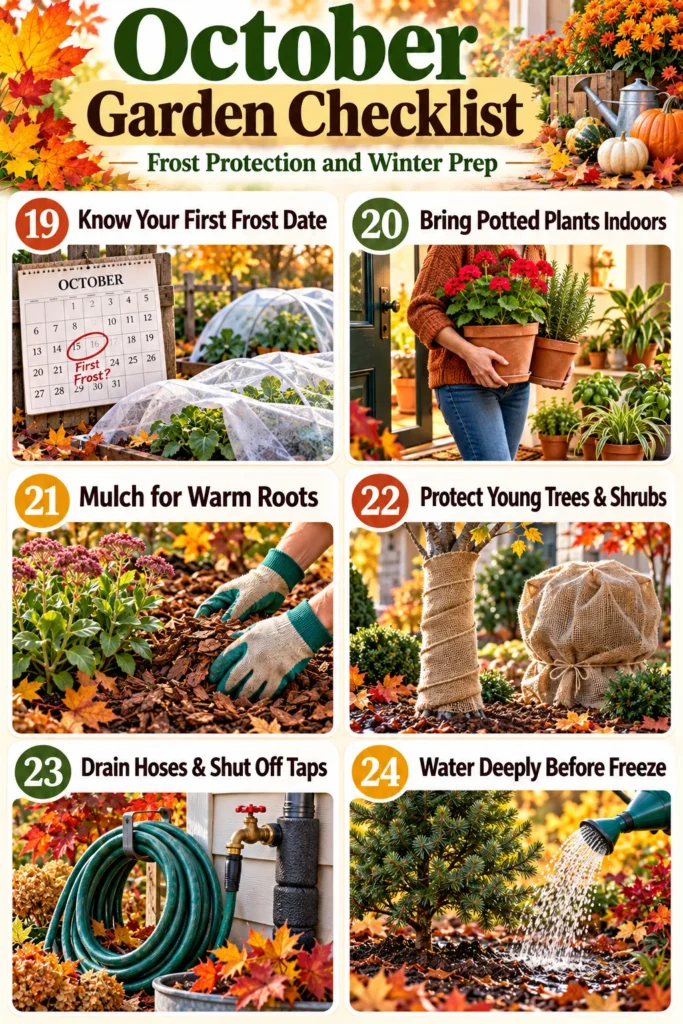
Cold nights can hurt tender plants. These steps in the October Garden Checklist keep your whole garden cozy until spring.
19. Learn Your First Frost Date and Keep Cover Ready
Look up the average first frost date for your area. Mark it on your calendar. Keep old bed sheets or garden fleece near the door for surprise cold nights. Throw them over tender plants in the evening and remove them in the morning. Do not use plastic that touches the leaves. A single frost can wipe out a whole season of hard work, so prepare early.
20. Bring Potted Plants Indoors Before Cold Nights
Tender plants like geraniums and herbs need to come inside before nights get close to freezing. Check pots for hiding bugs and rinse leaves with water. Put them near a bright window. Do not water too much because indoor plants drink less. Give them a few days to adjust. I move mine a little at a time so they do not feel shocked. They thank you with fresh growth.
21. Mulch Around Plants for Warm Roots
A thick blanket of mulch keeps roots warm and holds moisture. Spread shredded leaves,r bark, or straw about three inches deep around plants. Keep mulch a little away from stems so they do not rot. After the ground cools is the best time. It also stops weeds before they sprout. I think of mulch as a cozy winter coat for the garden. Simple and so useful.
22. Protect Young Trees and Tender Shrubs
Young trees have thin bark that can crack in cold weather. Wrap trunks with a tree guard or soft burlap. For tender shrubs, make a loose cage with stakes and wrap burlap around it. Leave the top open for air. Add mulch at the base too. Small steps like these in my October Garden Checklist saved my young fig tree last winter. Check on them frequently.
23. Drain Hoses and Shut Off Outdoor Taps
Frozen water expands and can burst pipes and hoses. Unscrew each hose and let all the water drain out. Coil them neatly and store in a shed or garage. Turn off outdoor taps if you can and open them to let water escape. Put away watering cans upside down. It is a boring job, but it prevents expensive repairs. Do it on a sunny afternoon so your hands stay warm.
24. Water Deeply Before the Ground Freezes
Plants still need water in cold months. Evergreens and new trees especially lose moisture through their leaves. Before the ground freezes, give them a deep, slow soak. Let the hose trickle at the base for twenty minutes. Moist soil also holds heat better than dry soil. I check the soil with my finger and water if the top two inches feel dry. Evergreens will love it.
October Garden Checklist for Soil Care and Next Year Planning
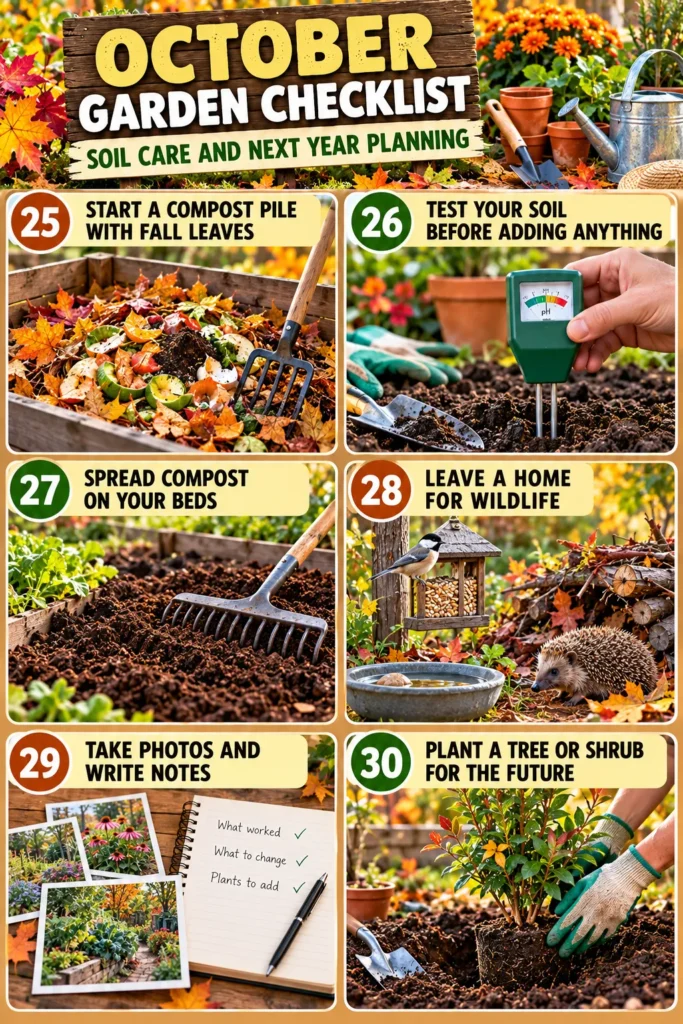
Great gardens start in the soil. This October Garden Checklist part helps you build richer earth and plan now.
25. Start a Compost Pile With Fall Leaves
Autumn gives you the best compost ingredients. Mix dry leaves with kitchen scraps like fruit peels and coffee grounds. Aim for about two parts leaves to one part scraps. Wet it like a squeezed sponge and turn it with a fork every couple of weeks. By spring, ng you have dark, crumbly compost. Avoid meat and dairy so you do not attract pests. Kids can help too.
26. Test Your Soil Before Adding Anything
A cheap soil test kit tells you if your soil is too sour or too sweet. Take small samples from different spots and mix them in a clean bucket. Follow the kit steps. Then you know whether to add lime or something else. Guessing wastes money. I tested mine for the first time last year and learned my beds needed far less food than I thought.
27. Spread Compost on Your Beds
Top dress your beds with an inch of compost now. Rain and worms will pull it into the soil over winter. Do not dig it in because that disturbs soil life. Just spread it with a rake. Your plants will love it. In spring, your soil will be soft and full of nutrients. It is lazy gardening that works better than hard digging. I do this every year.
28. Leave a Home for Wildlife
Your garden can help birds and insects through winter. Keep a small brush pile in a corner and leave a patch of leaves untouched. Hang a feeder and fill a shallow water dish. A hedgehog or toad might move in. I love watching small birds hop around my brush pile on cold mornings. This is the kindest part of my October Garden Checklist. Small kindnesses go far.
29. Take Photos and Write Notes
Your memory will fade by spring, so write things down now. Walk through your garden and take photos from the same spots. Note what grew well and what failed. Mark empty areas that need plants. Keep the notes in a simple notebook or phone app. When spring arrives, you will plan smartly instead of guessing. This small habit made me a better gardener. Do it today.
30. Plant a Tree or Shrub for the Future
Fall is a lovely time to plant trees and shrubs. The soil is still warm,m and roots grow well while the top rests. Dig a hole twice as wide as the root ball but no deeper. Place the plant and fill with soil. Water well and add mulch. Every October Garden Checklist I write ends with this job because trees keep giving for decades. Plant one today.
Conclusion: October Garden Checklist
Did you spot the tree planting job I promised near the end? Pick just three jobs this weekend and start there.
Small steps add up fast. Take your time and enjoy the fresh air. Keep this October Garden Checklist close and tick each job as you go.
Your future self will smile in spring when flowers bloom, and the soil feels rich. Happy gardening, my friend.
FAQ’s About October Garden Checklist
1. What Belongs on an October Garden Checklist for Small Backyard Gardens?
A small garden needs only the basics. Clear dead plants, plant spring bulbs, and add mulch. Protect tender pots from frost and spread compost on beds. Do a few jobs each weekend instead of everything at once.
2. How Early Should I Start My October Garden Checklist Before First Frost?
Start at least three weeks before your first expected frost. This gives bulbs time to settle and gives you room to protect tender plants. Check your local frost date online and mark it on your calendar.
3. Can Beginners Follow This October Garden Checklist Without Fancy Tools?
Yes, you can. Most jobs need only a rake, a trowel, and a hose. Start with raking leaves and planting bulbs. Borrow a spade if needed. Take it slow and enjoy the work.