

Last summer, I struggled to keep my container plants watered in July heat. I ran outside every single morning with a watering can, afraid one missed day would ruin them. But it really happened one day.
By afternoon, my basil was crisp, and my tomato plant wilted, and I remember standing there thinking, “There has to be a better way than this. Here is what I came to know after my experience.
Container plants need a completely different watering approach than anything growing in the ground, and once you understand why, the whole problem gets a lot easier to solve.
In this article, I’m going to walk you through exactly how deep to water, when to water, how mulch and soil choices change everything, and which self-watering tools actually work.
And here’s my commitment to you: you don’t need to stand outside every single morning with a watering can just to keep your plants alive. A smarter system does the work for you.
Why Container Plants Dry Out So Fast In July
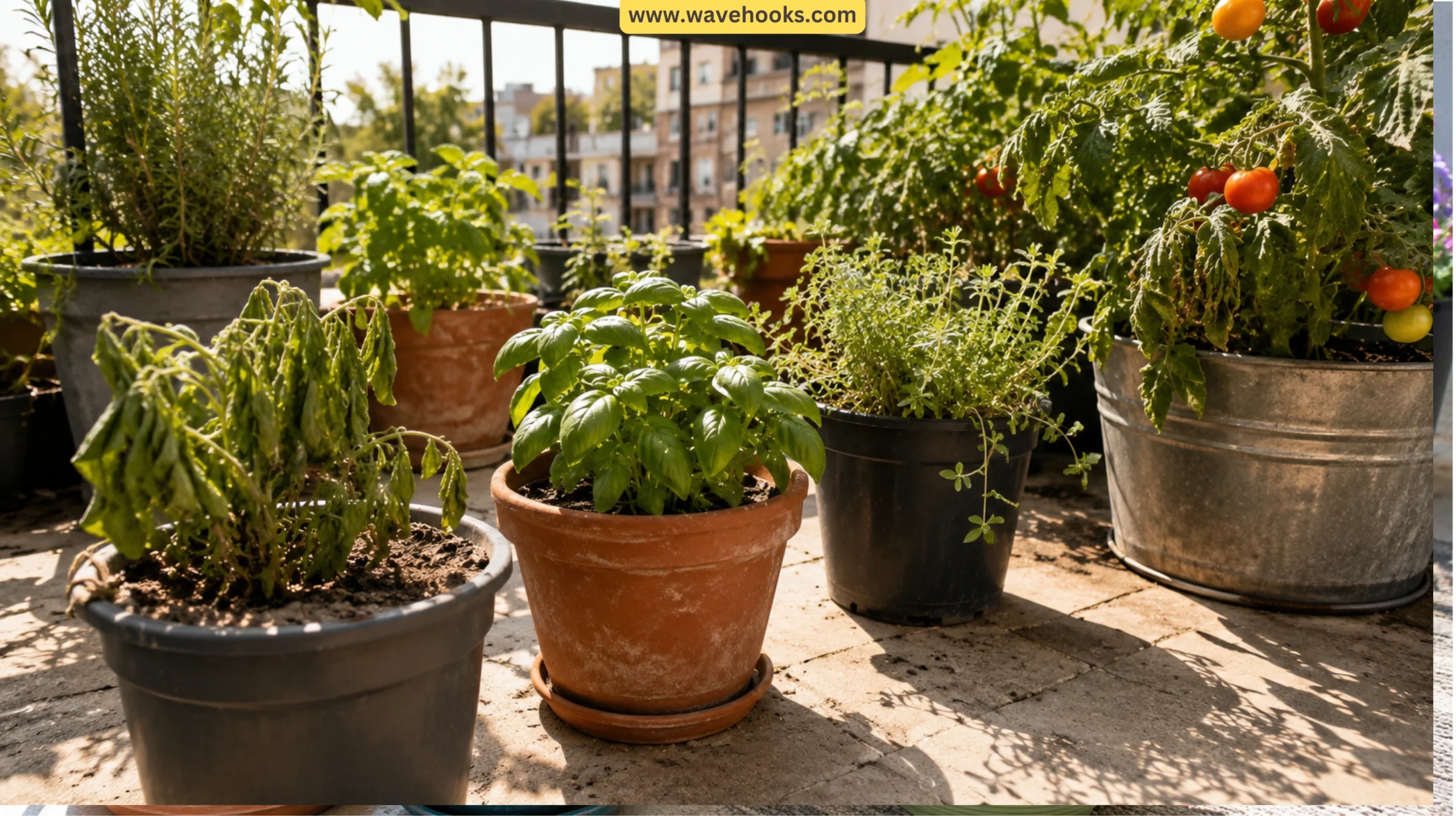
This isn’t a sign you have a bad plant hand. It’s simple physics working against you, and understanding why moisture disappears so quickly makes it much easier to keep container plants watered in July without wasting water.
Smaller soil volume is one of the biggest reasons container plants watered in July require much more attention than garden beds. It might have several feet of soil under a plant, acting like a giant water reservoir. A container has maybe 8–14 inches of soil, total. That’s it. There’s no chance for extra moisture to hide, so it evaporates or gets used up fast, usually within a single hot day.
Hot pot material makes this worse. Dark plastic, thin metal, and unglazed terracotta all absorb heat directly from the sun and transfer it straight into the soil. I’ve measured the soil temperature in a black plastic pot on a 90°F day, and it was noticeably hotter to the touch than the soil in a lighter-colored ceramic pot sitting right next to it. That heat cooks moisture out of the root zone from the sides, not just the top.
Wind on balconies is one of the most underestimated factors. Even a light, barely noticeable breeze pulls water vapor away from soil and leaf surfaces constantly. Balcony gardeners constantly assume their plants dry out because of sun alone, but wind exposure can be doing just as much damage, especially on higher floors where airflow is stronger.
Direct sun from multiple angles is another container-specific problem. In the ground, a plant’s roots are shaded by surrounding soil no matter what. In a pot, the entire container sides included get hit by sun, which heats the soil from the outside in.
Root-bound plants compound everything above. When roots fill the entire pot, there’s less soil left to store water. If you haven’t repotted in over a year, this could be a hidden reason your watering routine suddenly stopped working as well as it used to.
Lightweight potting mix is the final piece. Good potting mixes are designed to drain well and stay light and airy for root health, but that same quality means they hold less water than dense garden soil and dry out noticeably faster, sometimes within hours during a heatwave.
Suggested Read How To Know If A Plant Is Thirsty In Under 5 Minutes!
How Often Should You Water Container Plants In July?
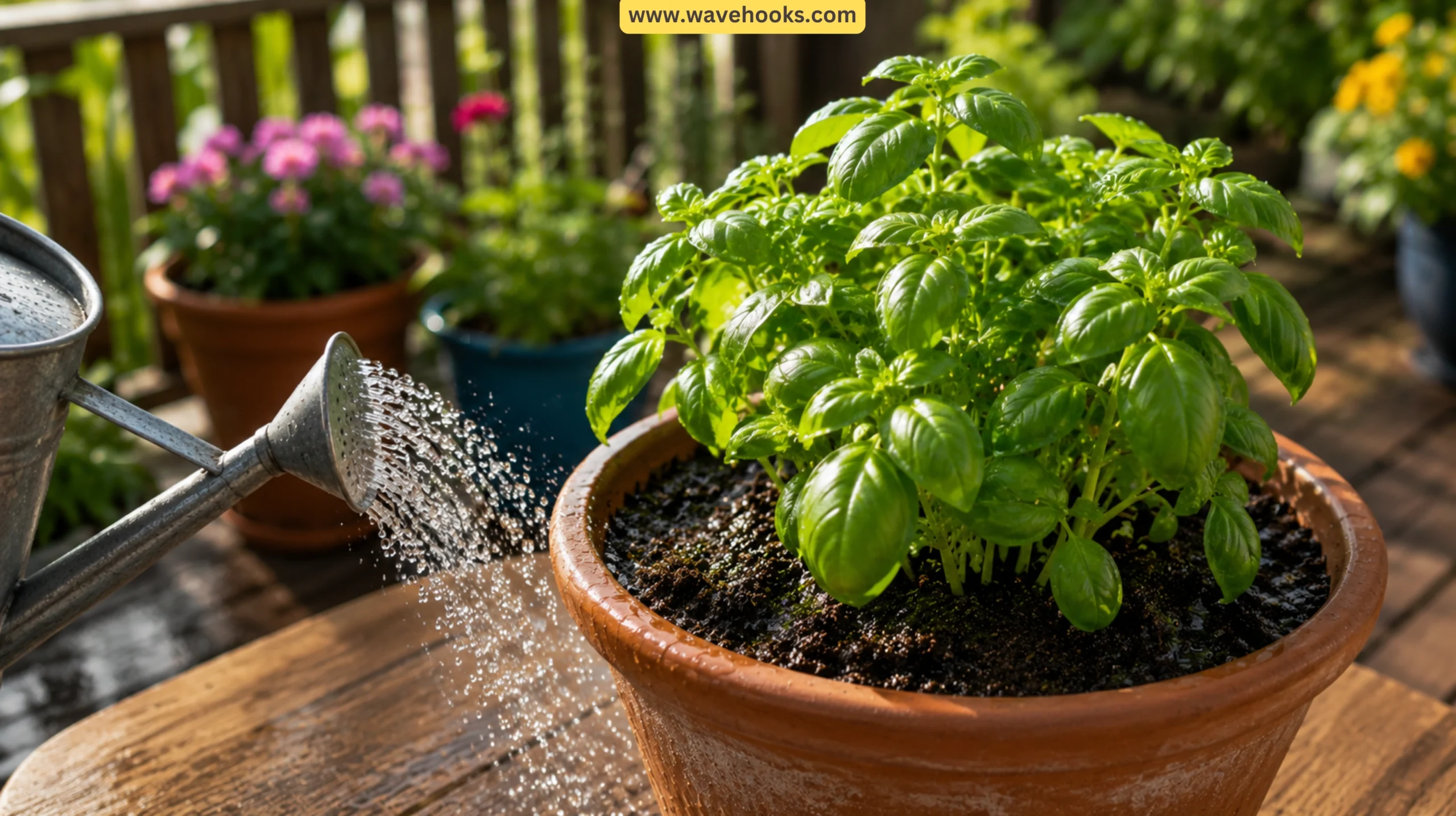
This is the single most common question I get. Knowing how often to keep container plants watered in July depends more on soil moisture than following a fixed calendar.
It depends on your pot size, plant type, and location, but there’s one simple test that works every time.
The finger test. Push your finger 1–2 inches into the soil. If it feels dry at that depth, water. If it’s still moist, wait. This prevents both underwatering and overwatering, which are surprisingly easy to confuse just by looking at the surface. This quick habit helps ensure container plants watered in July receive moisture only when they truly need it.
Small pots need more frequent checks. Anything under about 12 inches wide may genuinely need daily attention during a heatwave, especially if it’s in full sun for six or more hours a day. Hanging baskets and small terracotta pots are usually the thirstiest containers you own.
Large pots buy you time. Containers 16 inches or wider, especially with several gallons of soil, can usually go two to three days between waterings, even in serious heat, simply because they hold a bigger water reserve.
Morning is the best time to water. For healthier roots, always aim to keep container plants watered in July early in the day whenever possible. Watering early gives roots hours to absorb moisture before peak heat arrives, and it dramatically reduces how much water is lost to evaporation compared to midday watering. If you only remember one timing rule from this entire article, make it this one.
Avoid light surface watering. A quick, shallow splash wets only the top inch of soil and trains roots to stay near the surface, which makes plants far more vulnerable to heat stress later. It feels productive, but it’s actually one of the most common mistakes I see.
Pro Tip
If you’re unsure whether you’re watering deeply enough, use a soil moisture meter instead of guessing. These inexpensive tools measure moisture below the surface, helping you avoid both overwatering and underwatering. Insert the probe into the soil and check the reading for a quick, accurate result.
The Best Way To Water Patio Pots In Summer Heat
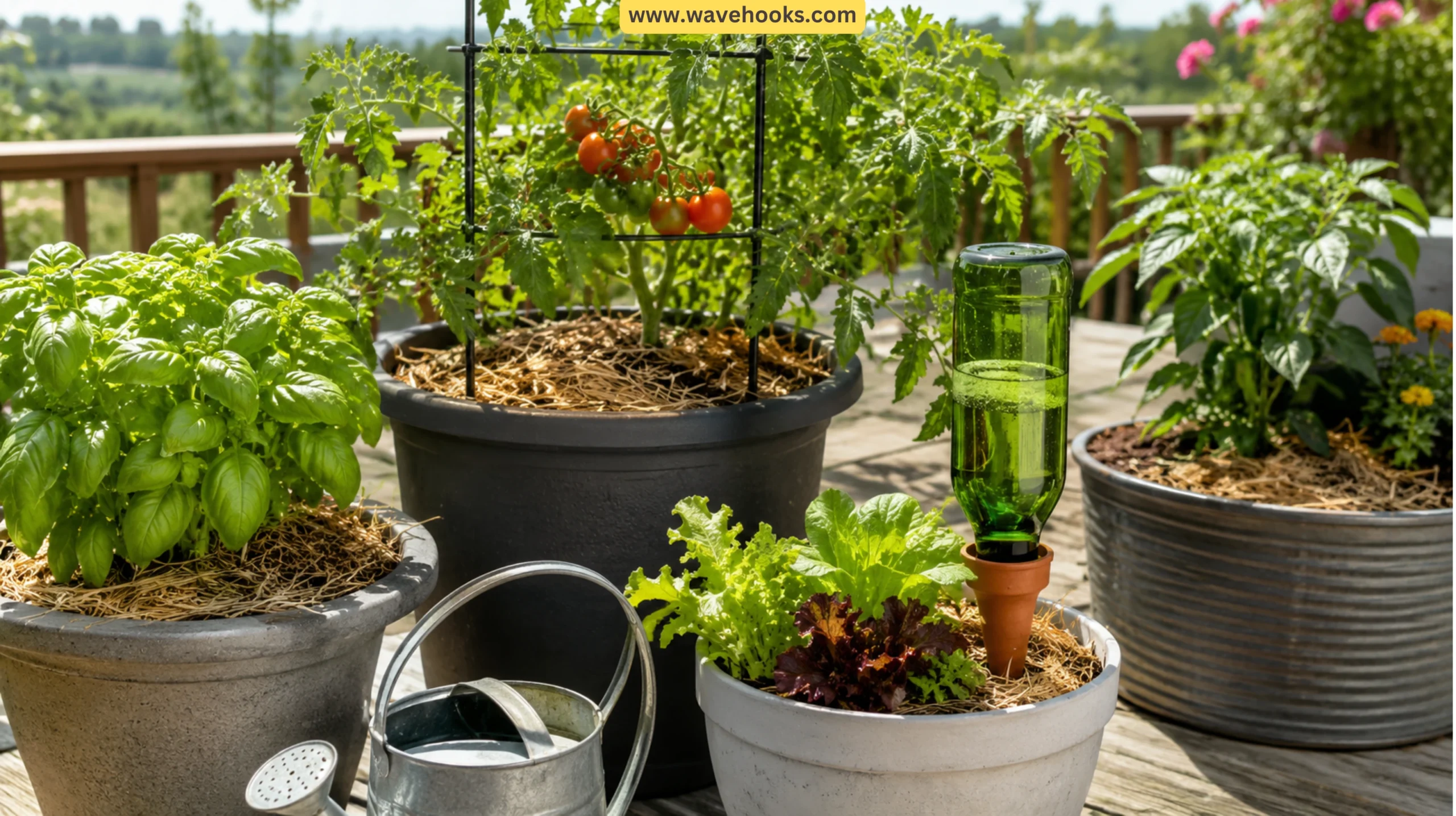
Using the correct watering technique is essential for keeping container plants watered in July during intense summer heat.
I used to pour water fast and walk away, then wonder why my plants still looked stressed a few hours later. Here’s the sequence that actually works:
- Water slowly. Pouring too fast causes water to run straight down the inside edge of the pot and out the drainage holes without ever soaking into the root zone. Slow, steady pouring gives the soil time actually to absorb what you’re giving it.
- Pause for absorption. After the first pour, wait 30–60 seconds. You’ll usually see the soil visibly settle or darken as it soaks in. That’s your cue to continue.
- Water until it drips from the drainage holes. This is the real test of whether you’ve watered deeply enough. If nothing is dripping out the bottom, the water hasn’t reached the full root system yet. Deep watering is one of the easiest ways to keep container plants watered in July without frequent watering.
- Empty saucers after 20–30 minutes. Leaving water sitting in a saucer traps the bottom roots in standing moisture, which invites root rot, especially dangerous in already-stressed summer plants.
- Check again in the evening during heatwaves. If a plant looks wilted after a punishing afternoon, a light evening watering can genuinely be the difference between recovery overnight and losing the plant by morning.
Also Read 20 Brilliant Hacks: How To Make A Patio Garden On A Budget!
Self-Watering Planter Ideas For Busy Gardeners
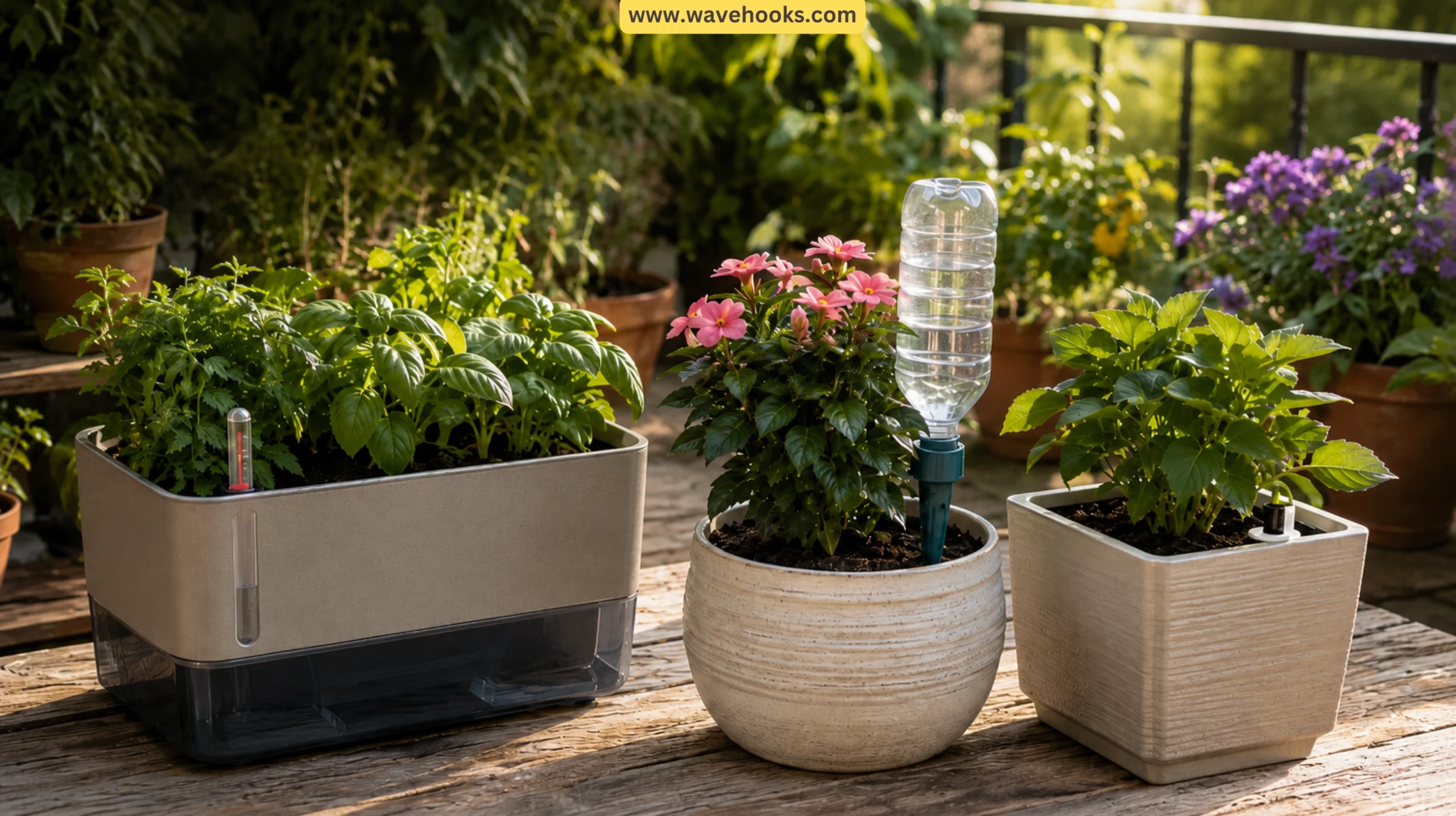
Self-watering systems make it much easier to keep container plants watered in July, even with a busy schedule, and there are more solutions available now than most people realize.
Self-watering pots use a built-in water reservoir under the soil, with a wicking system that lets roots pull up moisture as needed. These are one of the best investments for anyone who travels frequently or simply forgets to check pots daily. Many hold enough water to last 5–7 days depending on plant size and heat.
Water reservoir planters work on a similar principle and now come in attractive, decorative designs, so you don’t have to sacrifice style for convenience.
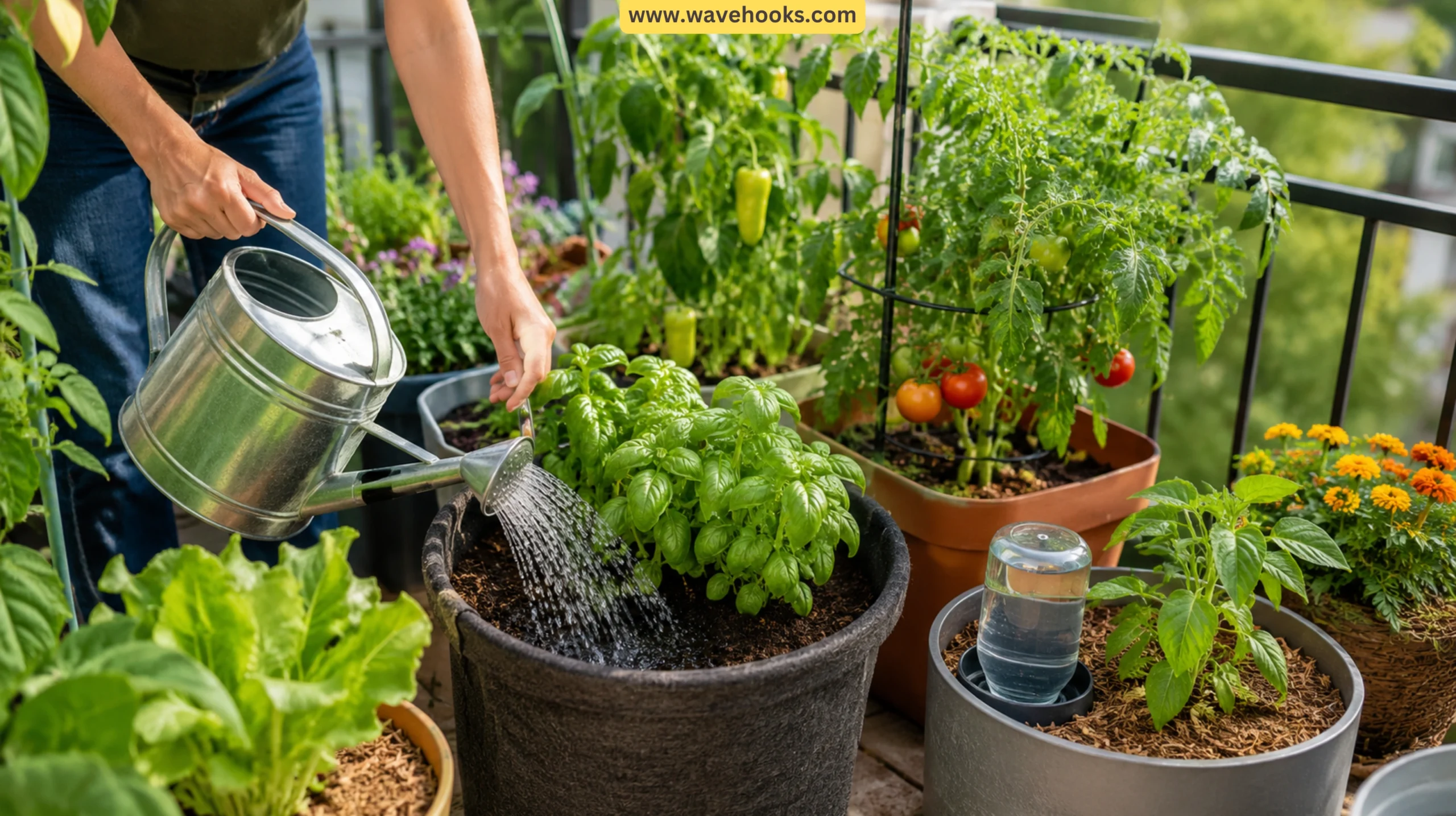
Drip spikes are an affordable add-on for existing pots. They screw onto a standard plastic water bottle and slowly release water into the soil over one to two days. Great for smaller pots or as a vacation backup.
Wick watering uses a length of cotton cord: one end sits in a bowl or bucket of water, the other end is buried in the soil. Capillary action draws water up steadily, keeping soil consistently moist without any daily effort.
DIY bottle watering is the free version of the drip spike. Poke a few small holes in a plastic bottle cap, fill the bottle, and bury it upside down near the plant’s base. Simple, cheap, and surprisingly effective for a few days at a time.
Olla pots are unglazed clay vessels buried in the soil next to your plant, filled with water through a narrow opening at the top. The porous clay releases water slowly and only when the surrounding soil is dry, a method that’s been used for centuries in hot, arid climates and works beautifully in containers too.
Suggested Read: 26 Incredible Plants You Can Grow In Water | Don’t Miss This
How To Keep Patio Pots From Drying Out Too Fast
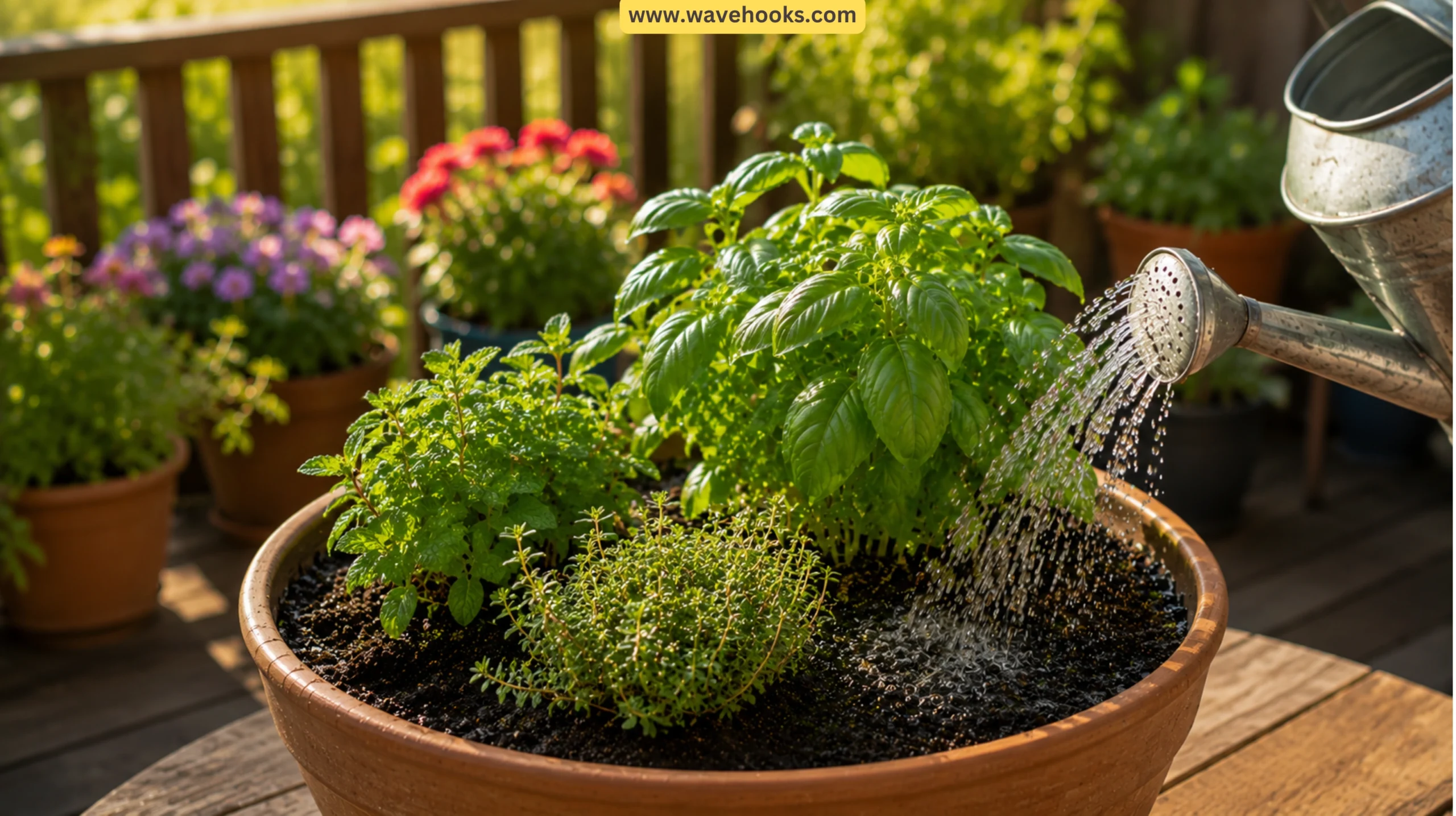
Proper placement plays a major role in keeping container plants watered in July for longer between watering sessions. Here are some tips:
Morning sun, afternoon shade is the ideal exposure for most container plants in July. This gives them the light they need to thrive without exposing them to the harshest, most dehydrating hours of the afternoon.
Group pots together. Clustering containers creates a small pocket of shared humidity and partial shade between them, which noticeably slows moisture loss compared to pots spaced far apart in full exposure.
Use larger containers whenever possible. More soil volume means more stored water and a bigger buffer against sudden heat spikes. This alone can turn a daily-watering plant into an every-other-day plant.
Double-pot small plants. Place a small pot inside a larger decorative one, with a bit of space or insulating material between them. This shields the smaller pot’s soil from direct heat on all sides.
Use saucers thoughtfully. They can help retain a little extra moisture, but only add them if you’re checking regularly. Roots sitting in standing water for extended periods invite rot, undoing all the benefit.
Also Read 45+ Genius Space-Saving Yard Tool Storage Ideas For Any Home
Best Mulch Ideas For Potted Plants
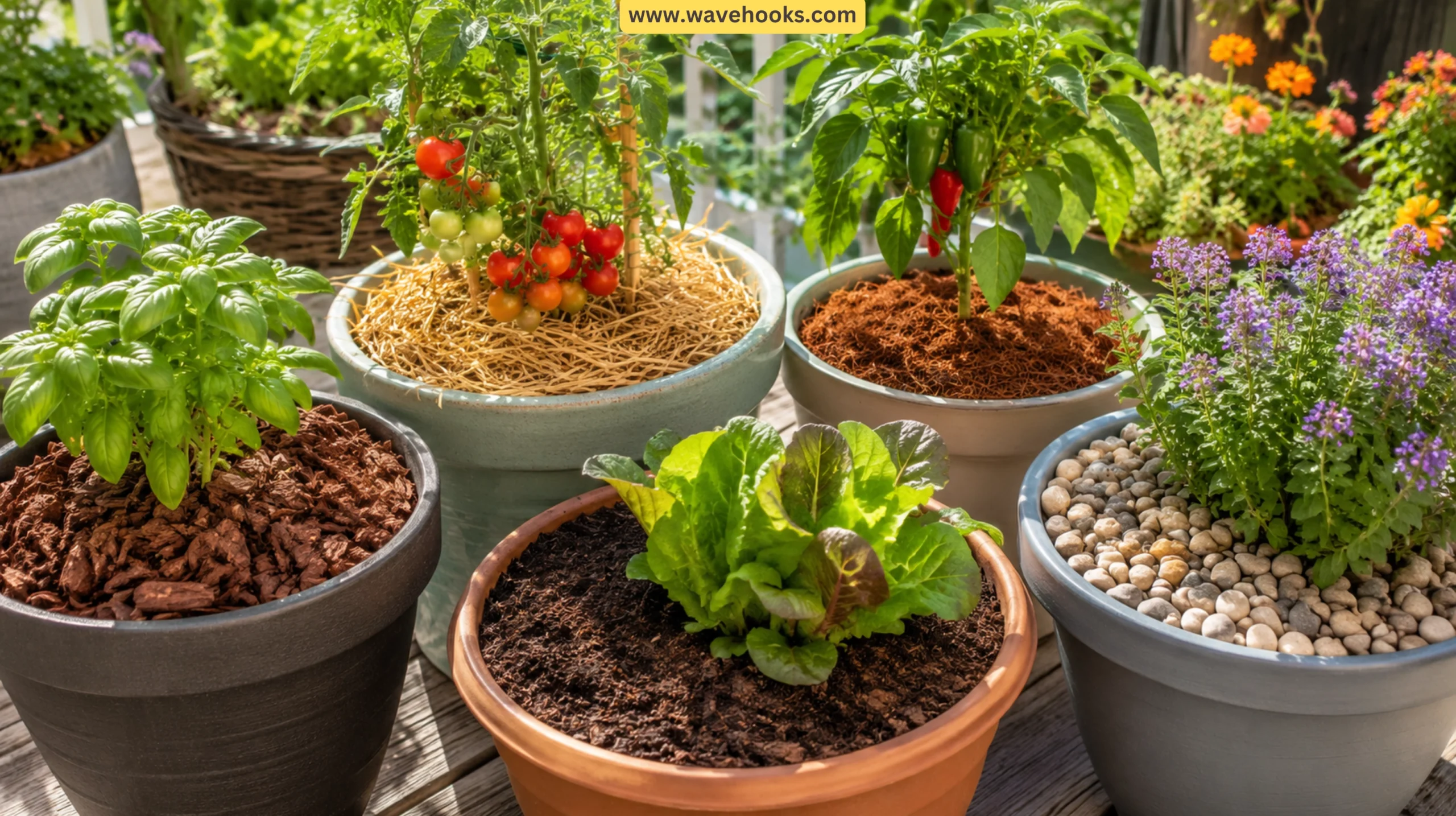
Mulch is one of the most underused tools in container gardening, and it is one of the simplest ways to keep container plants watered in July by reducing evaporation.
Bark mulch locks in moisture under the surface and gives decorative pots a clean, finished look.
Straw works especially well for vegetable containers like tomatoes and peppers, and it breaks down slowly over the season, adding organic matter as it goes.
Coconut coir holds water impressively well and blends naturally into the soil surface without looking out of place.
Pebbles are the go-to choice for ornamental pots. They don’t add nutrients, but they do reflect some heat away from the soil surface and reduce evaporation.
A thin compost layer, about half an inch, can retain moisture while slowly feeding the plant at the same time.
Pro Tip
Never pile mulch directly against the plant’s stem. It traps moisture where you don’t want it, increasing the risk of stem rot, fungal diseases, and pests. Instead, leave a 2–3 inch ring of bare soil around the base of each plant to improve airflow and keep the stem healthy.
Best Soil Mix For Water Retention In Containers
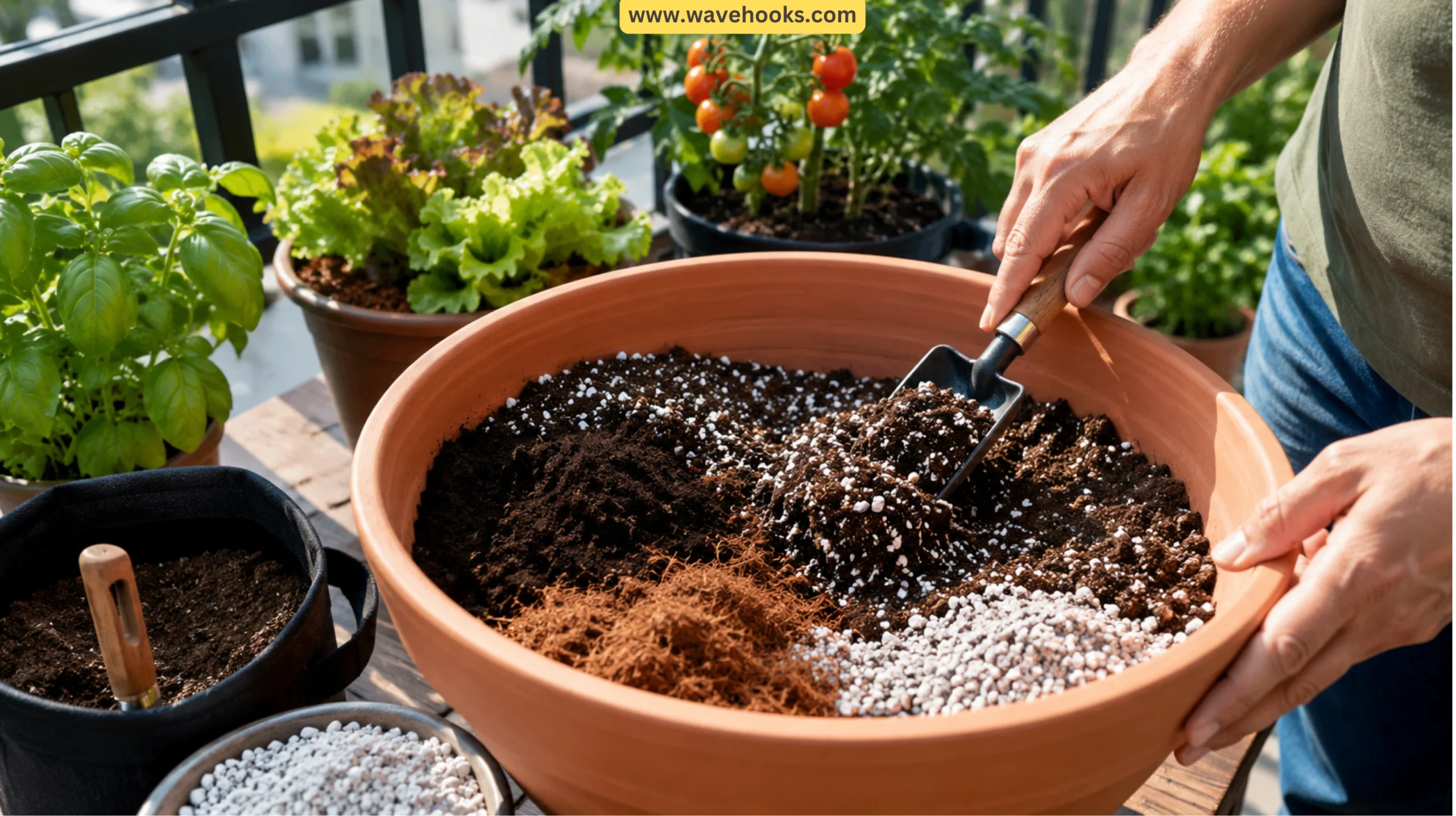
Choosing the right potting mix makes keeping container plants watered in July much easier throughout the season. Getting the soil right solves a huge chunk of the watering problem before you even pick up a can.
Use potting mix, never use garden soil. Garden soil compacts hard inside a container, blocking drainage and suffocating roots. Potting mix is specifically formulated to stay light while still holding adequate moisture.
Add compost. A modest amount mixed in improves both water retention and long-term fertility, giving roots something more substantial to hold onto than pure potting mix alone.
Add coco coir. It’s become a popular addition precisely because it absorbs and holds significantly more water than peat-based mixes, while still draining well.
Balance with perlite. You want enough perlite in the mix to keep things from becoming waterlogged, but not so much that the soil dries out too quickly. A rough guide many gardeners use is about 20–25% perlite by volume for typical container plants.
Avoid compacted soil. If water pools on the surface instead of soaking in within a few seconds, your mix has become too dense. This usually happens over time as organic material breaks down, and it’s worth refreshing the top few inches each season.
Also Read: 50+ Simple Front Yard Landscaping Ideas That Look Expensive!
Balcony Plant Watering Tips For Hot Weather
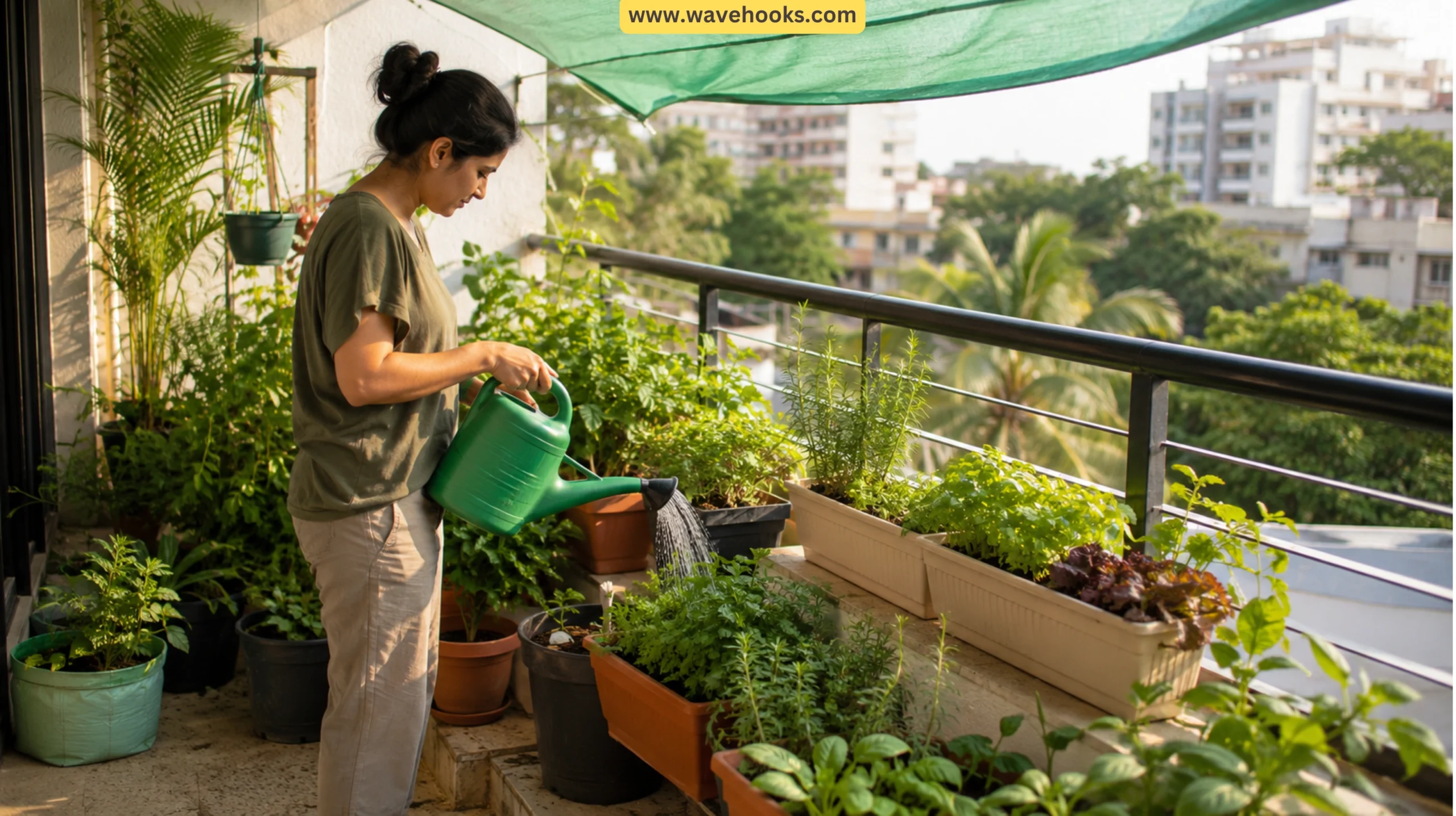
Balconies genuinely play by different rules than ground-level patios, and treating them the same is a common mistake.
Wind exposure makes keeping container plants watered in July more challenging on balconies than in sheltered gardens.
Wind dries plants faster than most people expect, even when it doesn’t feel breezy at all. Higher floors especially see near-constant air movement that pulls moisture from both soil and leaves.
Railing planters dry fastest of all. They’re typically shallow, narrow, and exposed to sun and wind from every direction. Expect them to need more frequent watering than any other container you own.
Use trays carefully. If you place trays under railing planters to catch drips, check them frequently. A full tray sitting against the bottom of the planter can cause the same rot risk as an unemptied saucer.
Shade cloth draped over the hottest afternoon hours can meaningfully reduce how fast balcony pots dry out, especially for heat-sensitive plants like leafy greens.
Water before extreme afternoon heat, not during it. Watering already-hot soil in blazing direct sun can actually stress roots further rather than cooling things down effectively.
Also Read: 15 Stunning Big Indoor Plants That Don’t Need Sunlight!
How To Keep Container Plants Alive While On Vacation
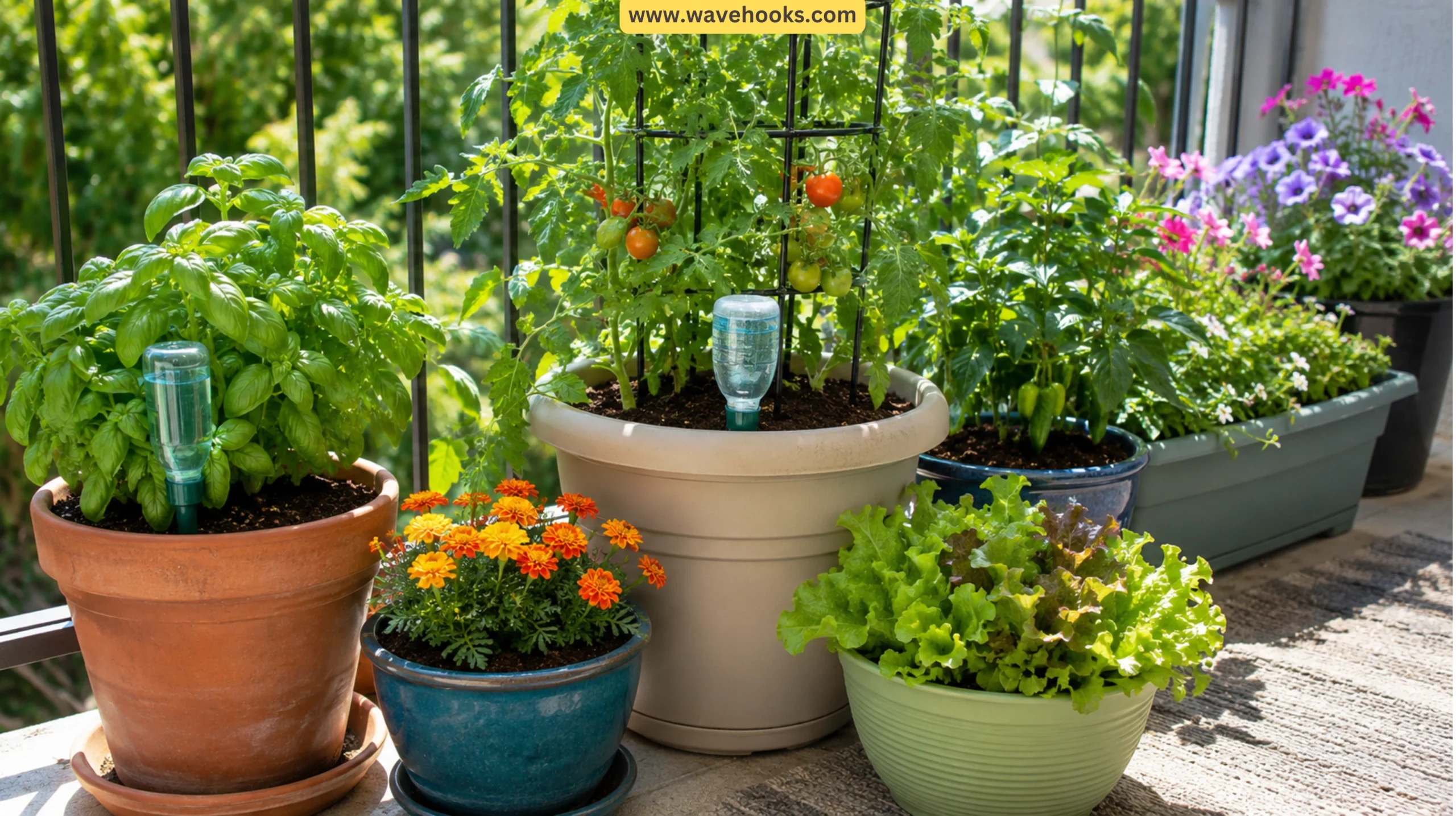
Planning helps ensure container plants watered in July stay healthy even while you’re away. You don’t need a full-time house-sitter to protect your plants for a week. A bit of preparation goes a long way.
Deep watering before you leave is the foundation. Use the slow-pour method from earlier so the entire root zone is thoroughly saturated, not just the surface.
Move pots to shade the day you leave. Even partial shade slows moisture loss noticeably compared to full sun exposure while you’re gone.
Use self-watering spikes or reservoir systems on your most vulnerable plants. Anything in a small pot or full sun should get backup coverage.
Group plants together so they shade and humidify each other in your absence, just like they would on a normal day.
Ask a neighbor for high-need plants. You don’t need someone checking everything, just the one or two thirstiest pots that might not survive a full week unattended.
Suggested Read 10 Quick Hacks On How To Make A Vegetable Garden On A Balcony
Signs Your Container Plants Need Water Immediately
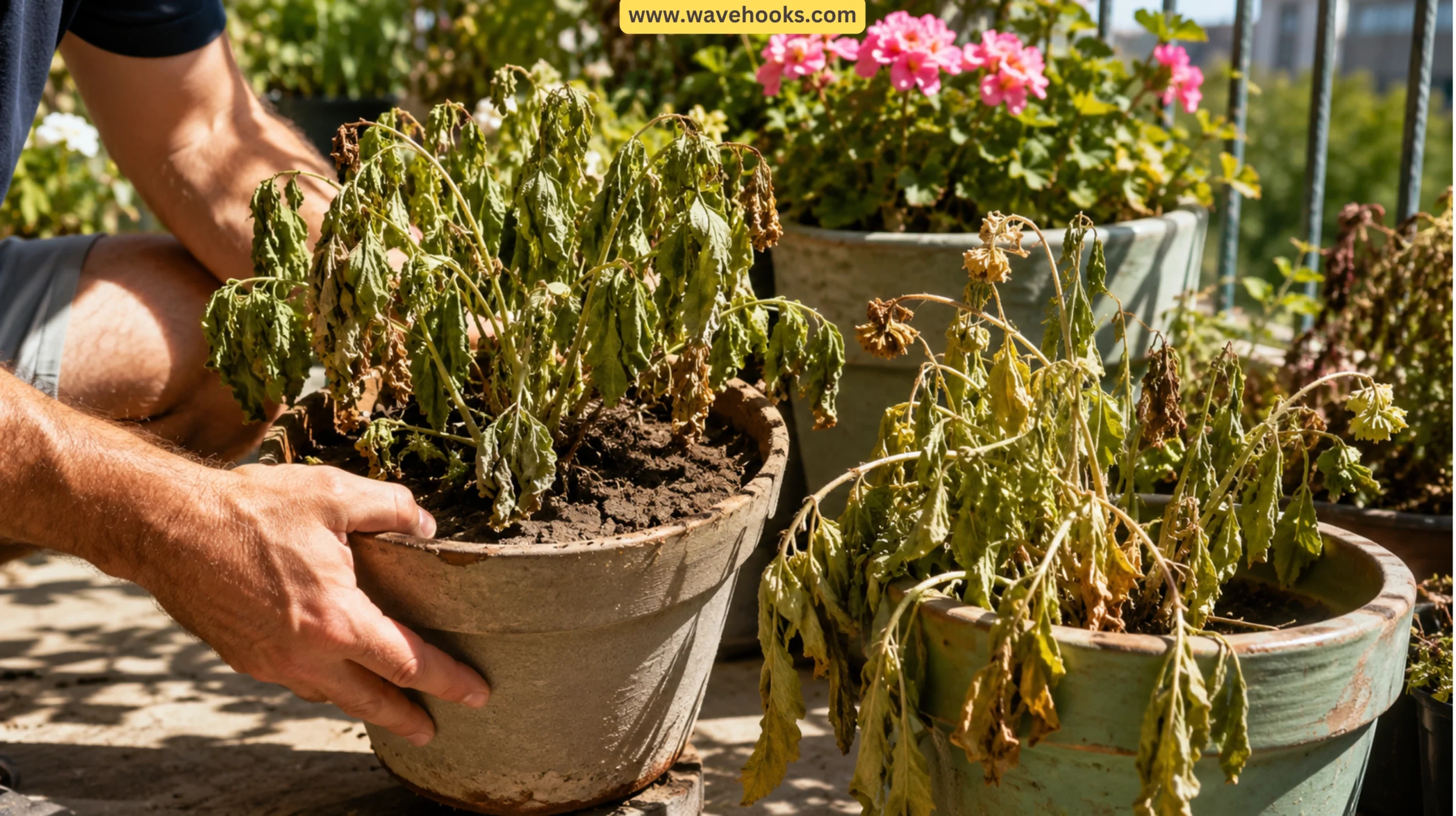
Recognizing early warning signs helps keep container plants watered in July before serious damage occurs. Learning to read these signs early means you catch problems before real damage sets in.
Wilting is the most obvious sign, though by the time it’s visible, the plant has already been under stress for a while.
Dry soil pulling away from the pot edge is a clear visual cue. If you see a gap forming between the soil and the container wall, the soil has shrunk from dehydration.
Drooping specifically in the evening, after a hot day, can be a plant’s way of asking for a check-in, even if it perks back up on its own overnight.
Crispy leaf edges indicate the plant has been water-stressed repeatedly, not just today. This is a common sign your current routine needs adjusting.
A surprisingly lightweight pot is one of the most reliable tests. Lift it if it feels far lighter than usual. It’s dry through and through, even if the surface looks okay.
Also Read: How To Use Grow Lights For Indoor Plants On A Tight Budget!
Mistakes That Make Container Plants Dry Out Faster
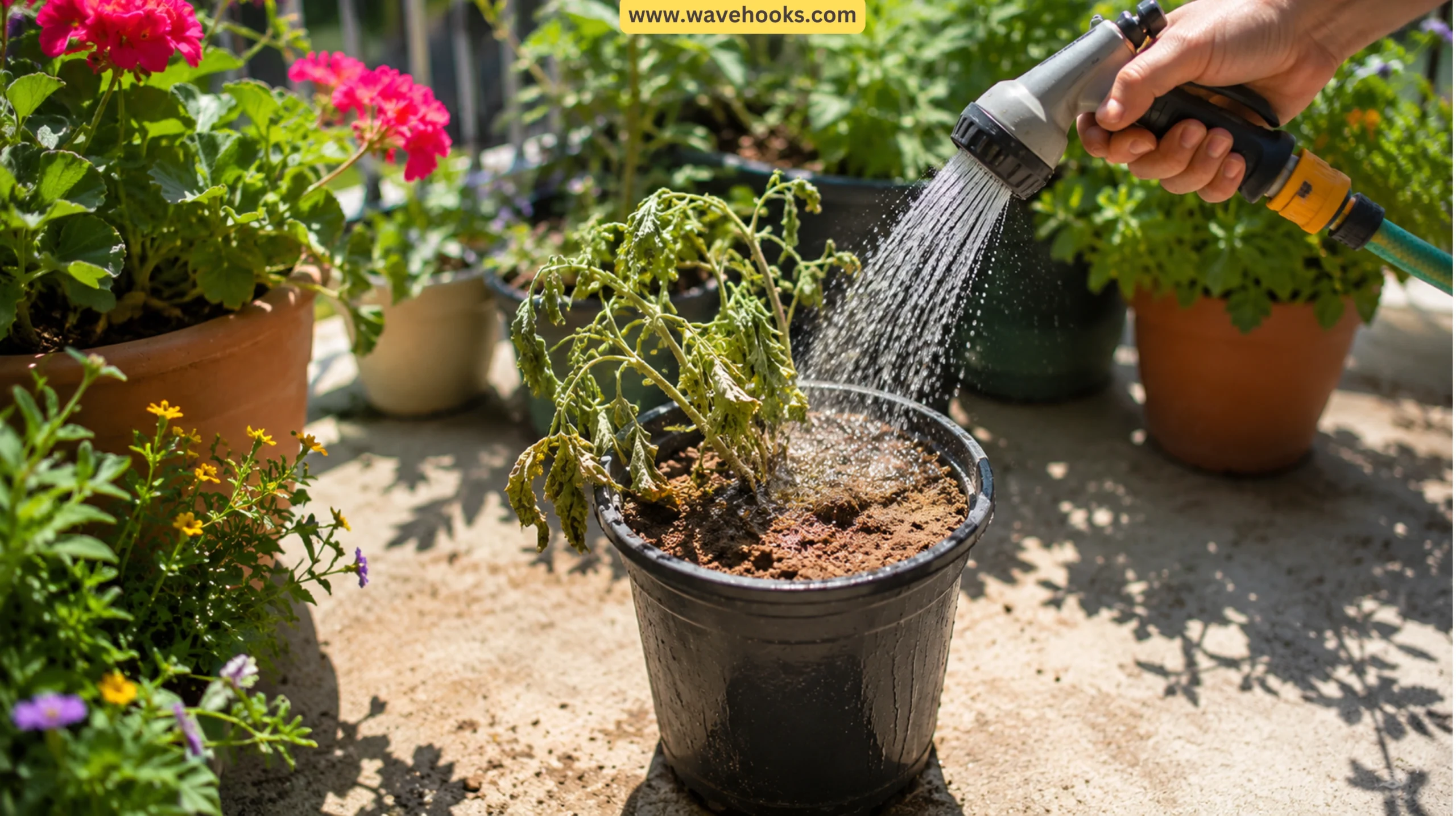
Avoiding these common mistakes makes it much easier to keep container plants watered in July consistently. A few small habits quietly work against you more than people realize.
Tiny pots simply cannot hold enough water reserve to survive a full hot day without help.
Black plastic pots in full sun absorb and trap heat aggressively, effectively cooking the root zone from the outside.
Watering only the surface trains roots to stay shallow, which makes them far more vulnerable to heat and drought stress.
Skipping mulch removes one of the easiest, cheapest protective layers available to any container gardener.
Too much fertilizer during heat stress can actually burn roots that are already struggling, worsening the damage instead of helping the plant recover.
Also Read: 20 Easy Plants For Apartment Balcony You’ll Actually Love!
Quick July Watering Routine For Busy Gardeners
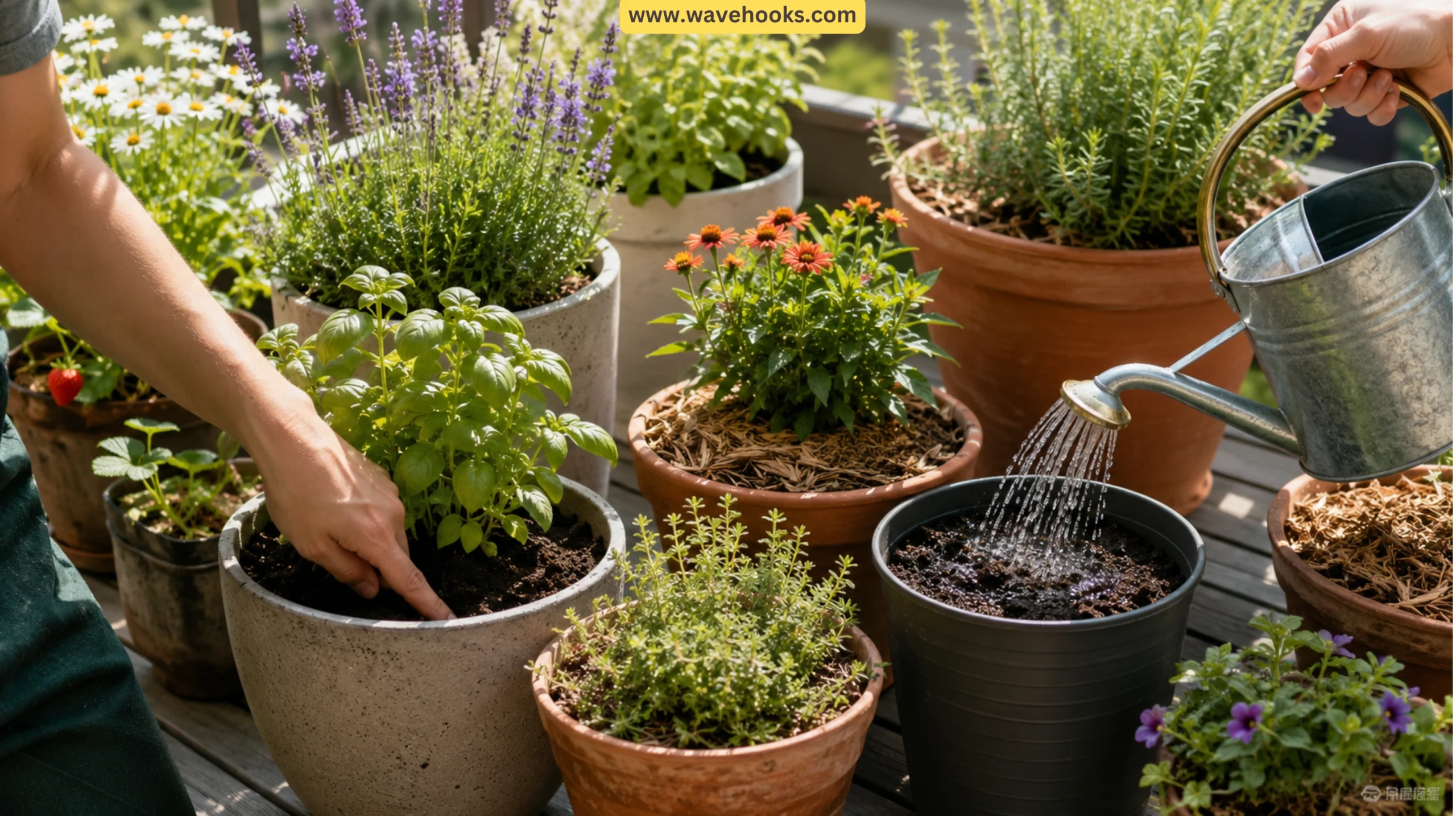
Follow this simple routine to keep container plants watered in July without spending hours every day.
- Morning check — finger test 1–2 inches down on every pot
- Deep water only dry pots — skip anything that’s still moist
- Mulch weekly — top off as it settles or breaks down
- Shade heat-sensitive pots during peak afternoon hours
- Evening rescue check during heatwaves, just in case
Also Read: You Won’t Believe How To Overwinter Boston Ferns Indoors!
Container Plant Watering Sheet
| Plant Type | July Watering Need | Best Tip |
|---|---|---|
| Herbs | Medium — check daily | Group pots together to create shared shade and reduce moisture loss. |
| Tomatoes | High — needs steady, deep moisture | Water at the soil line instead of wetting the leaves to help prevent disease. |
| Flowers | Medium to High | Deadhead spent blooms regularly to reduce plant stress and encourage more flowers. |
| Succulents | Low — let soil dry out completely | Avoid leaving pots sitting in water-filled saucers to prevent root rot. |
| Leafy Greens | High — dries out very quickly | Provide dependable afternoon shade to slow moisture loss and reduce heat stress. |
| Hanging Baskets | Very High — dries out fastest of all | Use a drip spike or wick watering system to keep moisture levels consistent. |
Also Read: How To Know If A Plant Is Thirsty In Under 5 Minutes!
Conclusion: container plants watered in July
If your patio pots have been struggling this July, pick one thing from this article. Keeping container plants watered in July doesn’t have to feel like a daily struggle.
By watering deeply, choosing the right soil, adding mulch, and protecting pots from extreme heat, you can help your plants stay healthy all season long.
Even small improvements, like watering in the morning or using self-watering planters, can make a noticeable difference.
Start with one or two of these simple tips today, and you’ll enjoy stronger, greener container plants throughout the hottest weeks of summer.
FAQ’s About How To Keep Container Plants Watered In July
1. Should I water container plants every day in July?
Not always. It depends on pot size and material. Small pots may genuinely need daily watering in a heatwave, while larger containers can often go a day or two between waterings if you check soil moisture at the 1–2 inch depth first.
2. Is morning or evening better for watering potted plants?
Morning is generally best, since it gives roots hours to absorb moisture before peak heat hits and reduces evaporation loss. An evening check during a genuine heatwave can still rescue a plant that’s clearly wilted from the afternoon sun.
3. How do I stop patio pots from drying out?
A combination of morning sun with afternoon shade, a mulch layer on top of the soil, grouping pots, and using larger containers all significantly slow down moisture loss compared to a single small pot in full exposure.
4. Can mulch be used in containers?
Yes, and it’s one of the most overlooked tricks in container gardening. Bark, straw, coconut coir, or even a thin compost layer all help retain moisture. Just keep mulch a small distance away from the plant’s stem to avoid rot.
5. Are self-watering planters good for summer?
Absolutely. They’re one of the easiest ways to reduce daily watering, especially for busy schedules or vacations, since the built-in reservoir lets roots draw up moisture as needed instead of relying on a fixed schedule you have to remember every day.
Also Read: Does Chinese Money Plant Bring Good Luck | 10 Proven Facts!
Indoor Evergreen House Plants: 30 Stunning Picks You’ll Love!







One Comment