I still remember my first garlic harvest. The bulbs were tiny, and I felt so sad. The reason was simple. I had no clue about when to plant garlic in fall.
If you feel lost right now, relax. You are in the right place. In this article, I will share thirty easy ideas that fixed my garden.
Once you know when to plant garlic in fall, you will grow fat, juicy bulbs every year. Let us begin together.
When to Plant Garlic in Fall: Timing Ideas That Change Everything
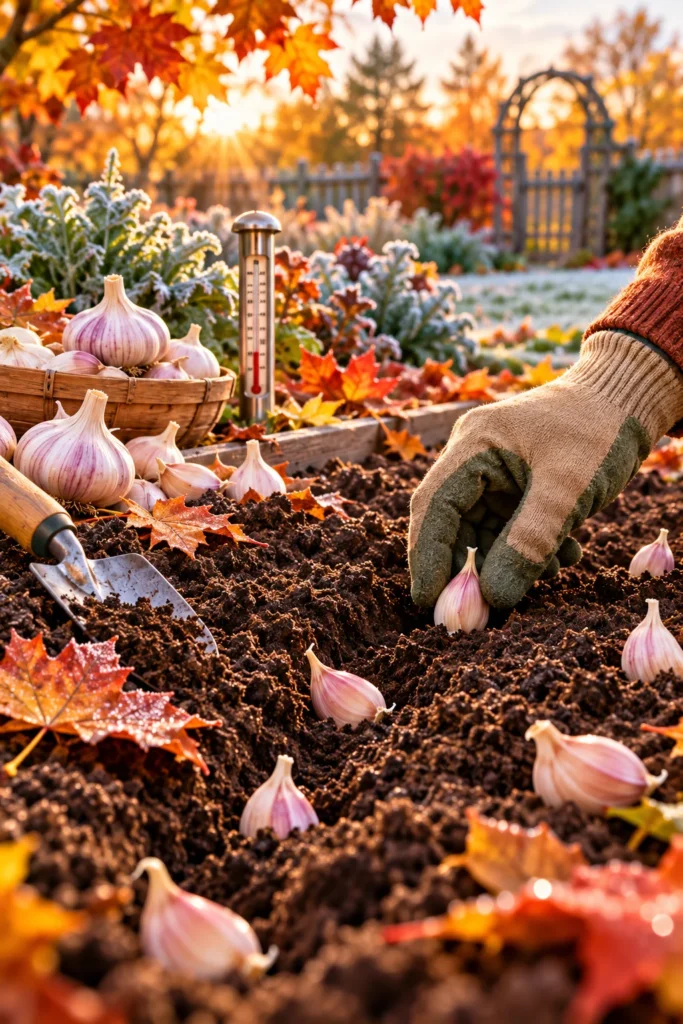
This section is all about timing because timing decides everything. Let’s look at the signs that tell you when to start planting.
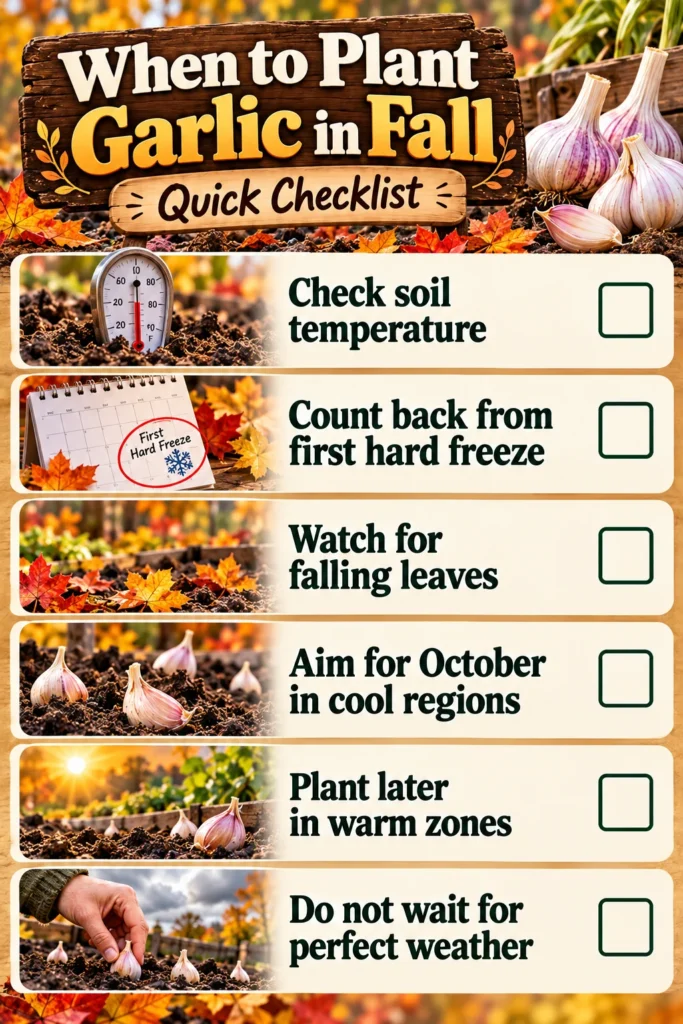
1. Watch Your Soil Temperature Instead of the Calendar
Most people check the date, but soil tells the real story about when to plant garlic in fall. Push a cheap soil thermometer four inches into the ground. When it reads around fifty degrees Fahrenheit, the cloves can go in. This trick works in every region. Calendars can lie after a hot or cold year, but soil never does. Check it in the morning.
2. Count Back From Your First Hard Freeze Date
Here is a rule I now live by. Find your average first hard freeze date and count back four to six weeks. That window gives cloves enough time to grow strong roots before winter locks the ground. Roots need weeks to settle in. If you plant too close to the freeze, the bulbs struggle all spring and stay small. Your local weather office shares freeze dates for free.
3. Let the Falling Leaves Be Your Gentle Reminder
Nature gives hints if we pay attention. When the leaves start to turn and the nights feel crisp, you are close to the answer for when to plant garlic in fall. I plant a few days after the first cold nights arrive. The air feels fresh, and the soil is cool. It feels right to tuck cloves into the earth when the world slows down.
4. When to Plant Garlic in Fall Usually Means October
If you live in a cold or mild northern state, then October is your friend. Most gardeners plant from late September to early November. I mark the middle of October on my own calendar every single year. It gives me a safe cushion if rain or work delays me by a week. Circle it in bright red ink. Pick one weekend and protect it like an event.
5. Warm Zones Plant Later Than You Think
My cousin lives where winters are mild, and she plants in November or even December. Warm areas need a later start so the cloves do not sprout too early in leftover heat. Some gardeners in hot zones chill cloves in the fridge for six weeks first. This trick tells the garlic that winter has arrived and helps bulbs form properly. It works surprisingly well.
6. Never Wait for the Perfect Weather Day
Here is a truth. Waiting for the perfect day often means missing the window. Once soil is cool and the freeze date is near, you should just plant. Even a slightly late planting beats no planting. I once waited for sunshine and lost ten days. Knowing when to plant garlic in fall means acting calmly and not waiting for a perfect afternoon.
Best Time to Plant Garlic in Fall for Your Climate and Garden
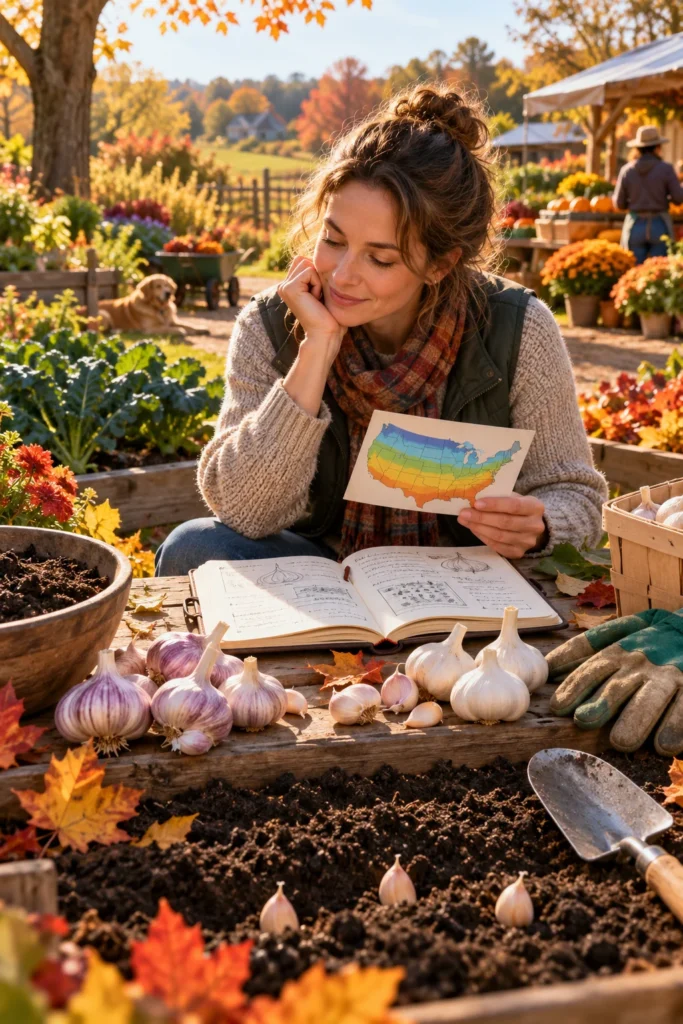
Now let us fine-tune your timing. These ideas help you find the best time for your very own garden.
7. Find Your Hardiness Zone Before Anything Else
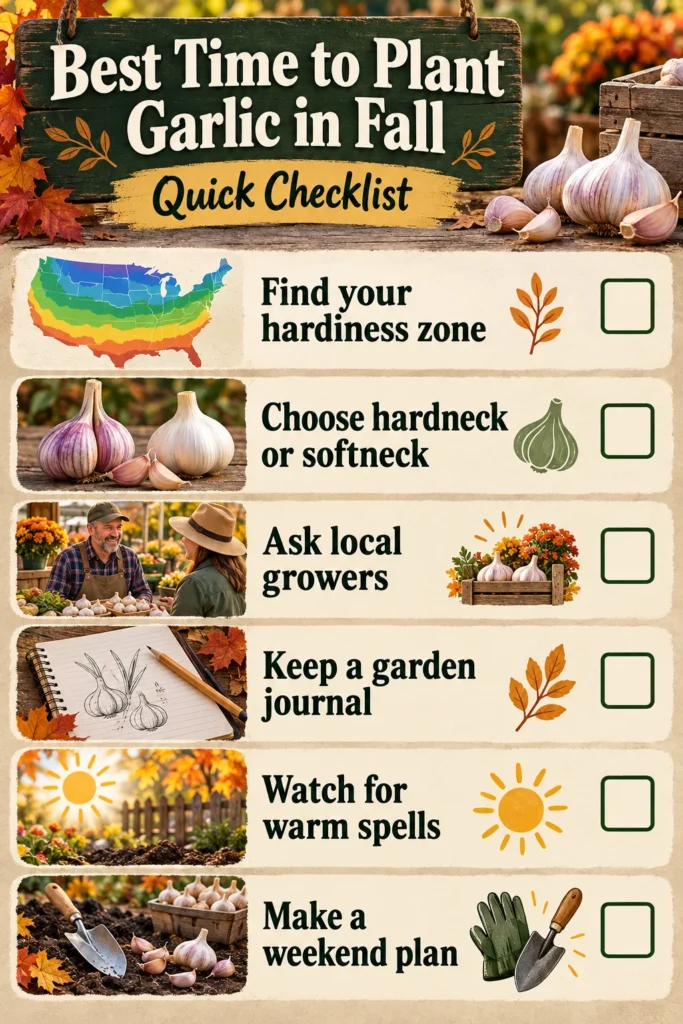
Everything starts with your hardiness zone. Search your zip code on the free zone map and write the number on a sticky note. This simple step answers most doubts about when to plant garlic in fall. Zones three to five: plant in September and early October. Zones six and seven: plant in October. Zones eight to ten: plant in November or later.
8. Choose Your Garlic Type Before Choosing the Day
Hardneck garlic loves cold winters and can go in the ground a little earlier. Softneck garlic prefers milder places and can wait a bit longer. I plant my hardneck first and softneck about a week later. The two types behave differently, so treat them differently. Reading the seed packet or asking the seller takes two minutes and saves a whole season. Both types taste great in my kitchen.
9. Ask Local Growers What Works Near You
Your neighbors are a goldmine. Visit a local farmers market and ask the garlic seller when they plant. These growers have tested your exact weather for years. I learned my best timing from an old farmer who simply said the second Sunday of October. Local advice beats any general chart because your hills and valleys change the weather. It also gives you a friendly chat.
10. Keep a Simple Garden Journal for Next Year
Write your planting date and the weather in a small notebook. Next year, compare your harvest size with your date. After three seasons, I found my own answer to when to plant garlic in fall, and it was October twelfth. A notebook turns guesses into facts. It also becomes a lovely memory book to read on slow winter evenings. Even a few lines make you smarter.
11. Watch Out for Early Warm Spells in Autumn
Some autumns stay warm for weeks. If your soil is still hot then hold back. Cloves planted in warm soil sprout green tops too soon, and those tender tops can freeze. This is why the question of when to plant garlic in fall matters so much. I wait until nights are steadily cool. A week of waiting is better than a field of frozen shoots.
12. Turn Your Best Time to Plant Garlic in Fall Into a Weekend Plan
Once you spot your window, turn it into a plan. Pick a weekend, then buy bulbs and compost early. Block two hours on your phone calendar. I set a reminder three weeks before so I never rush. Having tools and cloves ready makes the day feel joyful instead of stressful. A calm plan always grows better garlic than a rushed one. Planning is a gift to your future.
How to Plant Garlic in Fall With Simple Steps That Work
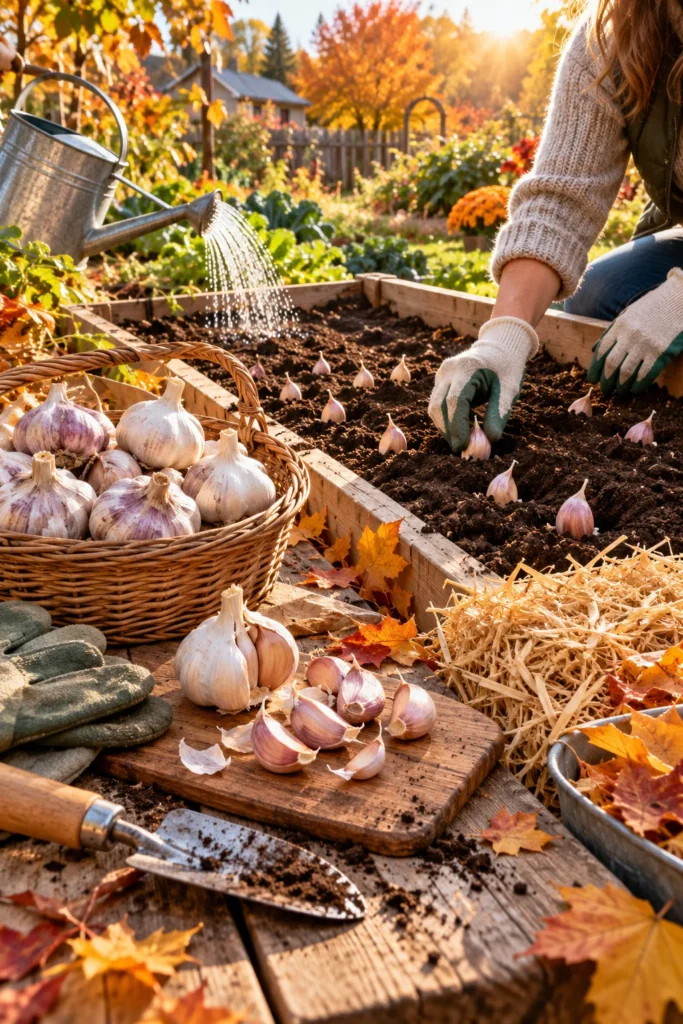
Timing is done, so now we get our hands dirty. Here are six easy steps for planting all your cloves.
13. Buy Seed Garlic and Skip Grocery Store Bulbs
Always start with seed garlic from a nursery or a local grower. Grocery store bulbs may be treated to stop sprouting and may carry hidden diseases. Seed garlic is bred for your region. Good seed is the first step before you even think about when to plant garlic in fall. I once used store-bought bulbs, and my cloves just sat there. Spend a little extra.
14. Break the Bulb Apart Just Before Planting
Do not split the bulb into cloves too early. Wait until a day or two before you plant. The papery skin protects each clove from drying out. Keep the skin on and choose the biggest cloves. Large cloves make large bulbs, so save tiny ones for the kitchen. Once you know when to plant garlic in fall, split your bulbs only a day before.
15. Prepare Loose and Rich Soil for Happy Roots
Garlic loves soil that feels soft and crumbly. Dig the bed about eight inches deep and mix in two inches of compost. Remove stones and old roots. Aim for soil that drains well because soggy ground makes cloves rot. I once planted in heavy clay and lost half my crop. A little prep today saves a lot of sorrow later. Raised beds work great too.
16. Pick the Sunniest Spot in Your Garden
Garlic needs six to eight hours of sun each day. Walk around your yard in the afternoon and notice which place stays bright. Avoid spots under big trees. Choose this spot before you settle on when to plant garlic in fall so everything is ready on the day. I moved my bed just ten feet once, and the bulbs grew bigger the next year.
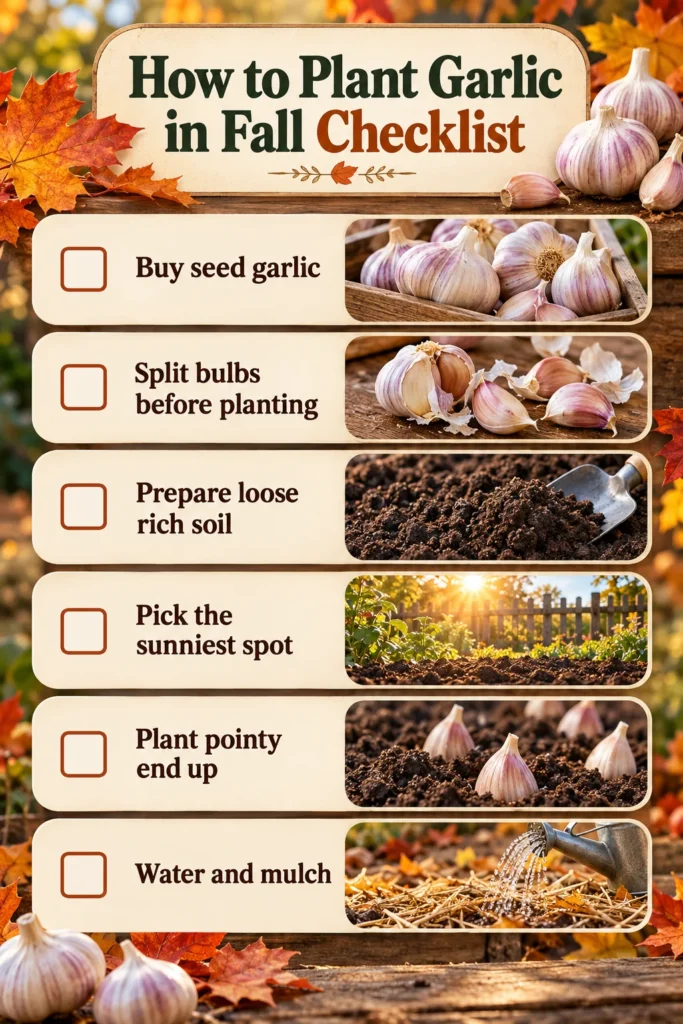
17. Plant Pointy End Up and Two Inches Deep
This part is the heart of how to plant garlic in fall. Press each clove into the soil with the pointy end facing up. Cover it with about two inches of soil. In very cold areas, go three to four inches deep. Leave six inches between cloves and twelve inches between rows. Tiny details here give you big bulbs. It feels like tucking kids into bed.
18. Water Once and Cover With a Thick Mulch Blanket
After planting, give the bed a deep drink of water. Then cover it with four to six inches of straw or shredded leaves. Mulch keeps the soil steady and stops cloves from heaving out during freeze and thaw. It also blocks weeds. I use leaves from my own yard so it costs nothing. Always pick clean straw without seeds. Your garlic will sleep all winter warmly.
Garlic Planting Mistakes That Quietly Ruin Your Harvest
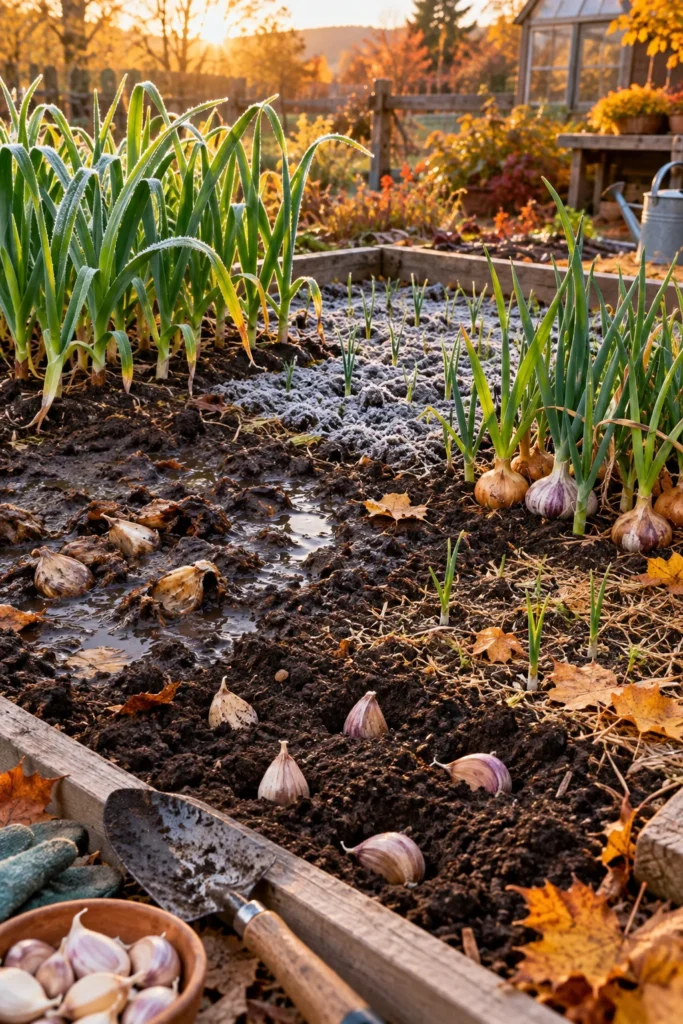
Everyone makes errors, and I made plenty. Let us walk through the common ones so you can skip the pain.
19. Planting Too Early Is Mistake Number One
I was so excited the first year that I planted in early September. The cloves sprouted tall green leaves by November, and the cold burned them. Strong tops wasted energy that roots needed. Many people feel excited and rush. Learning when to plant garlic in fall means waiting for cool soil and not just following your excitement. Slow down and enjoy the season.
20. Planting Too Late Leaves Roots Behind
The opposite mistake hurts just as much. If you plant after the ground is frozen solid, the cloves cannot grow roots. Without roots, they push up weakly and make small bulbs. Missing the answer to when to plant garlic in fall is the usual cause. If you are late, do not give up. Plant anyway and add extra mulch. A late crop beats no crop.
21. Using Wet and Heavy Soil Rots the Cloves
Garlic hates wet feet. Cloves sitting in soggy soil rot before they sprout. If your yard holds water after rain, then build a raised bed or mound the soil. Even the right answer to when to plant garlic in fall cannot save cloves from soggy ground. After a rainy fall, I lost many cloves to rot. Now I always check drainage first.
22. Planting Cloves Upside Down Slows Everything
It sounds funny, but it happens. If the flat root end faces up, the shoot must twist and fight its way to the surface. That wastes energy and slows growth. Look for the flat bottom where the roots will form and the pointy tip where leaves will rise. Say it out loud with me as you plant. Pointy end up. Kids love this little chant.
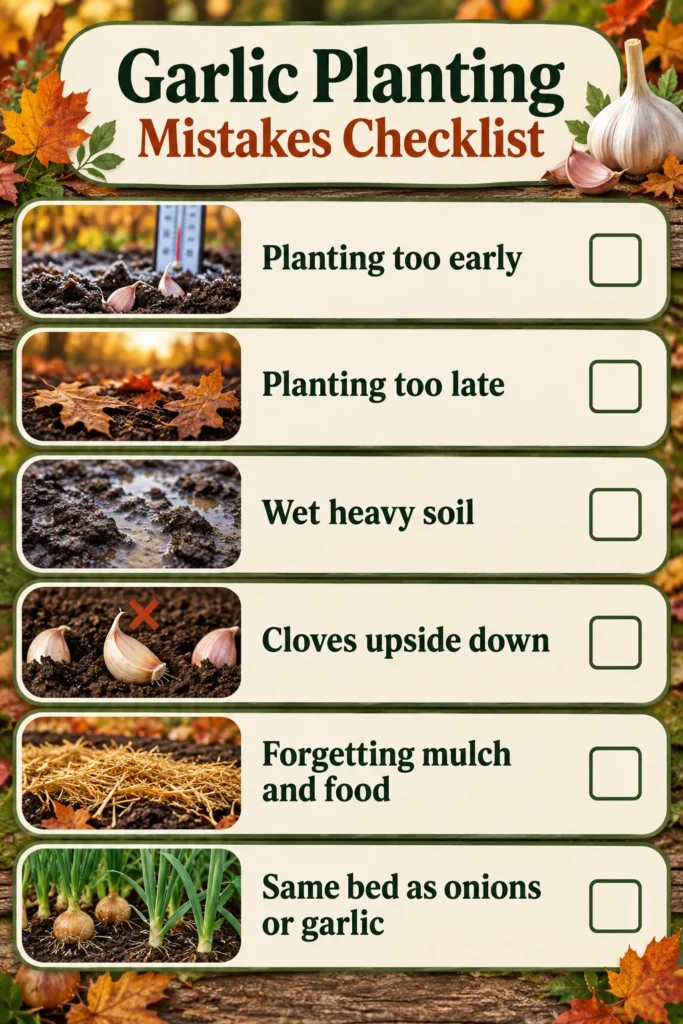
23. Forgetting Mulch and Food Makes Bulbs Small
Some gardeners plant and walk away. Without mulch, the soil swings from freezing to thawing and pushes cloves up. Without food, the bulbs stay small. Add compost at planting time and a nitrogen feed in early spring. Garlic is a hungry plant that gives back what you give. Think of mulch as a blanket and compost as breakfast. Both are cheap and easy.
24. Planting in the Same Bed as Onions or Garlic Last Year
Disease hides in the soil for years. If onions, leeks, or garlic grew in a bed last season, then pick a new spot. A fungus called white rot can wait there and attack your cloves. Rotate crops and wait three years. Many beginners ignore this when they learn when to plant garlic in fall. I draw a quick map every fall so I remember where each crop lived.
Fall Garlic Planting Care From Winter Sleep to Harvest Day
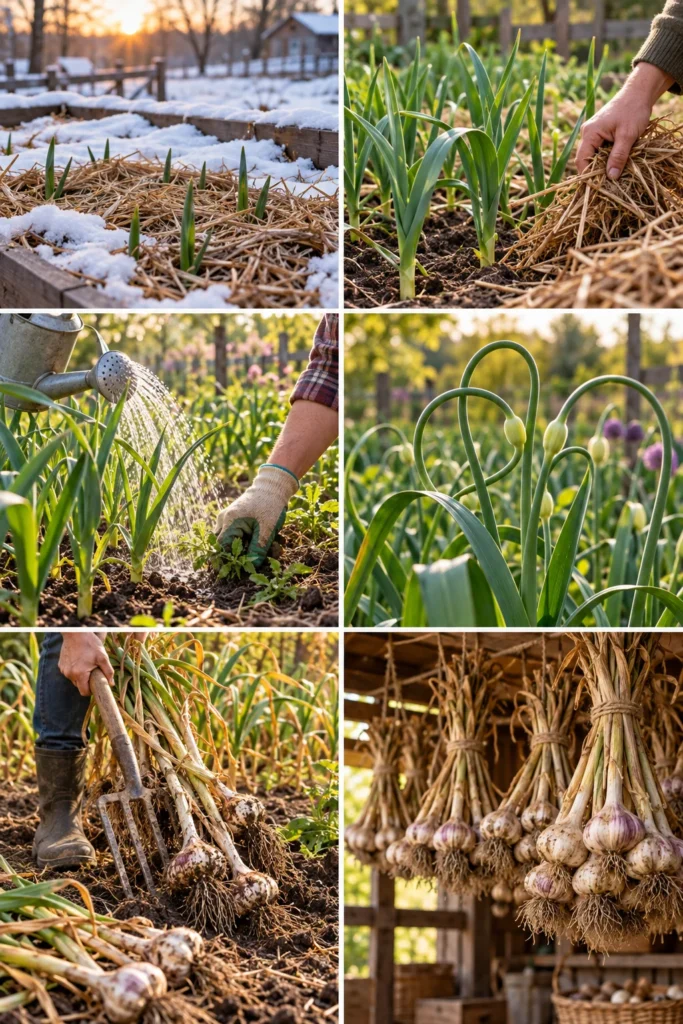
Planting garlic in autumn is only the beginning. These last ideas take you through the cold months to harvest day.
25. Be Patient and Quiet During Winter
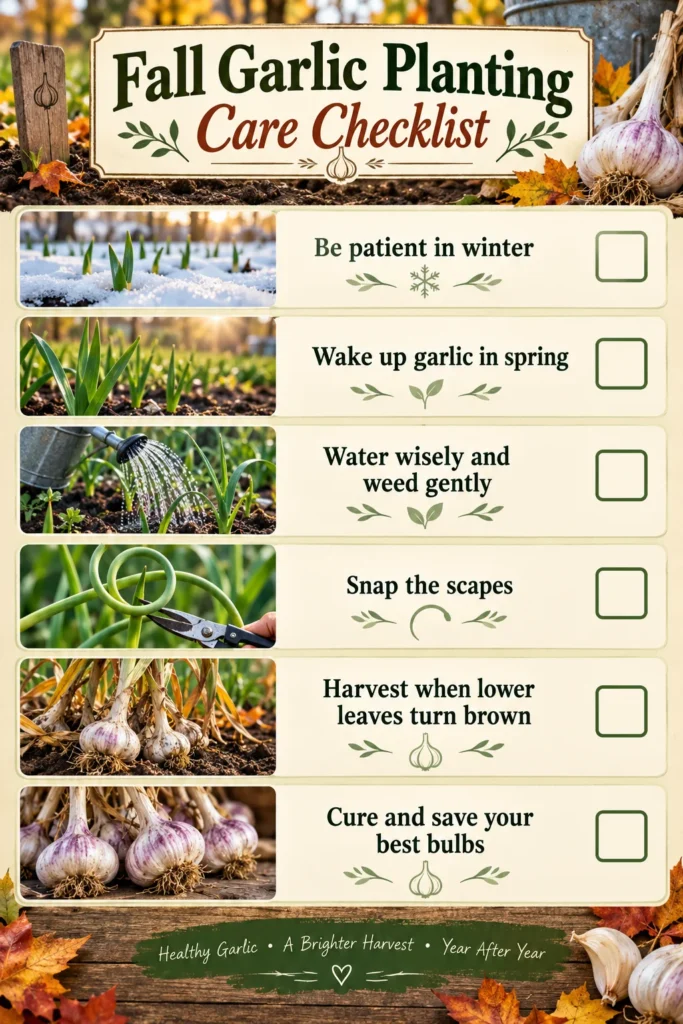
After mulching, your garlic sleeps. You may see a few green shoots in winter, and that is normal. Do not panic and do not dig. Cold weather will not hurt them if they have mulch. Resist the urge to check every day. If you followed the right plan for when to plant garlic in fall, then roots are busy working underground. Trust the process and let nature work.
26. Wake Up Your Garlic in Early Spring
When snow melts and new growth appears, pull the mulch back a little. This lets the soil warm, and the shoots breathe. Feed the bed with a gentle nitrogen fertilizer or fish emulsion. Do this once in early spring and once again a month later. Fast leafy growth in spring decides your bulb size, so give it good food. It is such a happy time.
27. Water Wisely and Weed Gently
Garlic likes about one inch of water each week during spring. Water deeply and not daily. Pull weeds by hand because garlic has shallow roots and cannot fight for food. Stop watering about two weeks before harvest so bulbs cure well in the ground. I keep a small watering can nearby and weed while sipping my morning tea. It becomes a peaceful habit. Healthy leaves mean a happy bulb.
28. Snap the Scapes in Early Summer
Hardneck garlic sends up curly flower stalks called scapes in early summer. Snap them off when they make one full curl. This sends energy down into the bulb. Best of all, scapes are delicious. Chop them into eggs or blend them into pesto. Every June I remember why learning when to plant garlic in fall was worth it. Two rewards from one plant. Kids love picking them too.
29. Harvest When the Lower Leaves Turn Brown
Your garlic is ready when the lower leaves turn brown, but five or six green leaves remain. This usually happens in July. Loosen the soil with a fork and lift the bulbs gently. Do not pull them by the stem. Dig one test bulb first. If the wrappers look thick and tight, then go ahead. Harvest time makes every wait feel worth it. Treat each bulb like an egg.
30. Cure and Save Your Best Bulbs for Next Fall
Hang your bulbs in a shady, airy spot for three to four weeks. Do not wash them. Once the skins turn papery, trim the roots and stems. Store them in a cool, dry place. Then set aside the biggest bulbs as seed for next year. Saving seed means you can repeat when to plant garlic in fall again, and your harvest only gets better.
Conclusion: When To Plant Garlic In Fall
Now you know the secret that I wish I had learned years ago. Timing is everything, and timing is simple when you watch the soil and the freeze date.
Remember that when to plant garlic in fall depends on your zone and your weather. Pick your weekend and buy seed garlic, and plant with joy.
Come spring, you will be pulling fat bulbs from the ground. Start small if you must because one row teaches plenty. Happy planting, my friend.
FAQs About When To Plant Garlic In Fall
1. Is it too late to plant garlic if I miss when to plant garlic in fall in my area?
No, it is not always too late. You can plant until the ground freezes solid. Add thick mulch and water well. Late garlic gives smaller bulbs, but you still get a tasty harvest. Plant as soon as you can.
2. What month is best for planting garlic in autumn in cold climates?
In cold climates, the best month is usually late September to October. Aim for four to six weeks before the ground freezes. This gives roots time to grow strong without making tall tops that the winter can burn.
3. How deep should fall garlic planting be for big bulbs?
Plant each clove about two inches deep with the pointy end up. In very cold areas, go three to four inches deep. Keep six inches between cloves and cover with mulch to protect them all winter.