Have you ever opened your closet to grab your favourite sweater, only to notice a small hole and tiny trails on the shelf?
That moment changes everything and becomes an urgent question to find how to get rid of tiny bugs in the closet.
Do you know these bugs work silently for weeks, sometimes months, before you notice a single sign? No noise, no bites, just slow damage to clothes.
The good news is you can stop them. This guide explains which bugs hide in closets, why they choose them, and how to get rid of them easily.
What Are These Tiny Bugs in Your Closet?
Before you can figure out how to get rid of tiny bugs in the closet spaces, you need to know exactly what you are dealing with.
Different types of insects love living in wardrobes and closets, and each one needs a slightly different approach to removal.
Here is a clear, simple guide to the most common wardrobe and closet bugs, what they look like, what they eat, and what signs they leave behind.
1. Clothes Moths (Tineola bisselliella)
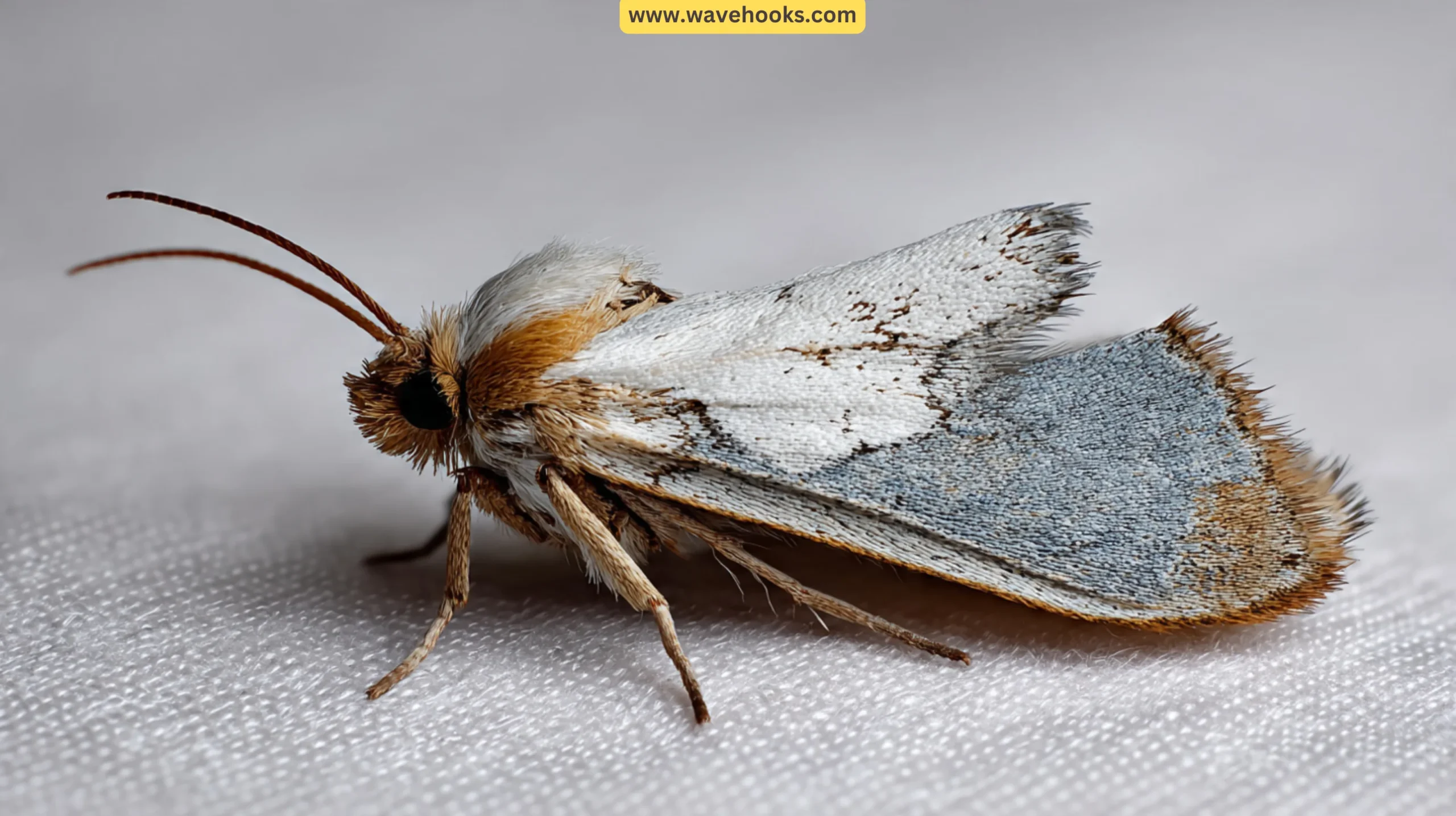
These are the most well-known closet invaders. They are small, golden-beige coloured moths about 6 to 8 millimetres long, roughly the size of a grain of rice.
But the adult moth is not your enemy. It is the larvae that eat your clothes. They love natural fibres like wool, silk, cashmere, and cotton.
Research from the University of Kentucky Extension confirms that clothes moth larvae can feed on fabric for weeks before you even notice them.
Also Read What Attracts Bed Bugs Into Your Home:15 Easy Ways To Stop!
2. Carpet Beetles (Anthrenus verbasci and related species)
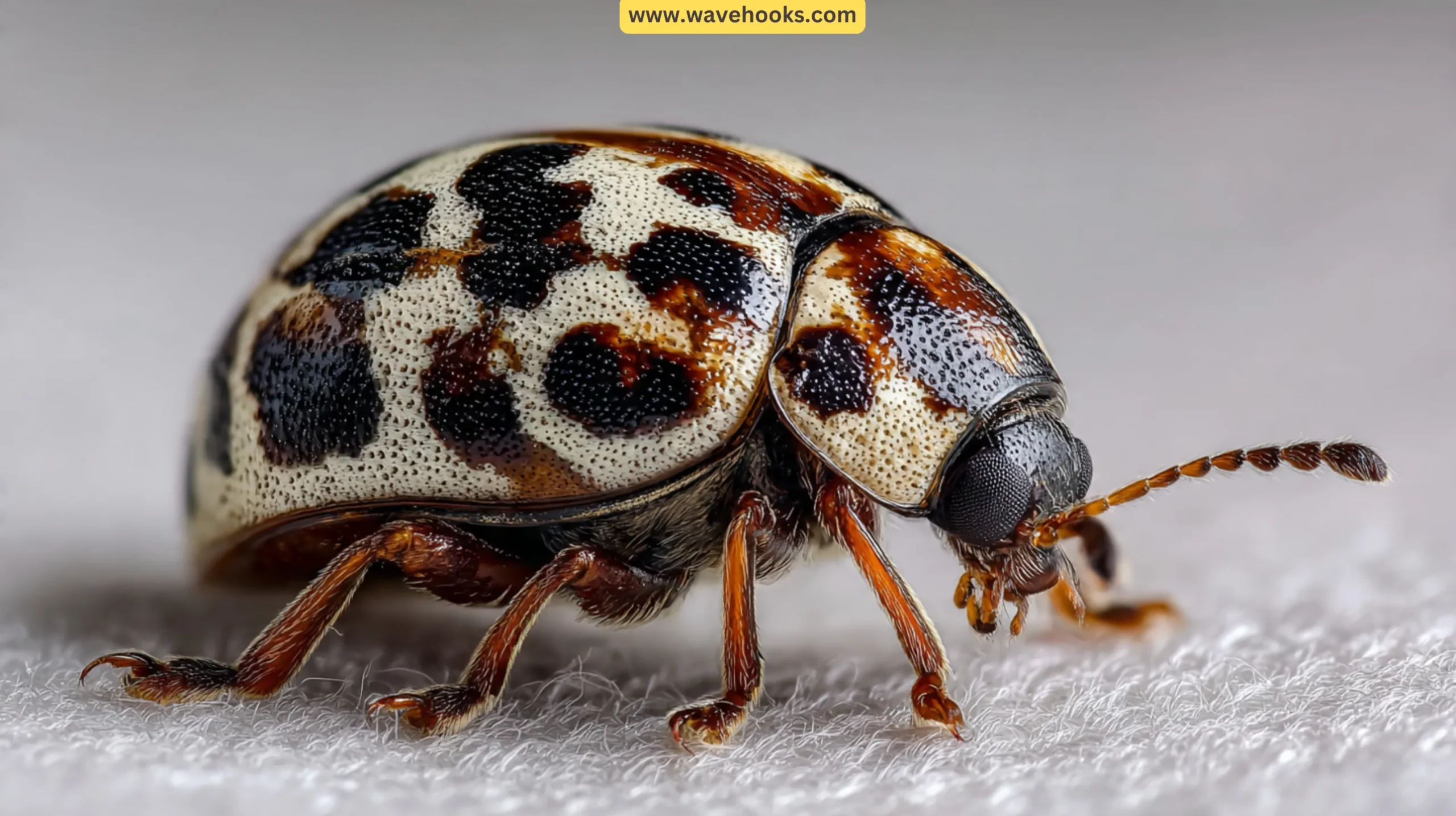
Carpet beetles are more common than clothes moths, but they are less well known. Their larvae are small, hairy caterpillar-like creatures about 4 to 5 millimetres long
Adult carpet beetles are tiny, only about 2 to 4 millimetres long, and look like small, rounded specks, with a patterned shell in white, brown, black, or orange markings.
They chew wool, leather, feathers, and even synthetic blends. They sneak in from outside through windows, flowers, or used furniture.
3. Silverfish (Lepisma saccharina)
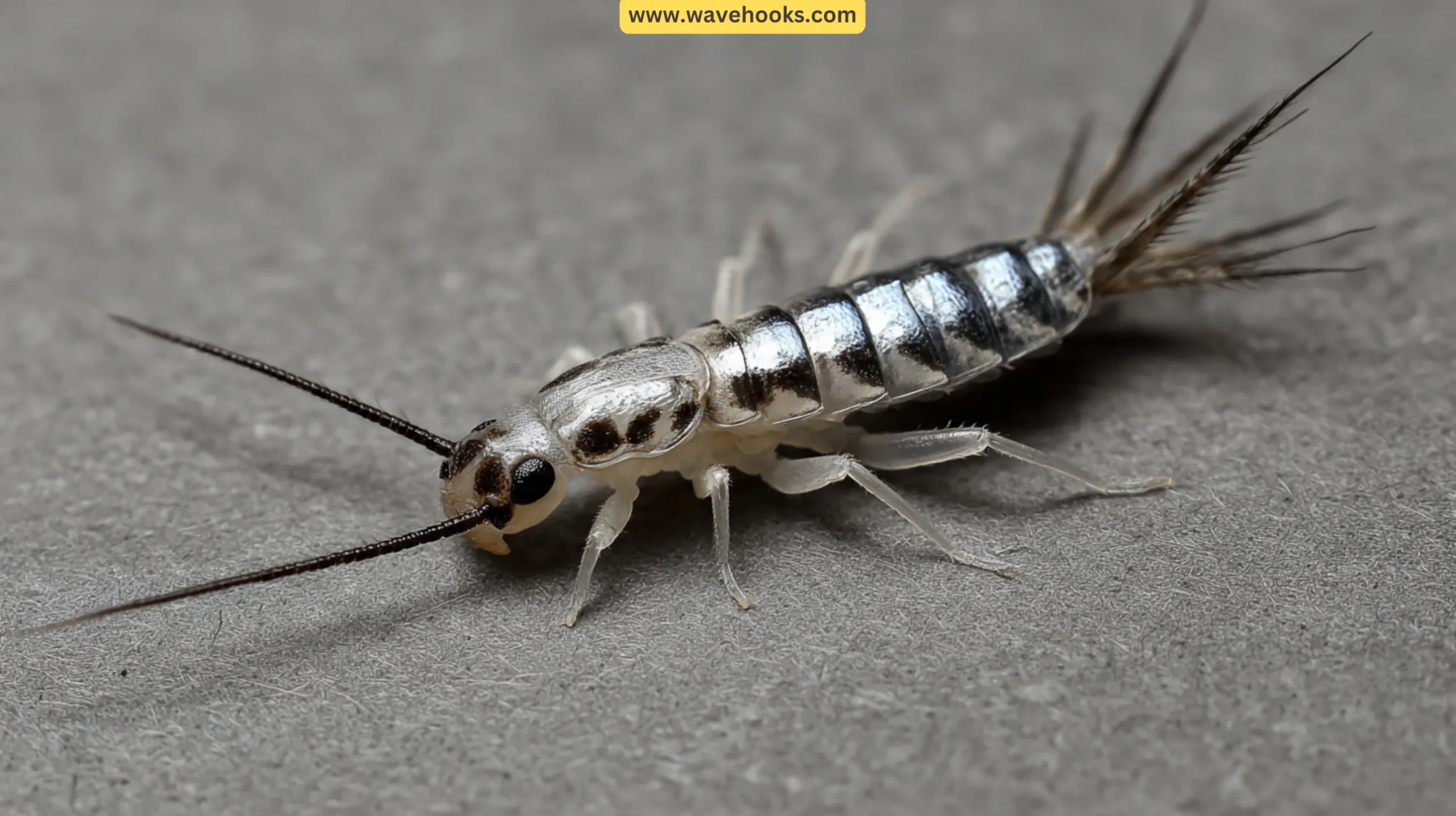
Silverfish are easy to recognise. They are silvery-grey, teardrop-shaped insects about 12 to 19 millimetres long, with three long tail bristles and two long antennae.
They move very fast in a wriggling, fish-like motion, which is exactly where they get their name.
They will eat paper, cardboard, and even the glue in book bindings. They are common in bathroom closets, basement wardrobes, and any area with high humidity.
Also Read Are Silverfish More Common In Summer? Here’s What I Found!
4. Psocids / Book Lice (Liposcelis species)
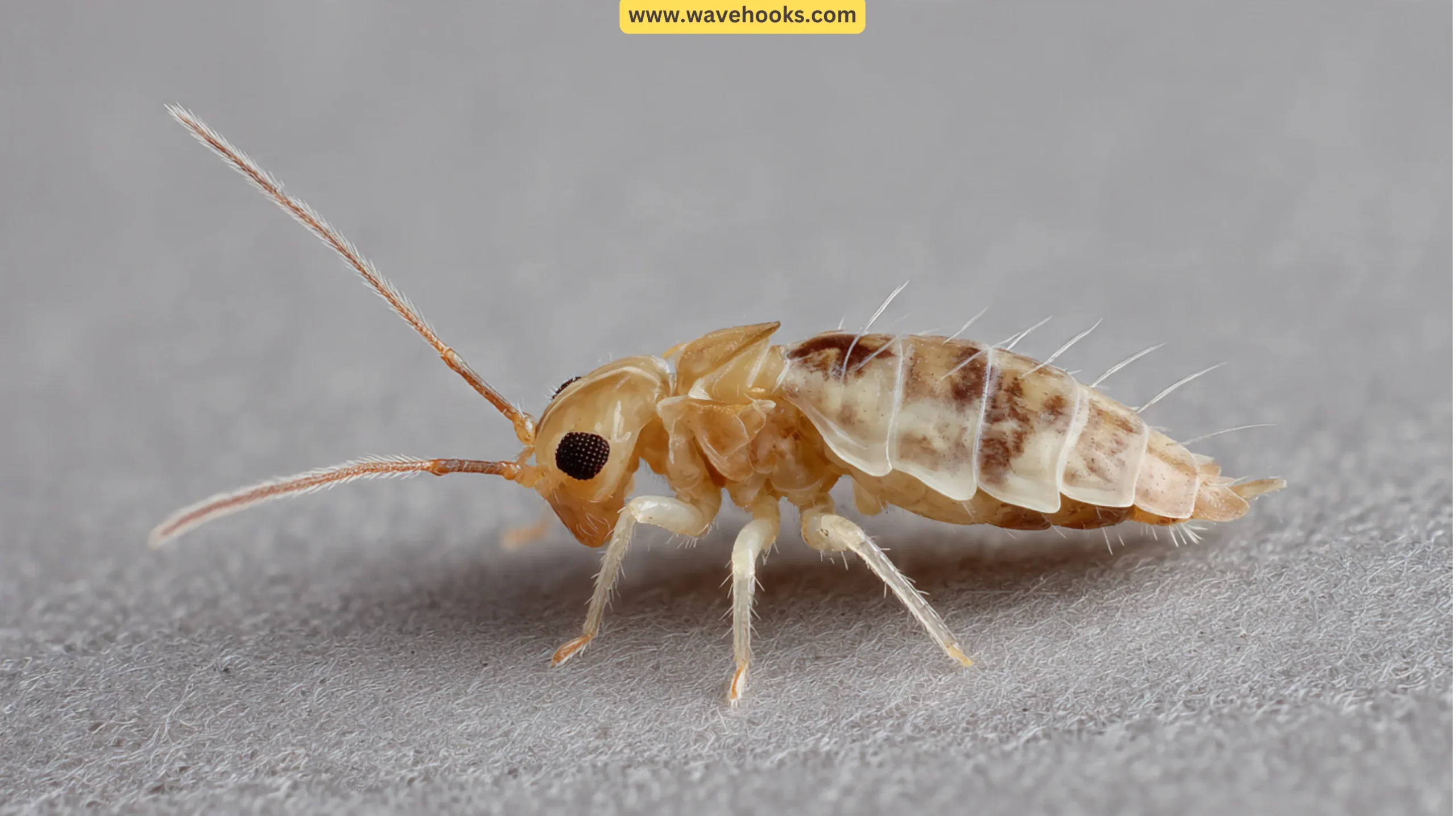
Psocids, commonly called book lice, are extremely tiny insects, only about 1 to 2 millimetres long.
They are pale, white, grey and invisible to the naked eye unless you look very closely. Many people notice them as a moving, dusty-looking mass on shelves or walls.
Psocids do not eat fabric directly. They feed on mould, mildew, and the microscopic fungi that grow in damp conditions.
5. Spider Beetles (Ptinus species)
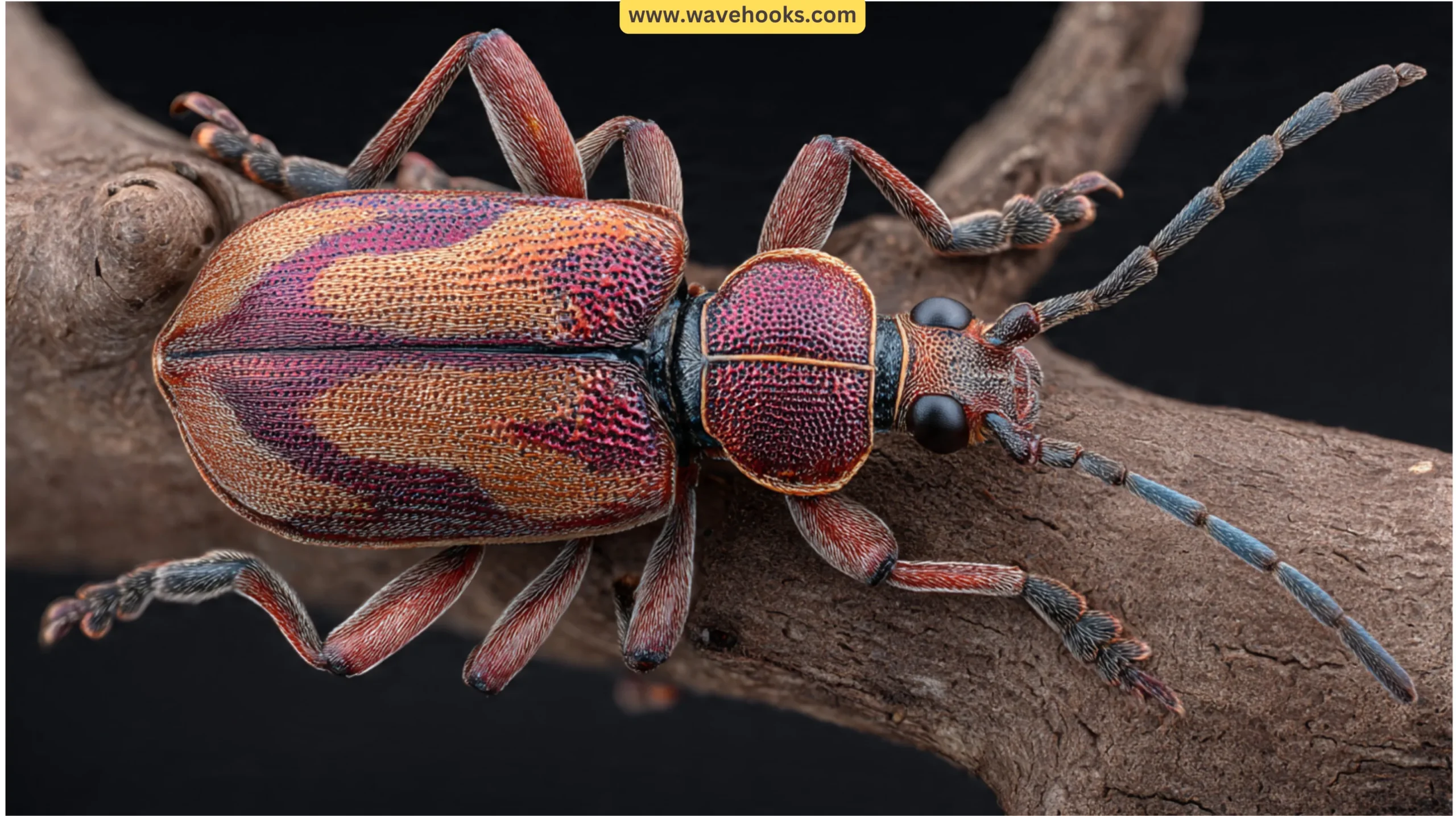
Spider beetles are small, round insects about 1 to 4 millimetres long that look like tiny spiders due to their long legs and rounded bodies.
They are reddish-brown to dark brown in colour. They eat Dried food, grain, wool, feathers, wood, and many stored natural materials.
We can notice them in dark, undisturbed closets, particularly those used to store old items, collected objects.
Also Read Does Vinegar Kill Spiders: Uncover 10 Real Surprising Facts!
6. Grain Mites (Tyrophagus species)
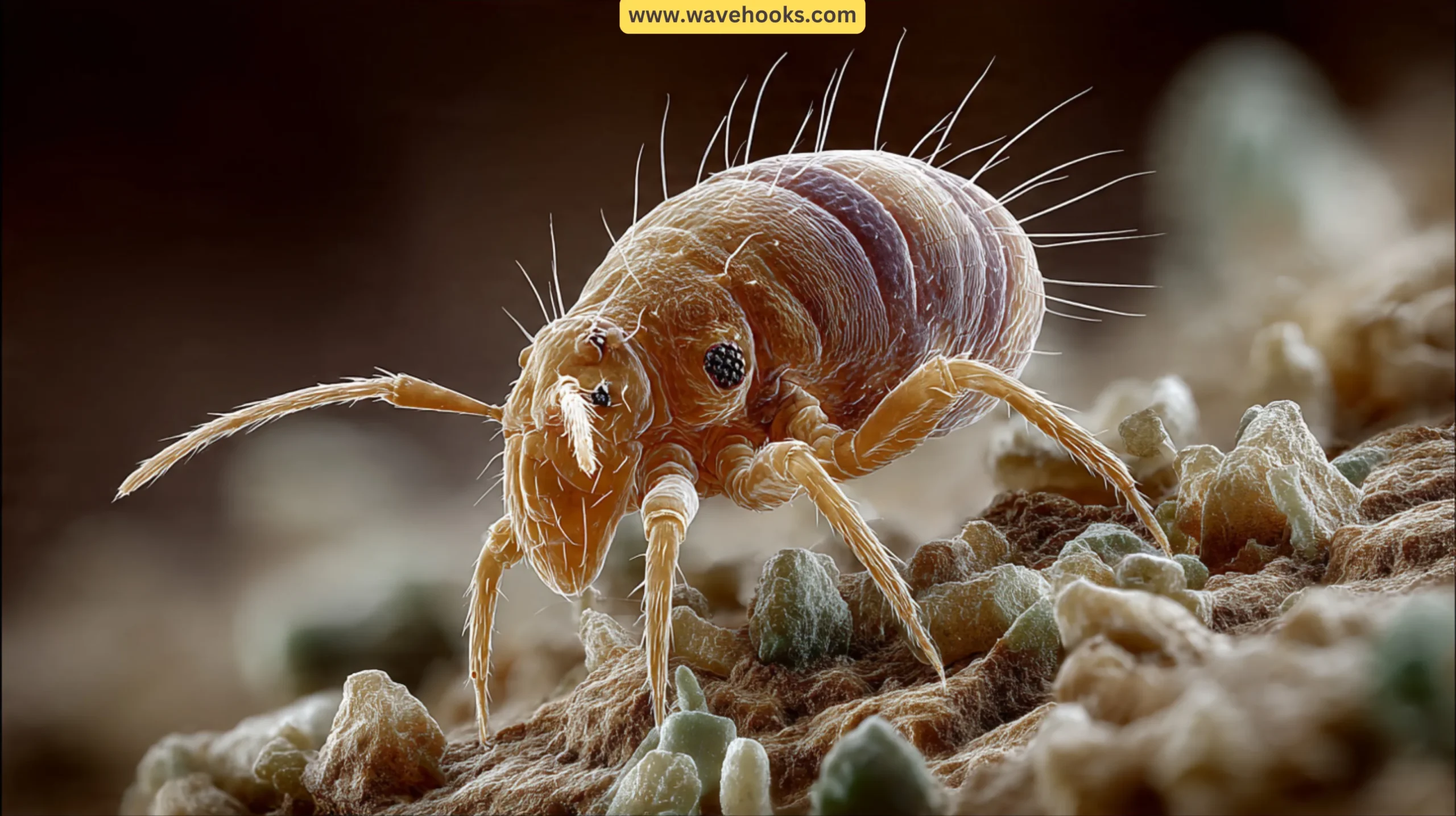
Grain mites are not insects. They are arachnids in the same family as spiders. They are microscopic and cannot be seen with the naked eye.
You might notice a fine whitish or brownish dusty layer on surfaces, which is actually a colony of thousands of mites. They eat mould, mildew, and stored food.
Some people develop skin irritation from contact with grain mite dust. They can also trigger allergies and asthma in sensitive individuals.
7. Cockroaches (Blattodea)
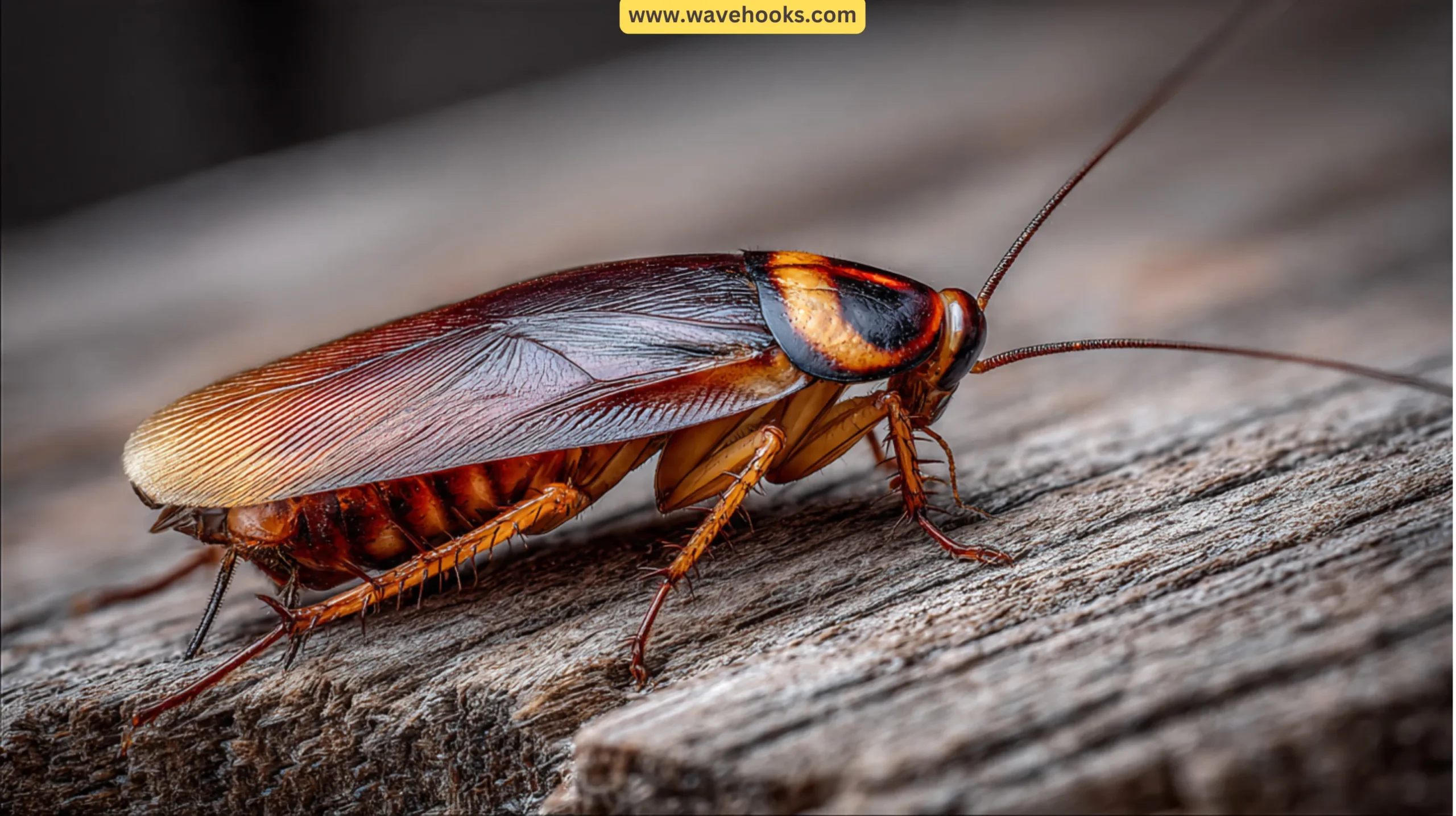
Cockroaches are highly visible insects, ranging from 1 to 4 inches in length depending on the species.
You might notice a strong, musty, oily odour in infested areas, along with dark droppings resembling coffee grounds or smear marks on walls and surfaces.
They feed on food scraps, grease, paper, and even glue. Some people develop skin rashes or respiratory issues with cockroach shed skins and droppings.
They are also known carriers of bacteria like Salmonella and can trigger allergies and asthma in sensitive individuals.
Also Read How To Keep Cockroaches Out Of Your Kitchen Drawers(12 Tips)
Understanding the Life Cycle
One of the biggest reasons people fail to fully solve how to get rid of tiny bugs in the closet infestations is that they only treat the insects they can see.
Understanding the full life cycle explains why this never works. Here you can get an idea regarding the problem:
Egg: Moth eggs are tiny white specks about the size of a pinhead and almost impossible to see without magnification. A single female moth can lay 40 to 50 eggs in her lifetime. The eggs hatch in just 4 to 10 days in warm conditions, meaning a new generation begins almost immediately.
Larva: This is the damaging stage. Moth larvae are small white caterpillars that feed continuously on natural fibres. Clothes moth larvae use a unique enzyme in their gut to digest keratin, the tough protein in wool and cashmere. Larvae can live for 2 to 30 months, depending on temperature and food availability.
Pupa: The larva forms a cocoon and transforms into an adult. This stage lasts 1 to 2 months and is particularly resistant to many treatments.
Adult: Adult moths live for only 2 to 3 weeks. They do not eat. Their only purpose is to mate and lay eggs. Female moths rarely fly and instead prefer to walk along fabric surfaces to lay their eggs in hidden spots.
At any given time, an infestation may contain all four life stages simultaneously. This is why freezing, hot washing, and thorough cleaning must all be used together, not just one method alone.
Research Fact: Research published in the Journal of Economic Entomology found that clothes moth larvae can survive in a dormant state for up to 30 months in cold, dry conditions. Simply removing food sources is never enough. You must actively kill all life stages through heat, cold, or insecticide treatment.
Why Do Tiny Bugs Come into Your Closet?
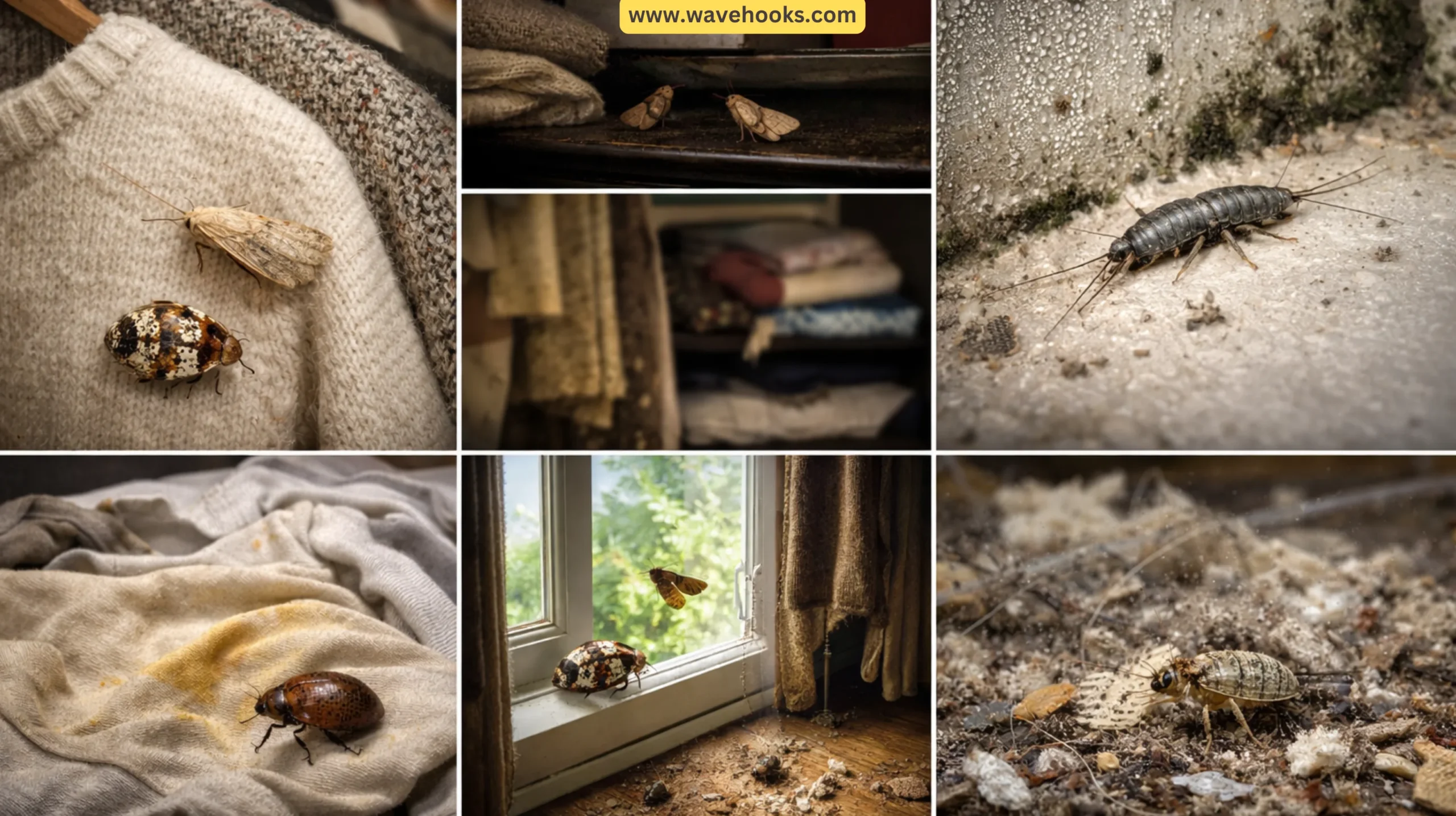
Understanding why and how to get rid of tiny bugs in the closet starts with understanding what attracts these pests.
If you remove the reasons they are attracted to your closet, you prevent them from ever coming back.
1. Natural Fibres Are Their Food: Clothes moths and carpet beetles are attracted to natural fibres because of the proteins they contain. If your wardrobe is full of natural fibre garments, you are essentially offering these insects a free buffet.
2. Darkness and Stillness: Almost all closet insects prefer dark, quiet, undisturbed environments. A closet that is rarely opened or has items that are never moved is ideal for insects to hide, breed, and go undetected for long periods.
3. Moisture and Humidity: Silverfish, psocids, and grain mites are directly attracted to moisture. A damp closet is not just a mould risk, but it is also an insect magnet. High humidity encourages these bugs to move in and breed rapidly.
4. Dirty or Unwashed Clothes: This is a big one that many people do not realise. These are more attracted to garments carrying human sweat, body oils, and food stains. Storing worn clothes without washing them is one of the biggest mistakes.
5. They Come in from Outside: Many closet insects, particularly carpet beetles and adult clothes moths, enter homes from outside. Carpet beetles commonly fly in through open windows and doors, attracted by flowers and pollen.
Important to Know: Clothes moth eggs are invisible to the naked eye. You can unknowingly bring them into your home on second-hand clothing or vintage items. Always wash or freeze second-hand clothing before putting it into your wardrobe.
6. Infrequent Cleaning: Closets that are not regularly cleaned, vacuumed, or aired out provide perfect undisturbed conditions for insects to thrive. Hair, dead skin cells, and dust build-up all provide extra food sources for closet pests.
Also Read 14 Natural Ways To Get Rid Of Carpenter Bees At Home
How to Tell Which Bug You Have
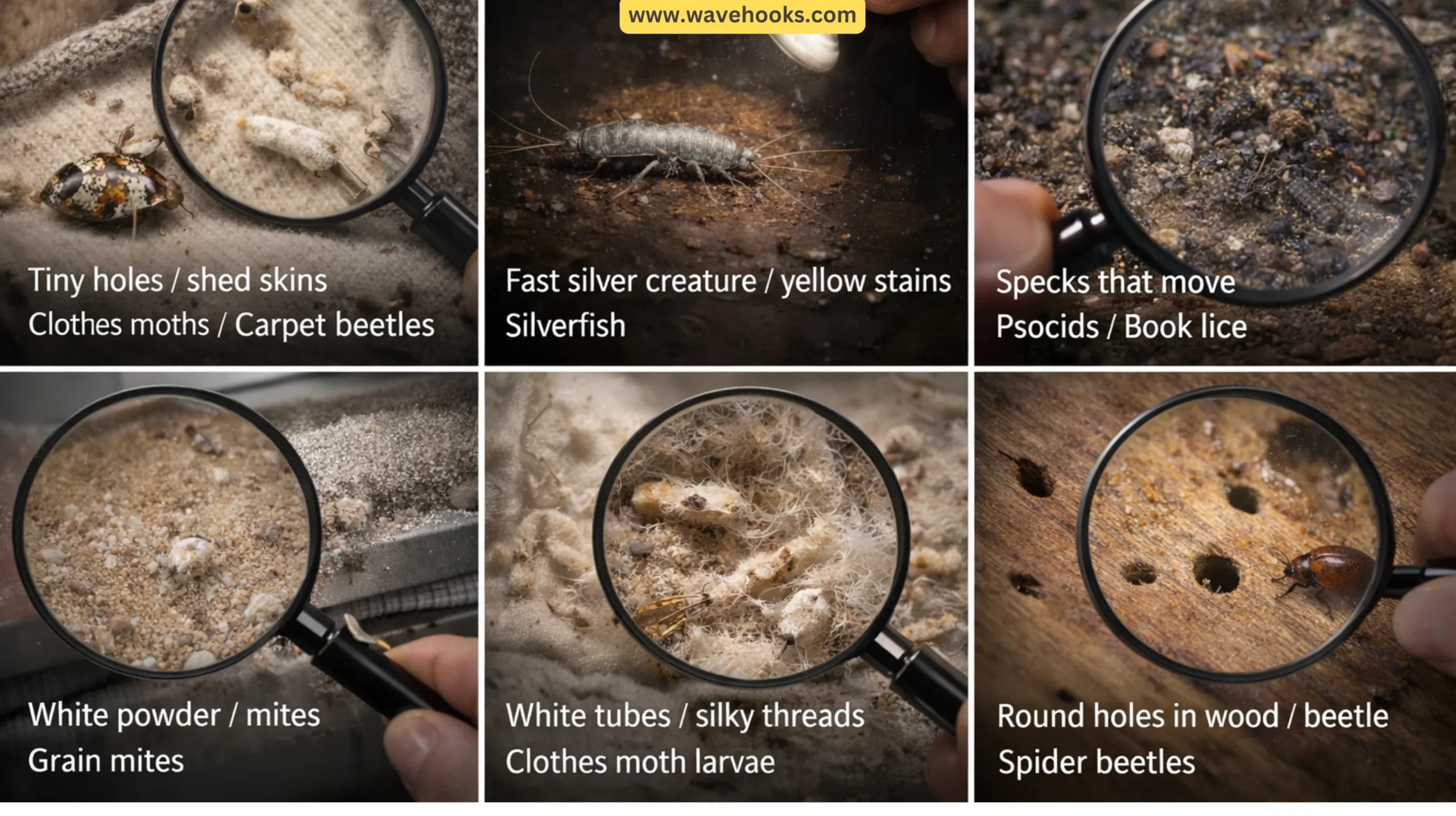
Before you apply any wardrobe insect solution, take a few minutes to identify which bug you are actually dealing with.
This will save you time and make your treatment far more effective. Here is a simple identification guide based on what you can see:
- Tiny holes in wool, cashmere, or silk clothes: Mostly clothes moths or carpet beetles. Check for silky webbing, which means moths, or straight-line damage and shed skins, which means carpet beetles.
- Fast-moving silver creatures at night: Check for yellow stains on paper and fabric nearby.
- Specks that look like dust but are moving: Psocids or book lice. Check humidity levels in your closet. It is too damp.
- A fine white or beige powder on shelves: Could be grain mites or powdery faeces left by beetle larvae. Look closely with a magnifying glass for movement.
- Small whitish tubes or silky threads on fabric: These are larval cases made by clothes moth caterpillars. This is a strong sign of active moth infestation.
- A dusty, grainy residue and round holes in wood: Spider beetles. Check for the small, round spider-like insects hiding in crevices.
- A musty odour, dark droppings and smear marks along walls: Cockroaches. Check for the flat, oval-shaped insects hiding in warm, dark crevices like behind appliances, under sinks, and inside cabinet hinges.
Helpful Tool: A magnifying glass and a small torch are your best friends when inspecting for closet insects. Shine the light into dark corners, under shelves, and along the floor. Many of these insects are tiny enough to be almost invisible without magnification.
Also Read Can Bed Bugs Live in Leather Couches? You’ll Be Shocked!
How to Get Rid of Tiny Bugs in the Closet: Step-by-Step Guide
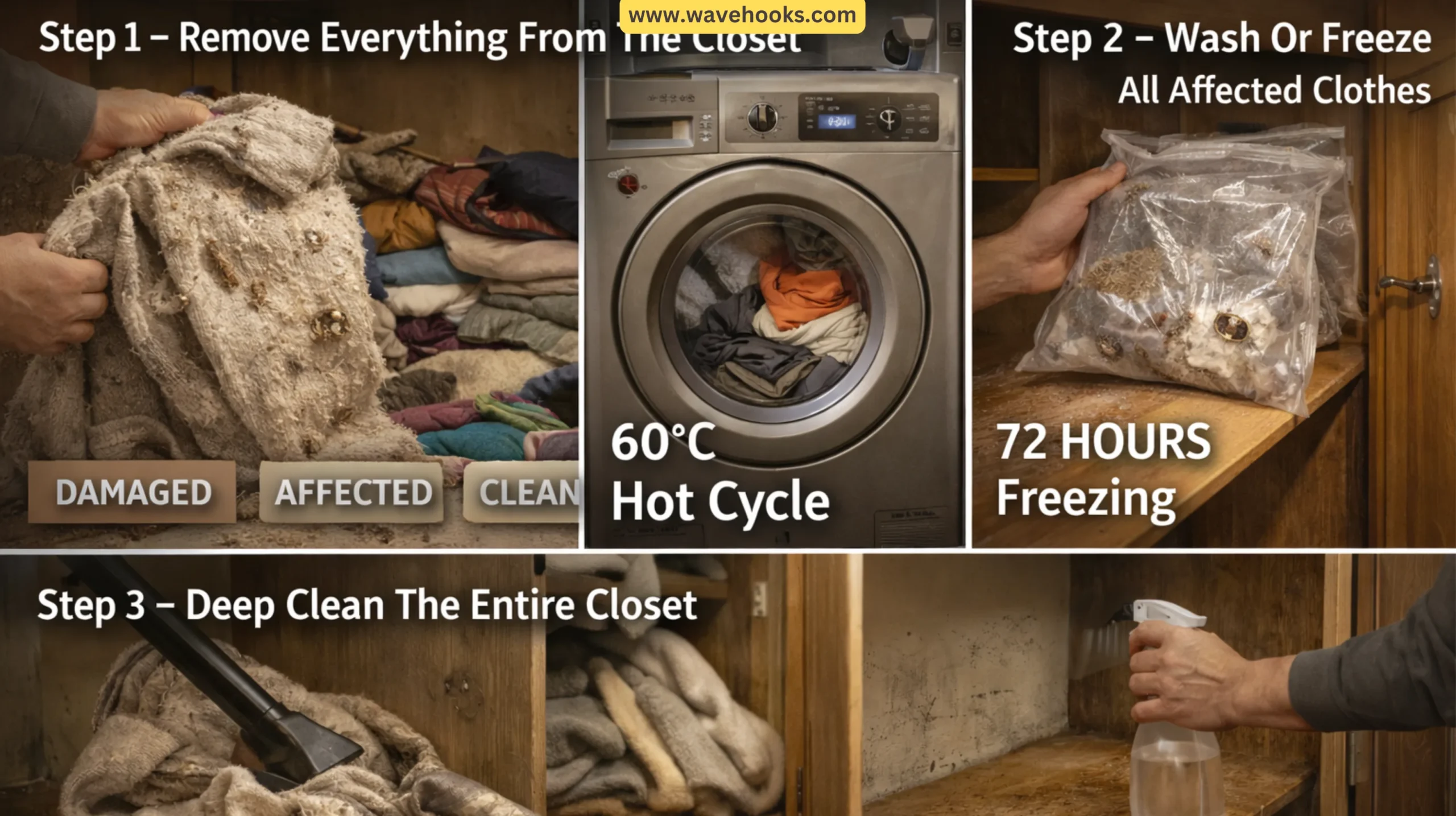
Here is exactly how to get rid of tiny bugs in the closet spaces, step by step, that anyone can follow.
Step 1 — Remove Everything from the Closet
Remove items, inspect each one carefully. Look for holes, webbing, larvae, shed skins, or any other signs of insect damage.
Sort items into three piles: damaged, affected, and looks completely clean. This helps you decide what needs treatment and what can go directly back in after cleaning.
Step 2 — Wash or Freeze All Affected Clothes
Once you have found affected clothing, you need to kill eggs, larvae, or live insects on the garments. You have two main options:
- Washing (Hot Cycle): Wash affected clothes at 60 degrees Celsius or higher if the fabric allows. This temperature kills all stages of moth and carpet beetle, including eggs, larvae, and adults. For delicate items that cannot handle high heat, use the freezing method below.
- Freezing Method: Place the affected garment in a sealed plastic bag, squeeze out all the air, and put it in your freezer for at least 72 hours at minus 18 degrees Celsius or colder. This method is completely safe for delicate wools, cashmere, silks, and even vintage items that cannot be washed.
- Dry Clean Only Items: Take them to a professional dry cleaner and specifically mention that you suspect moth or beetle damage. Dry cleaning kills all insect life stages.
Research Fact
A study by the University of California Division of Agriculture and Natural Resources confirmed that the freezing method is 100% effective at killing clothes moth larvae and eggs when maintained at −18°C (0°F) for a minimum of 72 hours. This method is completely safe for all fabric types, including the most delicate materials.
Step 3 — Deep Clean the Entire Closet
With everything out, now clean every part of the closet thoroughly:
- Vacuum Every Surface: Use the crevice attachment on your vacuum cleaner to reach every corner, crack, and crevice on the floor, walls, ceiling, shelves, and joins between surfaces. After vacuuming, immediately empty the vacuum bag into a sealed bag and throw it outside.
- Wipe Down All Surfaces: Mix equal parts white vinegar and water in a spray bottle. Wipe down every shelf, wall, and corner with this solution. White vinegar kills many insect eggs and larvae on contact, and its acidic nature also neutralises odours. Let everything dry completely before continuing.
- Pay Attention to Cracks and Joins: Insect eggs are usually laid in the joints between shelves and walls, in small cracks in wooden shelving, and along the edges where the floor meets the wall. Use a stiff brush or toothbrush to scrub these areas before vacuuming.
- Clean the Door Seals and Hinges: These are spots that many people forget. Moths and beetles can hide and lay eggs in these small, overlooked crevices.
Step 4 — Use Natural Repellents Inside the Closet

After cleaning, place natural repellents throughout the closet. These discourage insects from returning and are completely safe for your clothes and family:
- Cedar Products: Cedar wood contains natural oils called thujaplicins and cedrol that are toxic to moth larvae and repel adult moths and carpet beetles. Cedar blocks, balls, hangers, and sachets are all effective. Sand them lightly every six months to refresh the scent as the oils naturally fade over time.
- Lavender Sachets: Dried lavender flowers have been used for centuries to repel moths. The strong scent confuses and deters adult moths from landing on fabric to lay eggs. Place dried lavender in small fabric pouches and hang them throughout your closet.
- Dried Rosemary, Cloves, and Thyme: These strongly scented herbs all act as natural moth repellents. A small muslin bag filled with a mixture of these dried herbs is an excellent natural wardrobe insect solution. Replace every three to four months when the scent fades.
- Peppermint Oil: A few drops of peppermint essential oil on a cotton ball placed on a shelf acts as an effective repellent for silverfish and moths alike. The strong menthol scent overwhelms their sensory receptors and makes your closet an unwelcoming environment.
- Eucalyptus Leaves or Oil: Eucalyptus is particularly effective against silverfish. Place dried eucalyptus leaves or cotton balls with a few drops of eucalyptus oil in the corners of your closet.
- Diatomaceous Earth (Food Grade): This is one of the most powerful, completely natural and effective insect solutions. Sprinkle a thin layer along the floor edges, in corners, and along the back of shelves. Always use food-grade diatomaceous earth. When an insect walks through it, it will damage their protective outer coating, causing them to dehydrate and die.
Also Read 16 Top Effective Mosquito Repellent Plants Safe For Dogs!
Step 5 — Use Moth Traps
Moth traps are one of the most reliable tools for both monitoring and controlling clothes moth infestations.
They tell you whether moths are still present after treatment, and they reduce the population by catching adult males, which prevents mating and egg-laying.
Place one or two traps inside your closet after cleaning. Check them every two weeks. If you are still noticing after four to six weeks, repeat the process.
Important Note: Moth traps catch adult male moths, but they do not catch larvae, which are the ones causing the damage. Always use traps as part of a complete treatment plan, not as a standalone solution.
Step 6 — Consider Insecticide Treatments for Severe Infestations
If natural methods are not enough, targeted insecticide products can be used as a last alternative:
- Permethrin-based sprays: Very effective against clothes moths, carpet beetles, and silverfish. Spray on the walls, floor, and shelves of your empty closet and allow it to dry completely before replacing your clothes.
- Insecticidal aerosols: Provide quick knockdown of visible insects and coat surfaces with a residual insecticide that continues working for several weeks.
- Moth-killing strips or units: Slowly release insecticide vapour inside a closed closet, killing insects over a period of weeks without direct contact.
⚠️ Safety Warning
Always read the product label carefully before use. Keep children and pets away from the treated area until it is completely dry. Never apply insecticide directly to clothing, bedding, or other fabrics. Insecticides should only be considered after natural and non-toxic methods have been tried first, and they should always be used according to the manufacturer’s instructions.
Step 7 — Put Everything Back Properly
Once the closet is clean, treated, dry, and protected with repellents, replace your belongings the right way:
- Only put back clean, dry, completely insect-free items.
- Use cloth garment bags or breathable wardrobe bags for suits, dresses, and coats.
- Store woollens and cashmere in sealed airtight storage boxes with cedar blocks inside during off-season months.
- Never put damp or worn, unwashed items back into the closet.
- Leave a little space between hanging garments. Packed-together clothes create hidden, undisturbed areas that insects love.
Also Read How To Declutter Your Home In 15 Minutes A Day: 10 Expert Tips!
The Best Wardrobe Insect Solution for Each Type of Bug
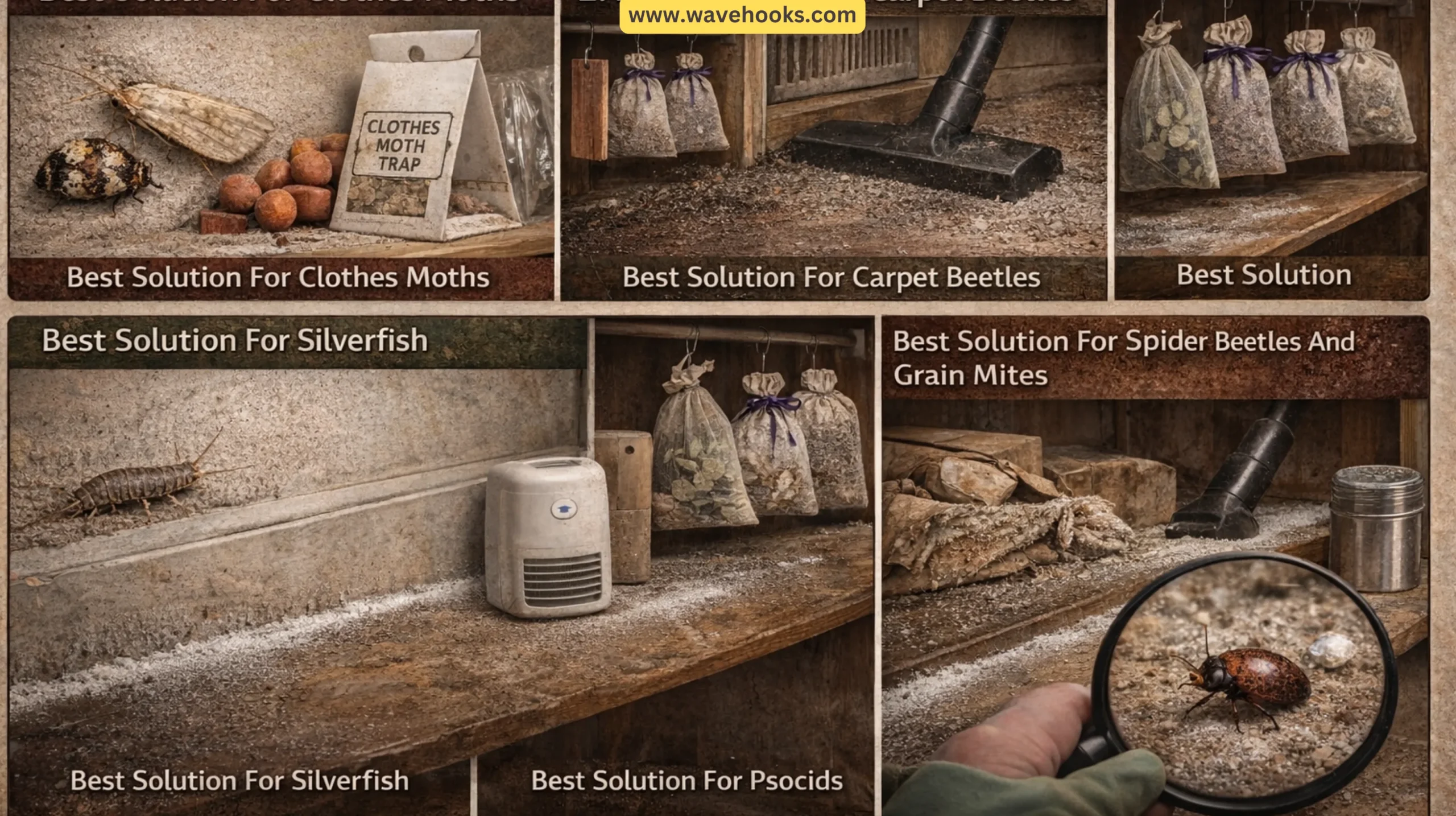
Different insects respond better to different treatments. Here is the best wardrobe insect solution for each specific pest:
1. Best Solution for Clothes Moths
- Freeze or hot-wash all affected clothes immediately.
- Deep clean with white vinegar solution, paying attention to dark corners.
- Use pheromone moth traps to monitor and catch adult males.
- Place cedar products and lavender sachets throughout the closet.
- Store natural fibre garments in sealed airtight bags during the off-season.
- Never store unwashed woollens. Always wash before long-term storage
Also Read: 30 Expert Ways On How To Get Rid Of Moths In Your Home!
2. Best Solution for Carpet Beetles
- Vacuum thoroughly, carpet beetle larvae hide deep in fibres and crevices.
- Wash affected items at 60°C or freeze for 72 hours minimum.
- Check and clean air vents, skirting boards, and under nearby furniture.
- Seal gaps where they enter from outside around windows and vents.
- Cedar and lavender repellents help deter adults from entering.
- For persistent infestations, a permethrin-based spray on closet surfaces is very effective
Also Check: 14 Natural Ways To Get Rid Of Carpenter Bees At Home
3. Best Solution for Silverfish
- Reduce humidity. This is the single most important step. Use a dehumidifier or improve ventilation.
- Seal any damp areas or water leaks nearby.
- Place peppermint oil cotton balls, cedar products, or eucalyptus sachets throughout the closet.
- Silverfish sticky traps placed along walls are effective for monitoring and catching them.
- Diatomaceous earth sprinkled along closet floor edges is highly effective and completely natural.
4. Best Solution for Psocids / Book Lice
- The primary solution is moisture control by fixing leaks, improving ventilation, and using a dehumidifier.
- Throw away infested cardboard boxes, as they cannot be properly cleaned.
- Clean all surfaces with white vinegar to kill the mould they feed on.
- Leave the closet open and well-ventilated until the humidity drops below 60%.
- Psocids will disappear on their own once the moisture and mould problem is fully resolved.
5. Best Solution for Spider Beetles and Grain Mites
- Discard any infested stored items, including food, dried materials, and old natural objects.
- Vacuum thoroughly and wipe down all surfaces with a white vinegar solution.
- Diatomaceous earth sprinkled on shelves is very effective against both.
- Fix humidity issues, as both pests strongly prefer damp conditions.
Read More 30 Expert Ways On How To Get Rid Of Moths In Your Home!
6. Best Solution For Cockroaches in Closets
- Remove everything and vacuum all surfaces, paying close attention to corners, cracks, and joins.
- Wipe all surfaces with a white vinegar and water solution.
- Place cockroach gel bait or boric acid powder along the floor edges and behind shelves.
- Diatomaceous earth sprinkled in corners is a highly effective and completely natural treatment.
- Reduce moisture by improving ventilation or placing silica gel packs on shelves
Also Read How To Get Rid Of German Cockroaches: 12 Powerful Methods!
How to Prevent Tiny Bugs in the Closet from Ever Coming Back
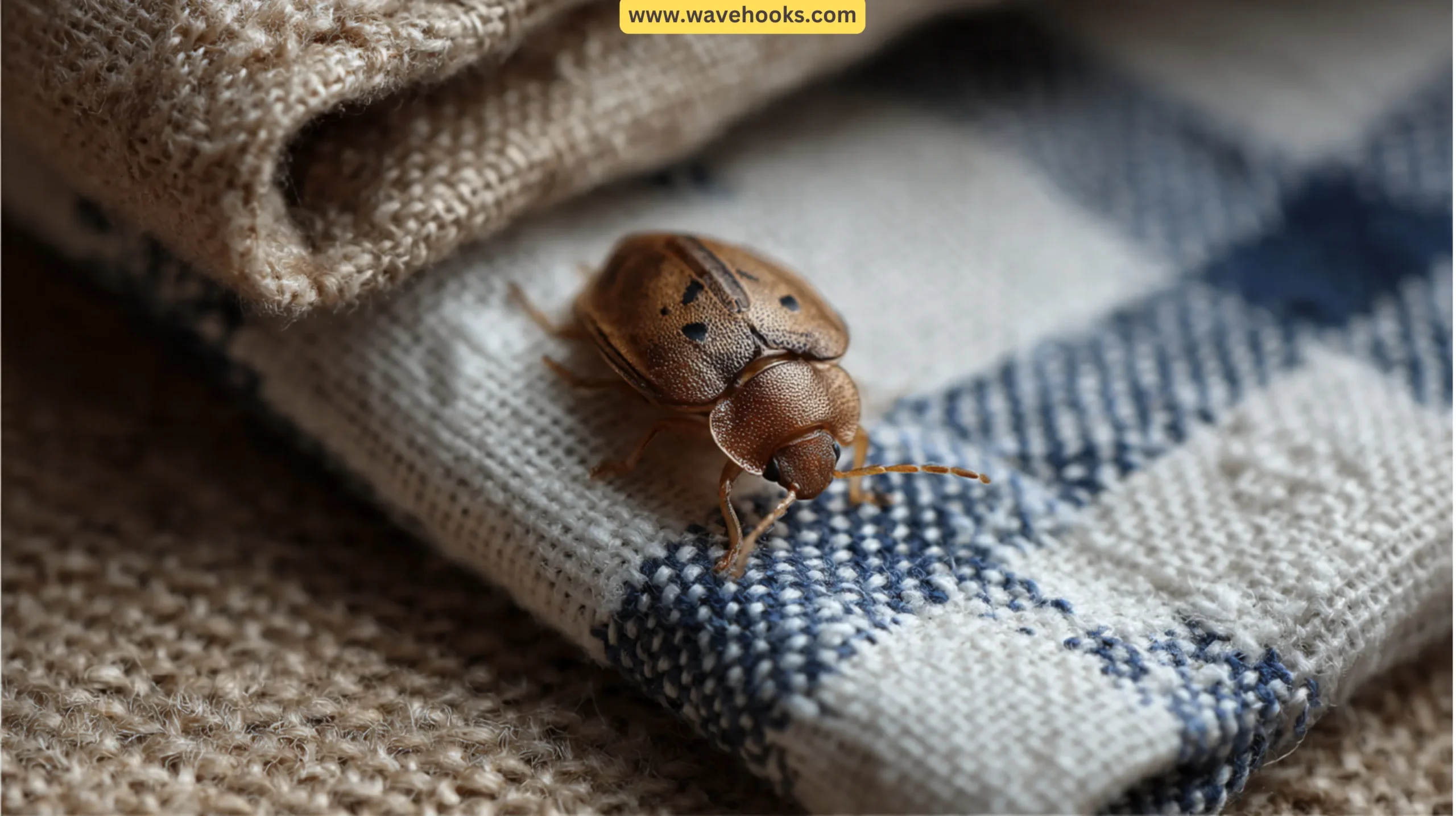
Knowing how to get rid of tiny bugs in the closet spaces is important, but making sure they never come back is even better.
Here are the most effective prevention strategies anyone can follow:
1. Always Wash Clothes Before Storing: Never put worn, dirty, or body-odour-scented clothes into long-term storage without washing them first. Research confirms moth and carpet beetle females are strongly attracted to proteins and oils left on worn garments. A clean garment is a far less attractive target.
2. Store Natural Fibres in Sealed Containers: For valuable woollens, cashmere, silk, and fur items, use airtight storage boxes, vacuum storage bags, or sealed plastic containers. Moths and carpet beetles cannot get into a properly sealed container. Add a cedar block or lavender sachet inside each container for extra protection.
3. Inspect and Quarantine Second-Hand Items: Before bringing any second-hand clothes, vintage items, antiques, or donated goods into your home, inspect them carefully. Look for holes, webbing, shed skins, or live insects. Better still, freeze everything for 72 hours before it goes anywhere near your closet.
4. Vacuum and Air Out Your Closet Regularly: Vacuum your closet at least once a month, including the floor, corners, and shelves. Move clothes and check. Leaving the closet door open for a few hours each week also helps, as insects prefer the still, stale air of a sealed, undisturbed space.
5. Keep Humidity Under Control: A dry closet is an insect-unfriendly closet. Silverfish, psocids, and grain mites cannot survive in low-humidity environments. Keep indoor humidity below 60% using a dehumidifier, good ventilation, or moisture-absorbing products like silica gel packs or activated charcoal bags placed on closet shelves.
6. Use Ongoing Repellents: Keep cedar blocks, lavender sachets, or dried herb mixtures in your closet at all times as an ongoing deterrent. Refresh them every three to four months by sanding cedar and replacing dried herbs.
7. Check Your Closet Every Season: Four times a year, once per season, do a thorough inspection of your entire closet. Take everything out, look for any signs of insect activity, vacuum thoroughly, and put everything back neatly. This regular habit catches problems early and keeps your closet in perfect condition all year round.
Also Read How To Get Rid Of Boxelder Bugs: 24 Hacks For Bug-Free Home!
Conclusion
How to Get Rid of Tiny Bugs in The Closet spaces is completely solvable, and now you have everything you need to do it.
You know which bugs to look for, why they appear, and exactly how to remove them using proven steps and safe natural remedies.
Wash before storing, keep your closet dry, use natural repellents, and inspect regularly. These simple habits protect your clothes permanently.
Your wardrobe deserves better. Start today, your favourite clothes are counting on you.
Frequently Asked Questions: How to Get Rid of Tiny Bugs in The Closet
1. How can I tell the difference between clothes moth damage and carpet beetle damage?
Clothes moth damage appears as irregular, ragged holes clustered in one area, usually with silky webbing or tiny white larval tubes nearby. Carpet beetle damage looks different, with long, narrow streaks or lines across the fabric with bristly shed skins nearby. Silk webbing means moths. Bristly shed skins mean carpet beetles.
2. Are these bugs dangerous to my health?
Most common closet bugs do not bite or carry disease. However, carpet beetle larvae can cause skin irritation and allergic rashes in sensitive people. Grain mites can trigger sneezing and asthma symptoms. Psocids are harmless but signal a mould problem that can affect breathing over time.
3. I treated my closet, but the bugs came back. Why?
The most common reasons are surviving eggs that were not frozen or hot-washed. Treat all life stages, monitor with moth traps for six weeks, and always inspect every new item before placing it in your wardrobe.
Also Read How To Get Rid Of Silverfish: 19 Surefire Tips To Deal Them!
Do House Plants Attract Bugs? The Surprising Truth Revealed!