Last winter I woke up early and heard a strange crunch under my shoes. The grass was white, and my favorite basil was lying flat.
I stood there feeling helpless. That morning I promised myself I would learn how to protect plants from frost.
Since then, I have tested many tricks in my backyard, and some of them shocked me. Ready to see which ones worked?
Keep reading because how to protect plants from frost is easier than you think.
How to Protect Plants from Freezing Before the Cold Arrives
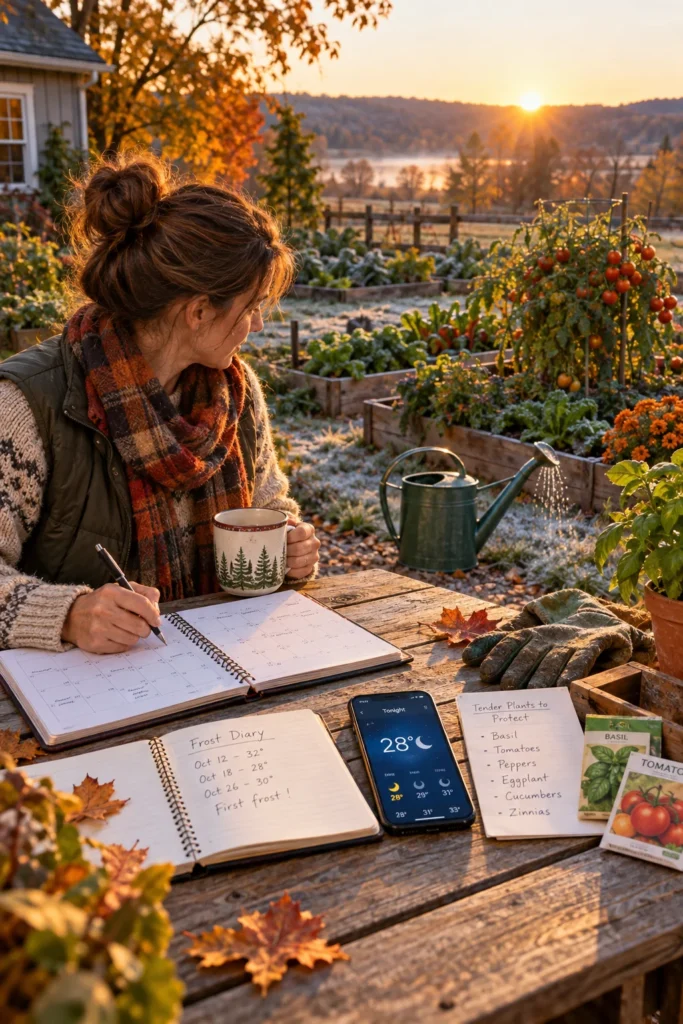
Smart planning is the first step in how to protect plants from frost, so let us start with these habits.
1. Learn Your First Frost Date Before It Surprises You
Every area has an average date when the first frost shows up. Search for your local date online or ask a neighbor who loves gardening. Write it on your calendar and set a reminder two weeks before. I did this last year and felt so calm because I never got caught by surprise. Knowing the date gives you time to gather covers and plan with ease.
2. Check the Night Weather Every Evening
Daytime can feel warm while the night drops fast. Check the weather app every evening in the cold season and look at the lowest night temperature. If it says thirty-two degrees Fahrenheit or zero Celsius, then act that same day. I keep the forecast on my phone so I never forget. This habit is the basis of how to protect plants from frost, and it takes ten seconds.
3. Find Out Which of Your Plants Are Tender
Not every plant fears frost the same way. Kale and carrots shrug it off while tomatoes and basil turn to mush. Make a short list of your tender plants and keep it near the door. When a cold night is coming, you will know exactly who needs help first. Small steps feel great. This is a big part of how to protect plants from frost without wasting effort.
4. Walk Your Garden to Find the Cold Spots
Walk around your garden at sunrise on a chilly day and feel the air. You will notice some spots are colder than others. Low areas collect cold air like a bowl holds water. Mark these spots with a stick. Keep your most delicate plants away from them and place hardy ones there instead. This little walk shows how to protect plants from frost better than any book.
5. Keep a Little Frost Diary in Your Kitchen
Grab an old notebook and write the date and the lowest temperature each cold night. Also note which plants got hurt and which stayed fine. After one season, you will have a personal guide made just for your garden. I laughed at this idea first, but now I treat my diary like treasure. It gives you real facts instead of guesses. Try it once, and you will love it.
6. Give the Soil a Deep Drink in the Afternoon
Here is a surprising trick. Moist soil holds heat better than dry soil. So on the afternoon before a freezing night, give your beds a gentle deep drink. The soil stores warmth during the day and slowly lets it out at night. Do not water at night, though, because wet leaves can freeze. Afternoon watering is simple and costs almost nothing. Your plants will feel the difference by morning.
How to Cover Plants for Frost the Right Way
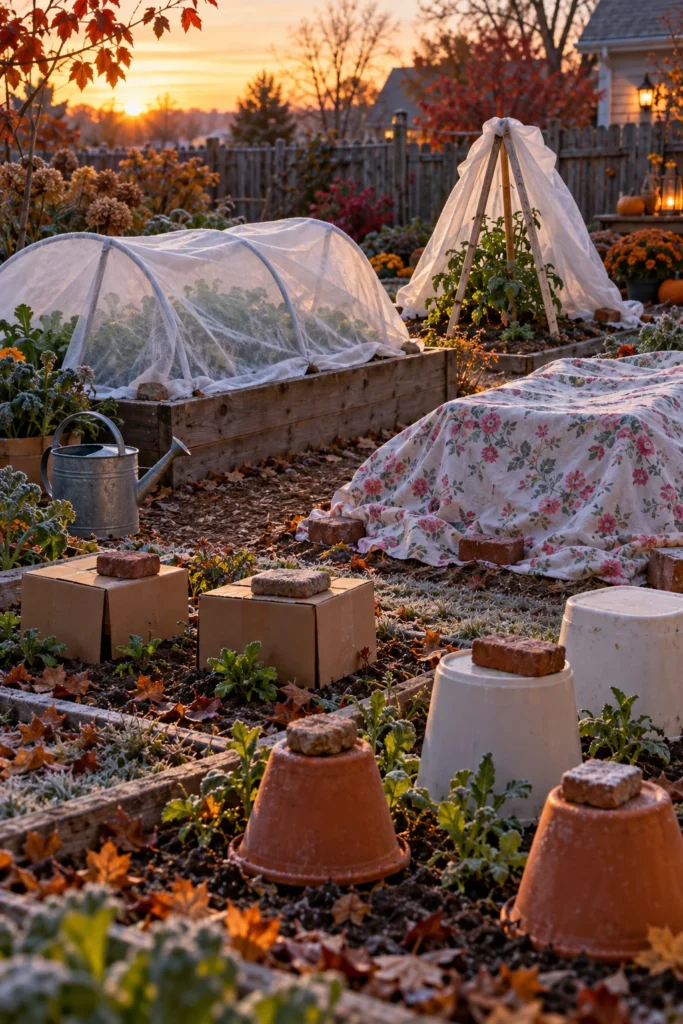
Covers are the heart of how to protect plants from frost, so here are six ways to use them well.
7. Buy a Roll of Frost Cloth Once and Use It Forever
Frost cloth is a light fabric made for cold nights. It lets air and water pass through while holding warmth in. Drape it over your plants in the evening and keep it loose. Buy a thicker one for very cold nights. I bought one roll three years ago and still use it. It folds small and stores easily in a drawer. Your plants will sleep safe and sound.
8. Use Old Bedsheets and Blankets for One Cold Night
No money for fancy covers? Use what you already have. Old bedsheets and thin blankets work really well for one night. Throw them over your plants just before sunset so they trap the warmth from the ground. Avoid heavy wet blankets because they crush stems. Pin the edges with rocks or bricks. I saved my roses with a faded flower sheet once. Nobody will mind a funny-looking garden.
9. Cover Small Seedlings with Cardboard Boxes
Here is how to protect plants from frost when you have small seedlings. Place a strong cardboard box upside down over each one. The box blocks cold air and keeps a little warmth inside. Add a brick on top so wind cannot blow it away. Remove the box in the morning so the plant gets sunlight. It is cheap and takes only a minute. Tiny seedlings feel safe.
10. Turn Buckets and Flower Pots into Tiny Houses
Empty buckets and flower pots are hiding in every garden shed. Turn them upside down over young plants and shrubs. They act like tiny houses. Block any drain holes with a stone so the cold air cannot sneak in. Take them off after sunrise. I once covered my whole herb corner with mismatched buckets, and my neighbors thought it looked funny, but it worked. Free and fun.
11. Use Stakes So the Cover Never Touches the Leaves
A cover that touches the leaves can pass the cold right into them. Push stakes or tall sticks into the soil around your plant first. Then lay the cover over the stakes so it makes a tent. This keeps a pocket of air between cloth and leaves. That air acts like a warm jacket. It also protects soft stems from breaking under weight. Setup takes two minutes.
12. Cover Down to the Ground and Remove It in the Morning
Many people cover only the top and wonder why plants still freeze. Heat rises from the soil, so you must trap it. Many gardeners miss this tiny detail. Let the cover reach the ground and hold the edges down. This is a key point in how to protect plants from frost. Uncover plants once the sun warms the air the next morning so they can breathe easily.
Frost Protection for Outdoor Plants in Beds and Borders
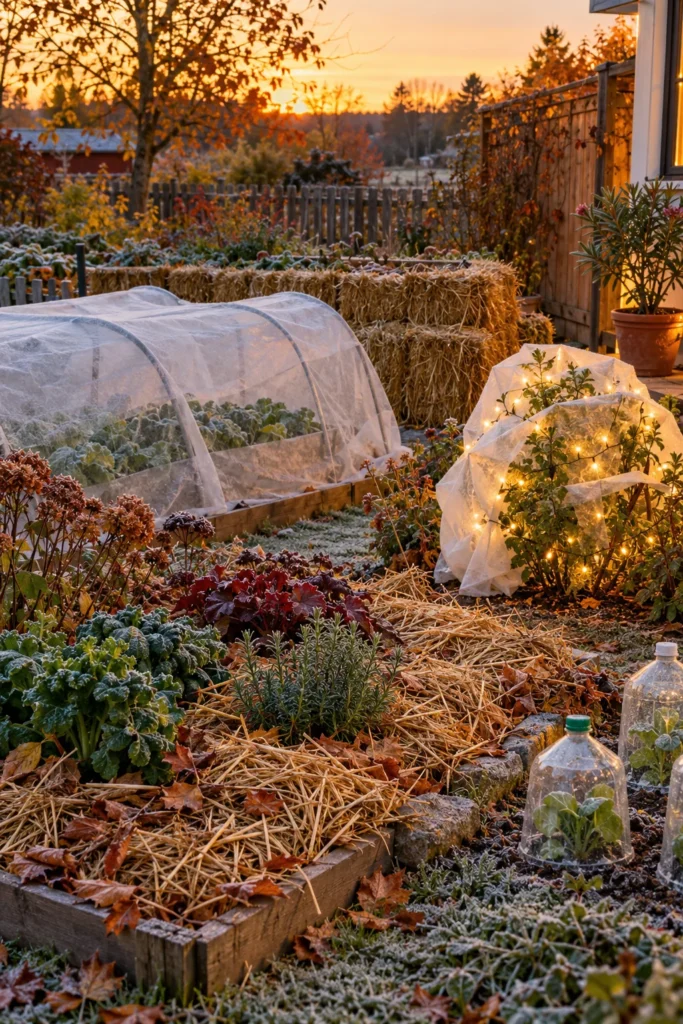
These outdoor ideas show how to protect plants from frost in beds using simple materials that are easy to find.
13. Spread a Thick Blanket of Mulch Around Your Plants
Mulch is like a warm blanket for the soil. Spread three to four inches of straw,r dry leaves, or wood chips around your plants. Keep it a little away from the stems so they do not rot. Mulch slows the loss of heat from the ground and protects roots. Mulching is my first choice for how to protect plants from frost. It also keeps weeds away.
14. Stack Straw Bales to Block the Icy Wind
Do you want a cozy shelter for a whole bed? Stack straw bales around the edges to block icy wind. Lay an old window or a sheet on top at night for a roof. Wind steals warmth faster than you think. Knowing how to protect plants from frost also means stopping the wind. Bales can be reused next year or added to compost. Cozy and cheap.
15. Build Easy Hoop Tunnels Over Your Vegetable Beds
Bend flexible pipes or thick wire into hoops and push them into your vegetable bed. Drape a row cover over the hoops and clip the edges. You now have a long tunnel that keeps lettuce and spinach safe all winter. Open the ends on sunny days so it does not get too hot. This simple idea changed my winter harvest completely. It is worth the small effort.
16. Turn Plastic Bottles into Mini Greenhouses
Save your empty water bottles or milk jugs. Cut the bottom off and place the bottle over a small plant like a tiny greenhouse. Push it slightly into the soil so it stays in place. Take the cap off during the day to let air in. These cloches are perfect for baby tomatoes and peppers. Kids love helping with this fun recycling project.
17. Use the Warmth of Walls and Fences
Walls soak up heat in the day and give it back at night. Plants growing near a sunny wall or fence enjoy a warmer spot. If you have tender plants in small pots, think about moving them close to the house in autumn. A few steps can make a big difference. Even moving a pot by two feet helps on a cold night. Simple and free.
18. Wrap Old Style Lights Around Shrubs for Gentle Heat
Old-style Christmas lights give off gentle heat. Wrap them around shrubs and small trees before covering with frost cloth. Never let the lights touch wet wires or standing water. Use outdoor-safe lights and plug them into a safe outlet. Newer LED lights stay cool, so they do not help much. This idea feels festive, and it truly adds a few warm degrees.
How to Keep Plants from Freezing in Pots and Containers
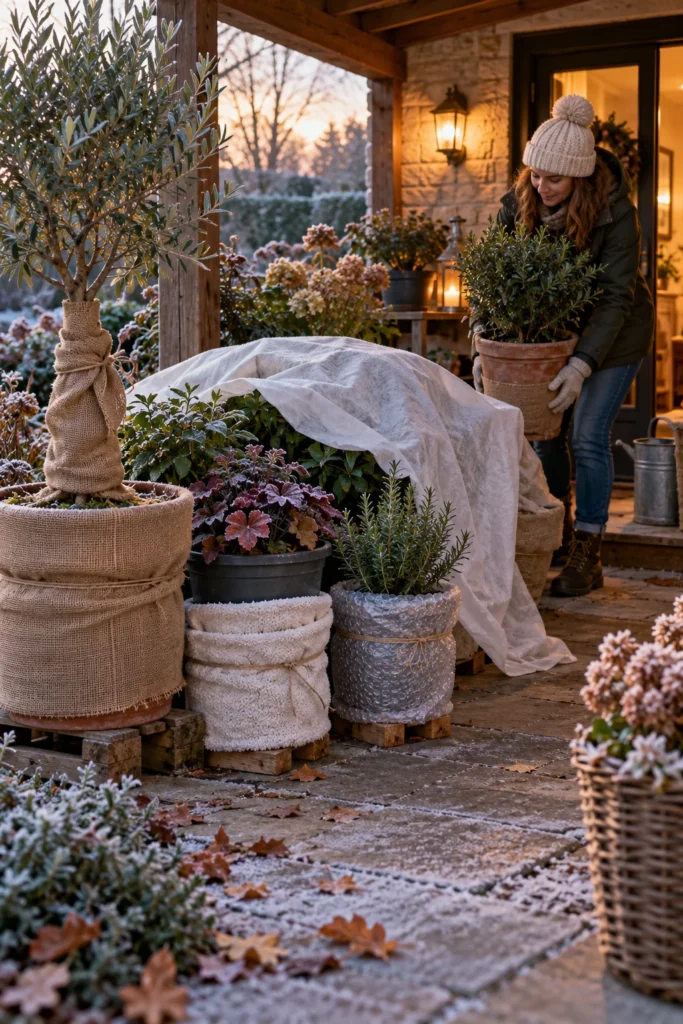
Container plants get cold faster, so this part of how to protect plants from frost needs a little extra love.
19. Carry Your Potted Plants Inside for the Night
The easiest answer to how to protect plants from cold weather is to carry your pots inside. Put them in a bright room or near a window. Check that the room is not too hot or too dry. Bring them in slowly over a few days if you can. Look for tiny insects on leaves before the move. My plants thanked me with fresh leaves.
20. Group Your Pots Together Like a Cozy Family
Want to know how to protect plants from frost when pots are too heavy to carry? Push them together in a tight group close to a wall. The pots share warmth and block wind for each other. Put the tallest ones at the back and the tender ones in the middle. Then cover the whole group with one big cloth for extra safety. Your plants will love the company.
21. Wrap Pots with Bubble Wrap or Old Towels
Roots in pots feel the cold from every side. Wrap the pot with bubble wrap, old towels, or burlap and tie it with string. Leave the top open so water can enter. This keeps the soil warmer and stops the pot from cracking. Clay pots especially need this care. Your plant will keep its roots nice and cozy all night long.
22. Lift Your Pots Off the Cold Ground
Cold travels up from concrete and stone floors. Place pots on small wooden blocks, an old pallet, or plant stands. Even one inch of space makes a real difference. The gap acts as a cushion of air. I use cut pieces of old wood for this, and it costs me nothing. Your pots will stay warmer and drain better too. Small change and big result.
23. Use a Garage or Porch or Shed
Do not have indoor space at home? A garage, covered porch, or shed can be enough. These places block frost and wind even without heat. Put plants near a wall and away from the door. Water lightly since they need less in cold weather. This is another easy part of how to protect plants from frost for people with small homes. Even a cold room helps.
24. Wrap Young Tree Trunks with Burlap
Young trees and shrubs have thin bark that can split in cold weather. Wrap the trunk with burlap or tree wrap from the bottom up. Tie it gently with soft garden string. For small shrubs, make a cage of stakes and fill it with dry leaves,s then wrap burlap around it. Remove the wrap in spring so the bark can breathe. Little trees need this care the most.
Protecting Garden Plants from Frost with Smart Care Habits
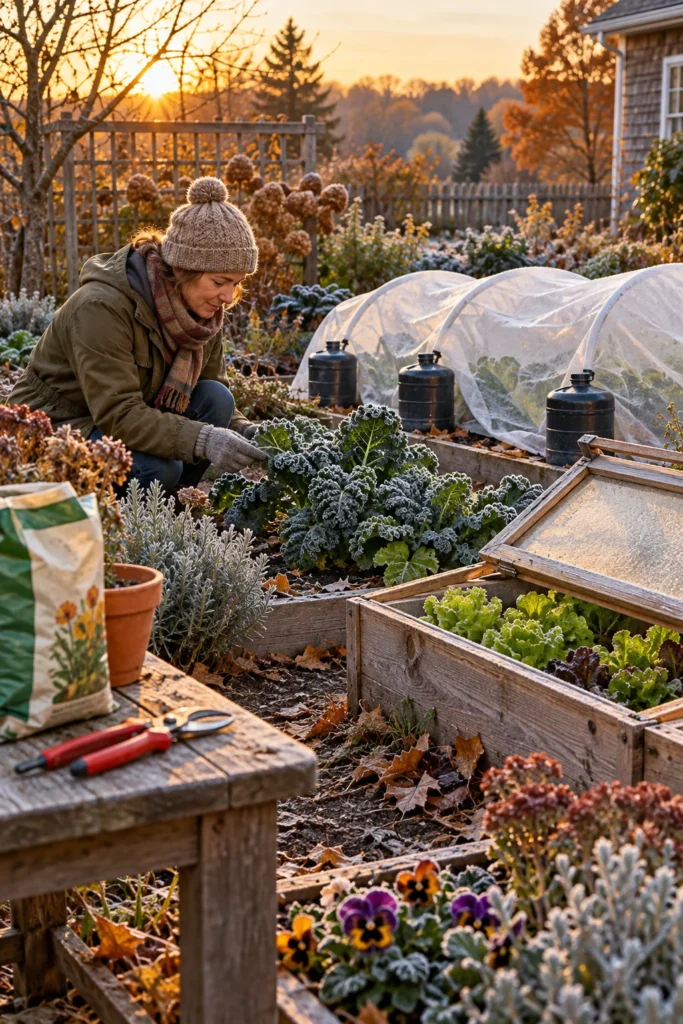
Small daily habits finish the job of how to protect plants from frost and keep your garden strong all season.
25. Fill Dark Bottles with Warm Water
Fill dark plastic jugs or bottles with warm water and place them near your plants under the cover. The water releases heat slowly through the night. Choose dark bottles or paint them dark so they absorb sun in the daytime. I tuck three jugs in my tomato bed, and they work like little heaters. Always close the lids tightly to avoid leaks.
26. Build a Cold Frame for Leafy Greens
A cold frame is a bottomless box with a clear lid. It is my favorite answer to how to protect plants from frost for leafy greens. Build one from old windows and spare wood or buy a small kit. Set it in a sunny spot over your bed. Prop the lid open on warm days so your plants do not cook.
27. Skip Late Autumn Pruning
Trimming plants in late autumn can wake them up and cause soft new growth. That new growth is weak and freezes easily. Wait until spring to prune most plants. The old leaves and branches also act like a natural cover for the plant. So put the scissors away for now and let nature help you. Remove only dead or broken parts.
28. Stop Feeding Your Plants Late in the Season
Feeding plants late in the season pushes fresh, soft growth that cannot handle cold. Stop nitrogen fertilizer about two months before your first frost date. This helps plants slow down and toughen up naturally. I learned this after losing a beautiful hibiscus. Think of it as telling your plants it is time to rest. A calm and steady plant has a much better chance of surviving a freezing night.
29. Be Gentle with Plants After a Frost Night
What if frost already hit? Do not panic. Check plants in the morning and keep covers on until the air warms above freezing. Quick sun on frozen leaves can cause damage. Wait a few days before cutting any dark leaves because they may still recover. Knowing how to protect plants from frost includes knowing how to care for them afterward. Be patient and kind.
30. Choose Hardy Plants and Plant at the Right Time
The best protection starts with smart choices. Pick plants that suit your climate and plant them at the right time. Add hardy flowers and winter vegetables that love cool weather, like kale and pansies. Ask your local nursery which plants survive in your area. Over time, you will need fewer covers and enjoy a garden that feels strong and stress-free. Your future self will thank you.
Conclusion: How To Protect Plants from Frost
Now you know how to protect plants from frost with thirty ideas that are simple and kind to your wallet. Start with one or two today and add more as the weather turns cold.
Remember that protecting plants from frost is mostly about small habits done on time. Your garden will reward you with fresh leaves and bright flowers.
Tell me which idea you loved most because I would enjoy hearing your story. Happy gardening, my dear friend.
FAQ’s About How To Protect Plants From Frost
1. How to protect plants from frost overnight with things I already have at home?
Use old bedsheets or blankets or cardboard boxes or upside-down buckets. Cover plants just before sunset and let the cover reach the ground. Hold the edges with stones. Remove everything in the morning when the air warms up.
2. How to protect plants from frost in pots on a balcony or patio?
Move pots against the house wall and group them tightly. Lift them off the cold floor and wrap each pot with bubble wrap or burlap. Add a frost cloth over the plants for the coldest nights.
3. What temperature needs frost protection for plants and when should I cover them?
Most tender plants get hurt near thirty-two degrees Fahrenheit or zero Celsius. Cover them when the night forecast is close to that number. Hardy plants like kale can handle colder nights, but young seedlings still need cover.