Did a tiny chirp wake you at midnight and leave you staring at the ceiling? I have been there. Finding crickets in your house feels strange because you never invited them.
The good news is that crickets in your house always come in for a reason. Once you know it, you can fix the problem fast.
Stay with me, and I will share simple ideas that worked for my neighbors and me. Ready for some truly quiet nights?
Why Do Crickets Come Inside and Why Are Crickets in My House
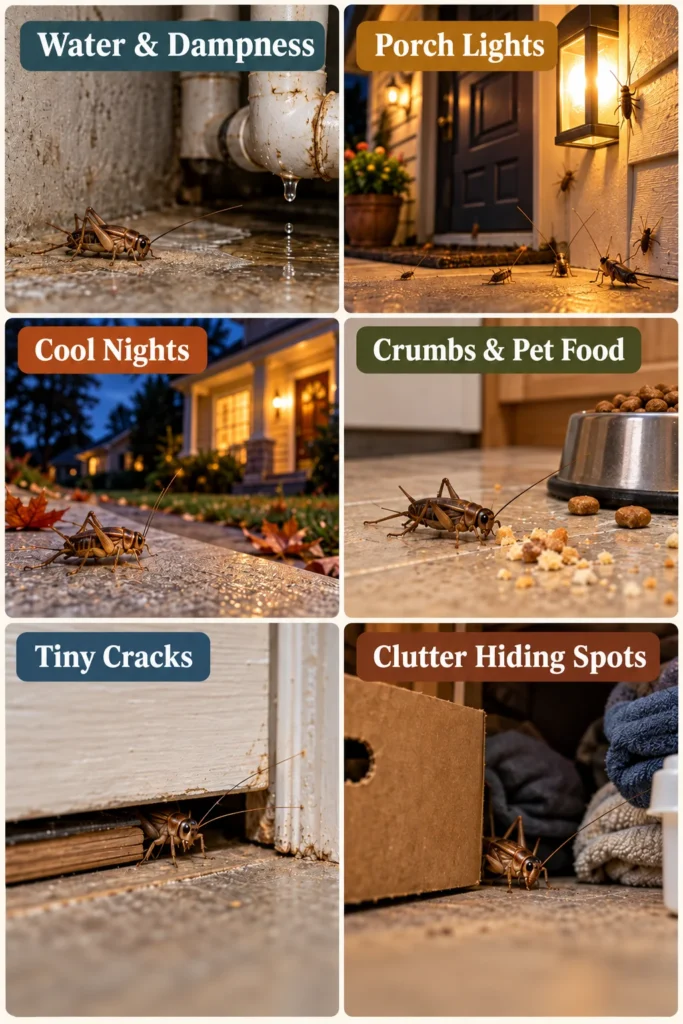
Let us start with the big question first. Here are six clear reasons crickets in your house show up uninvited.
1. Water Is the Biggest Reason Crickets Walk Inside
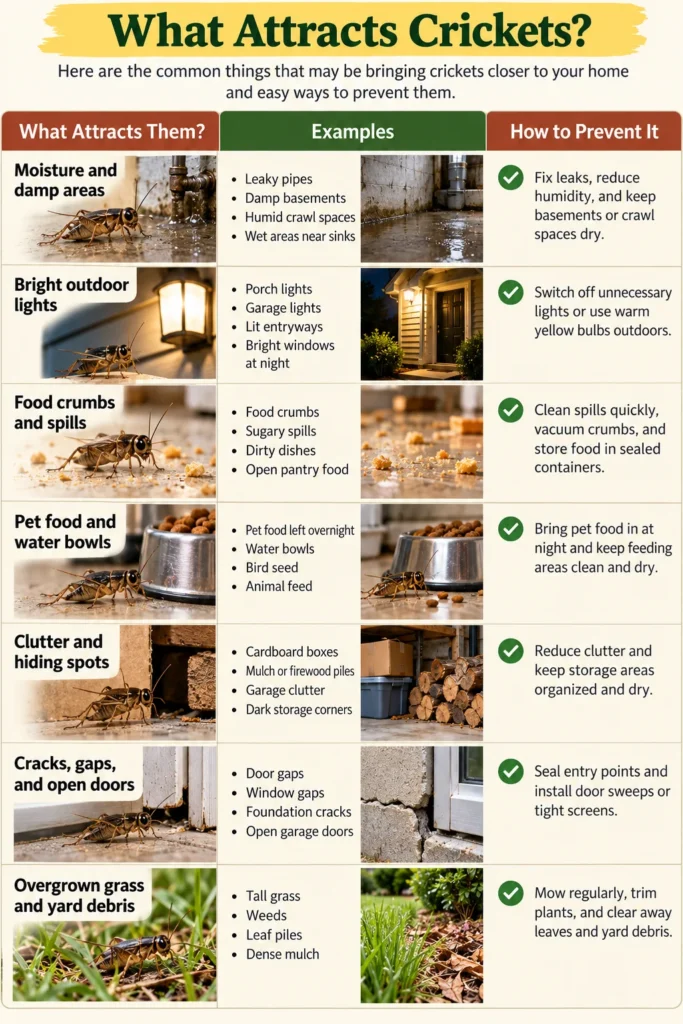
Here is something that surprised me. Crickets need water to live, and they find it fast. A leaky pipe or a damp basement acts like a tiny pond to them. When the yard gets dry, they march toward wet spots inside. If you ever ask why crickets come inside, then check for drips under sinks first. Fix the leak and half your problem may vanish by the weekend.
2. Bright Porch Lights Work Like a Welcome Sign
Have you ever noticed bugs dancing around your porch light? Crickets do the same thing. They follow light at night and a bright bulb tricks them into coming close to your door. Then one open moment sends them inside. That is how crickets in your house often begin their story. Remember this because the fix is easy, and I will show you later in the guide.
3. Cool Nights Push Crickets Toward Warm Homes
Think about how you feel on a chilly evening. You want a warm blanket. Crickets feel the same way. When fall arrives, the outdoor temperature drops and they hunt for cozy shelter. Your house stays warm and dry, which makes it a five-star hotel for them. This is why many people ask Why are crickets in my house just as summer ends. So expect them most in autumn.
4. Crumbs and Pet Food Feed Hungry Crickets
Crickets are not picky eaters. They munch on crumbs and pet food and even dead bugs. A few cookie bits under the couch can feed a small group for days. I once found a bowl of dog food crawling with them. If you keep seeing crickets in your house, then clean the kitchen floor and store pet food in tight containers every night. Small habits make a big difference.
5. Tiny Cracks Are Open Doors for Crickets
A cricket can squeeze through a gap smaller than a coin. Walk around your home and look at the base of doors and the frames of windows. Check where pipes enter the wall too. Even a thin line of light can invite them inside. I found three gaps in my own house the first time I looked. Small cracks lead to big problems, so spot them early.
6. Clutter Inside Gives Crickets Perfect Hiding Spots
Crickets love dark and quiet places. A stack of old boxes in the basement is a dream home to them. So is a pile of clothes in the corner. They hide all day and come out when the house goes silent. If crickets in your house keep returning, then your clutter may be giving them a safe bed. Tidy up one room this weekend and see the change.
Why Are Crickets Suddenly in My House
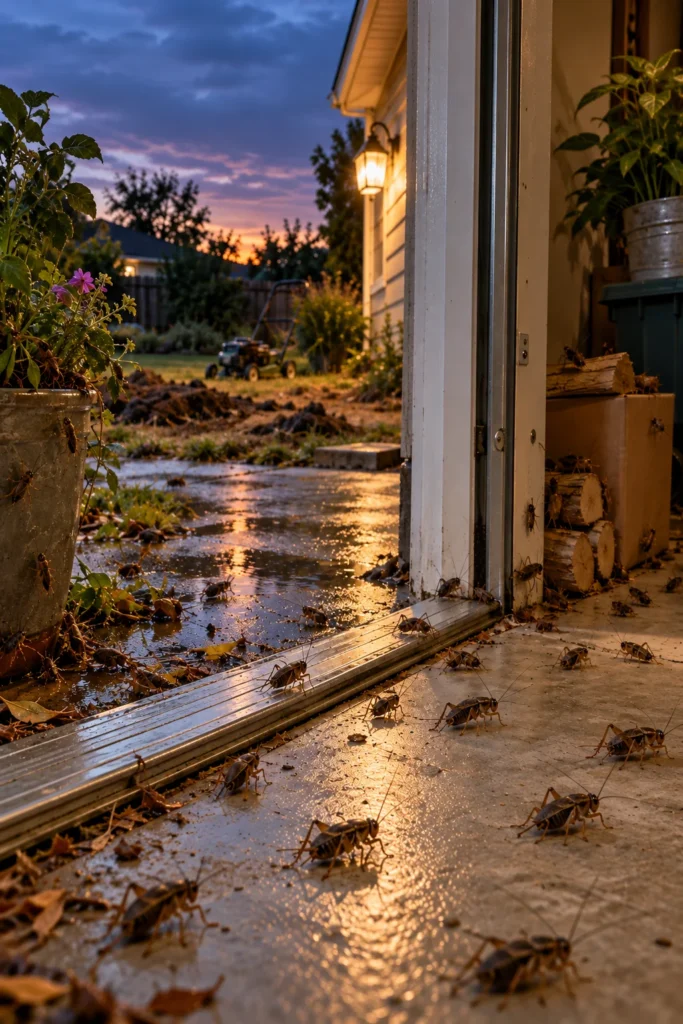
Did crickets appear overnight like magic? Here are six sudden triggers behind crickets in your house that most people miss.
7. Heavy Rain Can Flood Their Underground Homes
Crickets dig small burrows in soil. After a big storm, those burrows fill with water. Imagine waking up with a flooded bedroom. You would run for dry ground too. Crickets do exactly that, and your house looks like the nearest safe place. If the problem began right after heavy rain, then you have found your answer. Do not panic since this usually fades in a few days.
8. A Hot and Dry Summer Sends Them Searching for Water
The opposite problem happens too. During a long dry spell, the soil outside loses its moisture. Crickets then chase water wherever they can find it. Your bathroom and kitchen sink look like a jackpot. This is why crickets in your house can appear in the hottest weeks of the year. Keep drains dry at night and wipe wet counters before bed. It is a simple cause that many people miss.
9. Late Summer Is Cricket Party Season
Have you noticed the sudden noise around August and September? That is mating season. The cricket population peaks at this time, and thousands of them roam your neighborhood looking for partners. With so many around, a few are bound to wander into your home. It is not a sign that your house is dirty. It is simply nature doing its yearly job. Soon the noise fades away.
10. Garden Work and Building Projects Stir Them Up
Did a neighbor cut a field or start a new building project? Digging and mowing destroy cricket homes in one afternoon. The crickets then scatter in every direction. Many land at the nearest door, which might be yours. That is one more reason you may find crickets in your house after a loud week on your street. Watch the trend and be patient for a few days.
11. Firewood and Plants Carry Free Passengers
Sometimes you carry crickets in yourself. A bundle of firewood or a potted plant from the porch can hide a few. Boxes from a garage sale work the same way. I once brought in a fern and heard chirping that night. Shake plants outside before moving them in. Check firewood before stacking it by the fireplace. A quick look saves you many sleepless nights.
12. An Open Garage or Door Gives Them a Free Ride
Think about last night. Did you leave the garage door open while unloading groceries? Crickets move fast in the dark, and one open door is all they need. Once inside, they head straight for corners. If crickets in your house showed up out of nowhere, then retrace your steps from the last few days. The answer is usually a door left open too long.
Crickets in House at Night: Sounds and Hiding Spots
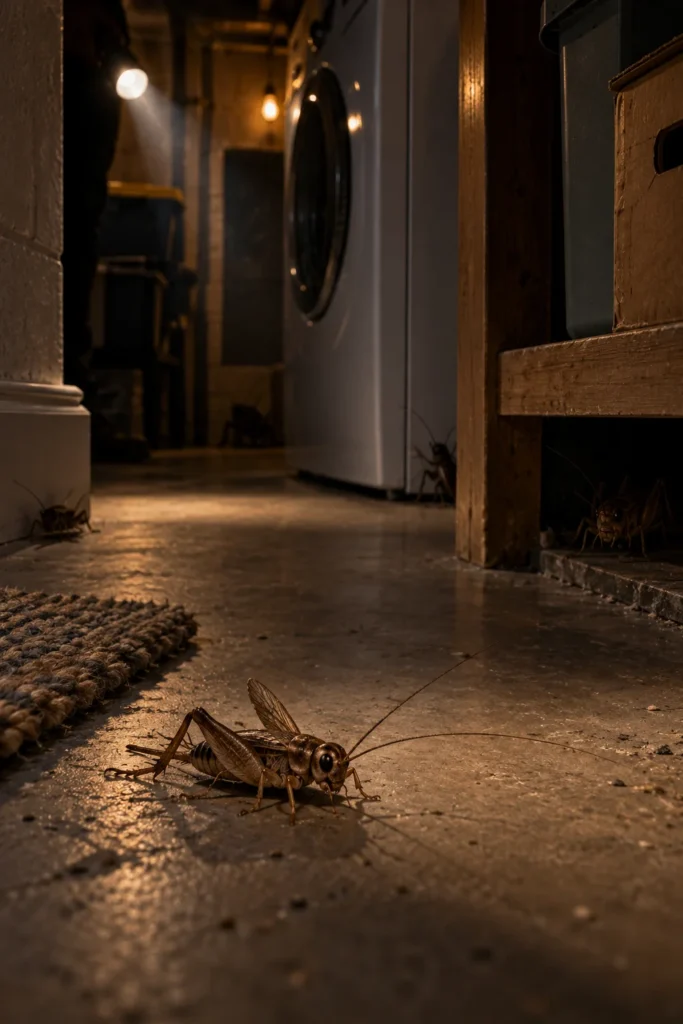
Night is when the show begins. These six ideas explain chirping and help you find crickets in your house quickly.
13. Only Boy Crickets Chirp and They Do It for Love
Here is a fun fact that made me smile. Only male crickets chirp. They rub their wings together to sing for a mate. Their song says I am strong and I am here. That is why crickets in the house at night sound so loud. The chirping is not a sign of danger. It is a love song that happens to be sung at 2 AM.
14. You Can Guess the Temperature From the Chirps
Here is a trick that feels like a magic show. Count the chirps you hear in 14 seconds and then add 40. The result is close to the temperature around the cricket in Fahrenheit. Faster chirps mean warmer air. I tried it and was shocked at how close it was. Next time you hear crickets in your house, you can turn the noise into a fun game.
15. Crickets Hide Behind Appliances and Under Furniture
Ever tried to chase a chirp and found nothing? Crickets pick spots that are dark and tight. They hide behind the fridge and under the washer and inside the cabinet under your sink. Baseboards and closets are also favorites. Sound bounces around the room, which makes it hard to locate them. Stand still and trace the sound by walking slowly toward the loudest spot.
16. A Quiet Flashlight Hunt Reveals Their Secrets
Wait until the chirping starts and then switch off every light. Walk slowly with a soft flashlight in hand. Crickets go silent when they feel footsteps, so pause often. When the sound returns, point your light near the source. This simple game helps you find crickets in your house within minutes. Be patient because it may take two tries. Take a cup and a piece of paper along with you.
17. Check the Basement and Garage First
Where would you hide if you were a cricket? Somewhere damp and dim and calm. That points straight to the basement, garage, and laundry room. Start your search in these spots before you check bedrooms. Look along walls and behind boxes. Peek inside floor drains too. Most crickets stay close to the ground floor, so you will often solve the puzzle without climbing a single stair.
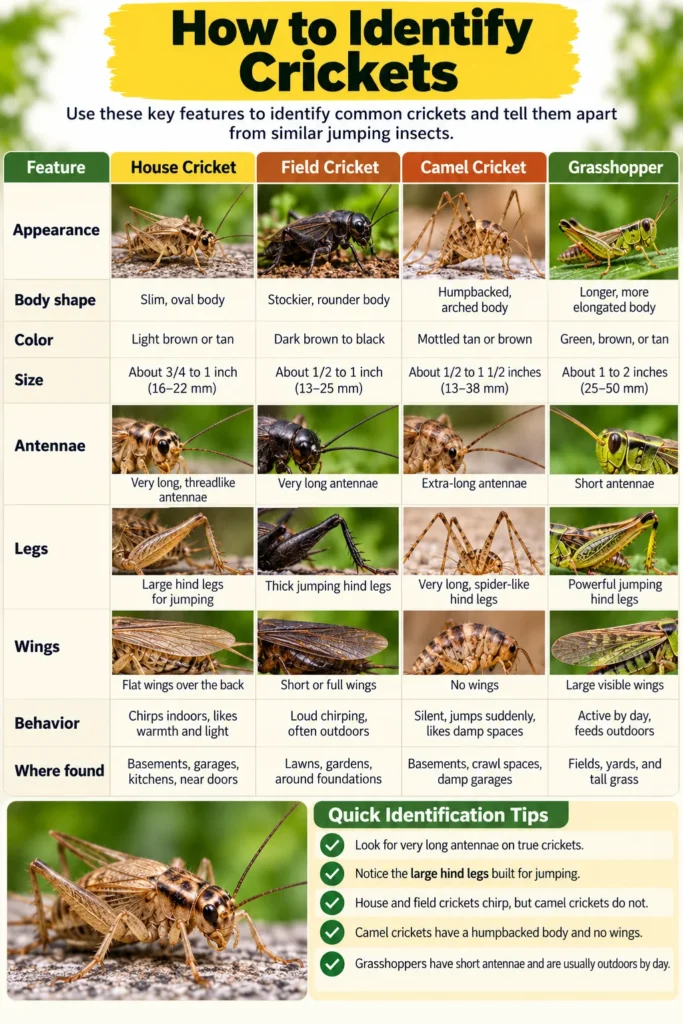
18. Not Every Cricket Is the Same Kind of Guest
Did you know there are different kinds of crickets? House crickets are tan and chirp loudly. Field crickets are black and usually come from the yard. Camel crickets are humpbacked and stay silent. Knowing which kind you have helps you pick the right fix. If you see crickets in your house with long, jumpy legs and no sound, then you likely have camel crickets.
How to Get Rid of Crickets in the House with Easy Ways
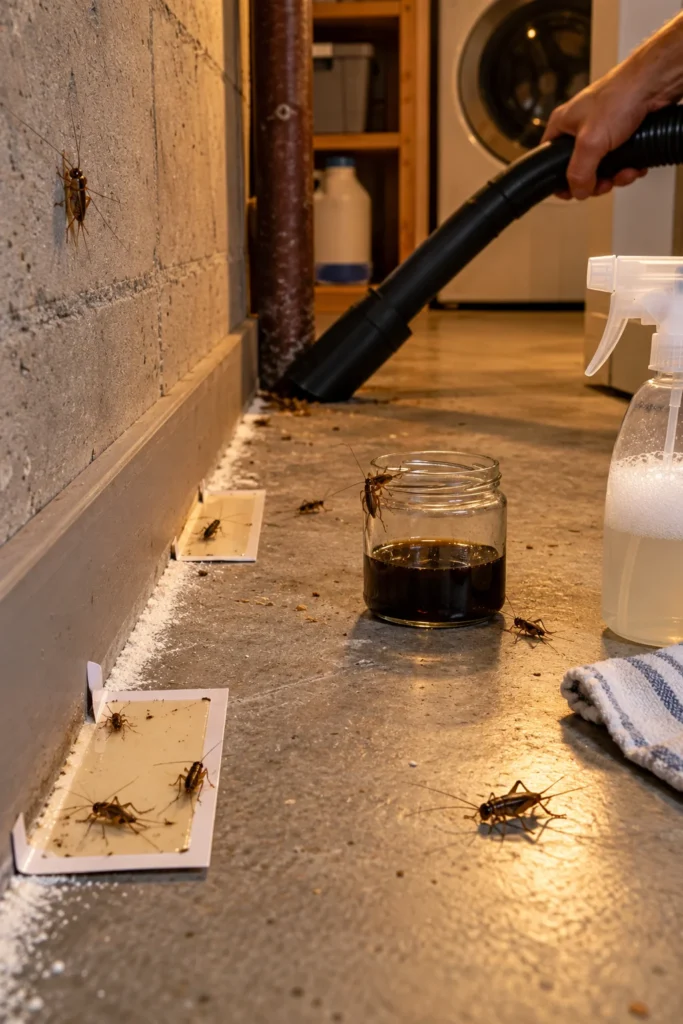
Ready for action? These six simple ways to get rid of crickets work when crickets in your house keep growing.
19. Sticky Traps Catch Crickets While You Sleep
This is the easiest method to start with. Buy a few glue traps and place them along walls and in dark corners. Choose flat ones that slide under furniture. Crickets walk along edges, so they stick as they pass. Check the traps every morning and replace them when they fill up. Keep them away from kids and pets. Sticky traps also show you which rooms have the most visitors.
20. A Homemade Molasses Trap Costs Almost Nothing
Grab a tall jar and add two spoons of molasses. Pour in a cup of water and stir well. Place the jar near the spot where you hear chirping. The sweet smell draws crickets in, and the smooth glass keeps them from climbing out. This trick works nicely when crickets in your house are scattered. Empty the jar every few days and refill it fresh.
21. Your Vacuum Cleaner Is a Great Cricket Catcher
Yes, the vacuum can be a hero here. Use the hose attachment to suck up crickets from corners and baseboards and under furniture. It also removes eggs and crumbs that attract more of them. Empty the bag outside right after you finish so they cannot crawl back. This method is fast and safe and needs no chemicals at all. I use it every autumn.
22. Diatomaceous Earth Dries Them Out Slowly
Food-grade diatomaceous earth is a fine white powder made from tiny fossils. Sprinkle a thin line in basements and along the edges of rooms. When crickets walk through it, the powder dries their bodies. Always use the food-grade type, keep it away from pets, and avoid breathing the dust. For crickets in your house hiding in hard spots, this powder works quietly for days.
23. A Soap and Water Spray Works Fast on the Spot
When you see a cricket right in front of you, grab a spray bottle. Mix warm water with a few drops of dish soap. Spray the cricket directly, and it slows down quickly. The soap blocks their breathing holes. This is great for spot treatment and costs pennies. Keep the bottle in the kitchen so you can act the second you spot one. Rinse the area after you finish.
24. Call a Pest Pro When Home Remedies Stop Working
Sometimes you do everything right, and the chirping still goes on. That is the time to call a pest control expert. They find hidden nests and use safe treatments you cannot buy in stores. If crickets in your house keep multiplying after two weeks of effort, then do not wait. A professional visit can end the stress and give you peaceful nights again. Ask for a price first.
How to Keep Crickets Out of Your House and Stop a Cricket Infestation in Your House
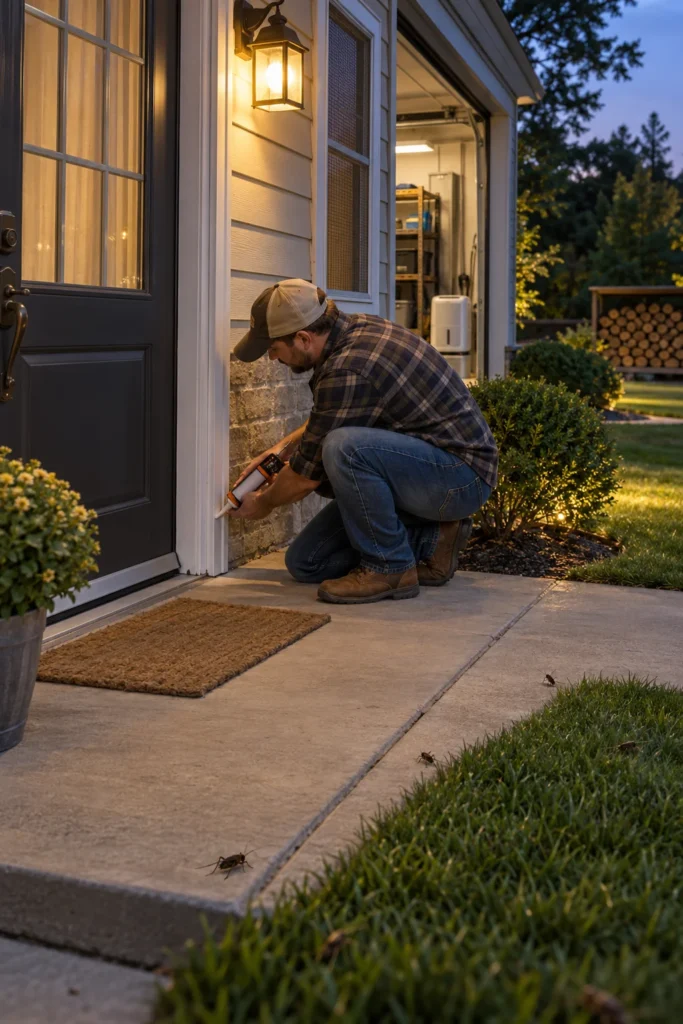
Prevention is easier than cleanup. These six habits stop crickets in your house before they ever begin their noisy party.
25. Seal Every Gap With Caulk and Weather Strips
Grab a tube of caulk and walk around your home like a detective. Fill cracks near windows, pipes, and the foundation. Use clear caulk for a neat finish. Add weatherstripping around doors that let light through. This one job blocks the main road crickets use to enter. It takes a single afternoon and costs very little. I did this years ago, and my cricket visits dropped sharply.
26. Door Sweeps and Window Screens Stop Easy Entry
Look at the bottom of your front door. Can you see daylight? If yes, then a door sweep is your next buy. Also check window screens for tiny holes and fix them with patch kits. Garage doors need sweeps too because crickets love that gap. These steps stop crickets in your house before they start singing. A little care now saves you from loud nights later.
27. Yellow Bulbs and Closed Curtains Make You Invisible
Remember the bright porch light from earlier? Now let us fix it. Switch outdoor bulbs to yellow ones since insects are less drawn to them. Move lights away from the door when you can. Close curtains at night so indoor light does not shine out. When your home looks dim and boring, crickets simply walk past and look for another place. It takes five minutes.
28. A Tidy Yard Leaves Crickets Nowhere to Live
Take a walk around your yard this weekend. Mow the grass short and rake up dead leaves. Move woodpiles at least 20 feet from your house. Trim bushes that touch the walls. Crickets love damp and shady hiding spots, so remove them. I made these changes last autumn and heard almost no chirping all winter. A clean yard is your first line of defense.
29. A Dehumidifier Makes Your Home Less Inviting
Remember how much crickets love water? Take that away, and they lose interest. Run a dehumidifier in the basement and keep humidity below 50 percent. Fix dripping taps and leaky pipes right away. Use fans in bathrooms after showers. Dry homes feel like deserts to crickets. This habit also protects you from mold, which is a nice bonus for your health. Your basement will smell fresher too.
30. Watch for Early Signs of a Cricket Infestation in Your Home
Spotting trouble early saves a lot of effort. Signs of a cricket infestation in the house include loud chirping every night and tiny dark droppings and chewed holes in fabric. You may also see many crickets in one room. Check weekly in basements and closets. Act at the first sign with traps and sealing. Small steps taken early keep a small problem from growing big.
Conclusion: Crickets In Your House
You now know why crickets in your house appear and how to send them away. Start small by fixing leaks and sealing gaps.
Then try a trap or two and keep your yard tidy. Do not feel bad if the first night is still noisy since progress takes a few days.
Soon you will enjoy calm sleep again. Keep these ideas handy because crickets in your house can return with every new season. You can handle it.
FAQ’s About Crickets In Your House
1. Why are crickets suddenly in my house at night during fall?
Cool fall nights push crickets to look for warm and dry shelter. Mating season also makes them more active after dark. Heavy rain or dry weather can add to the move. Seal gaps and fix leaks to stop them.
2. How to get rid of crickets in the house naturally without harming pets?
Use a molasses jar trap and a vacuum to remove them. Add a thin line of food-grade diatomaceous earth in places pets cannot reach. Seal cracks and fix leaks so no new crickets enter your home.
3. Can a cricket infestation in the house cause damage to clothes and furniture?
Yes. Crickets chew on cotton, wool, silk, and paper when food is scarce. They can leave small holes and stains on fabric. Act early with traps and cleaning to prevent damage to your belongings.