Have you ever opened your closet door and been hit with that stuffy, musty smell that makes you wrinkle your nose?
Or have you discovered mold creeping across your favorite jacket or noticed your wooden shelves slowly warping and discoloring?
If any of this sounds familiar, you’re dealing with one of the most common household problems that millions of homeowners face every year.
The question that arises is: why closets get humid? Understanding the answer isn’t just interesting, but it’s important.
Let’s break it all down in simple, easy steps to know the root cause that anyone can follow.
What Does Humid Mean and Why Does It Matter?
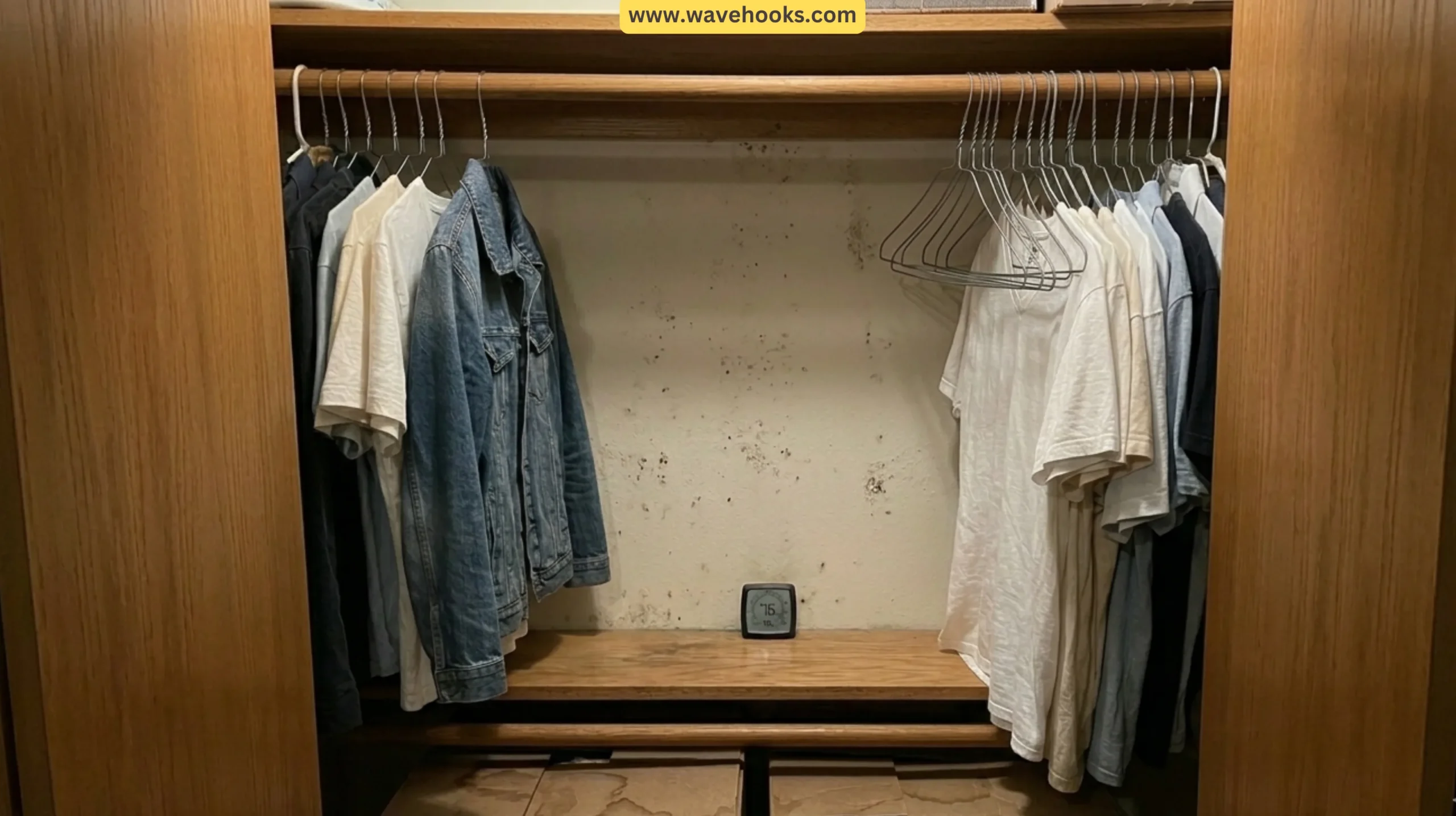
Humidity is simply the amount of water vapor, invisible moisture, floating around in the air.
You can’t always see it or feel it, but in high amounts, it causes serious problems in enclosed spaces like closets.
The measurement we care about is called relative humidity, expressed as a percentage.
According to the U.S. Environmental Protection Agency (EPA), indoor relative humidity should stay between 30% and 50% at all times.
Once it climbs above 60%, you’re in the danger zone. Mold begins to grow, fabrics break down, wooden structures warp, and that heavy, stale odor sets in.
Closets are small, enclosed, poorly ventilated areas and are rarely opened for long periods. That combination is a perfect recipe for trapped moisture.
Also Read 10 Genius Small Space Organization Hacks For Maximum Storage
Why Closets Get Humid and what is the reason
If you want the most important answer, it comes down to one word: ventilation. Improving closet airflow is essential for moisture control
When air can’t move freely through a space, moisture gets trapped with nowhere to go. Your closet works the same way.
How Moisture Enters Your Closet Daily
Every time you open the closet door, hang a piece of clothing you’ve been wearing, or even breathe near an open closet, you’re introducing water vapor into that space.
Your body naturally releases moisture through skin and breath. Clothes you’ve recently worn carry warmth and traces of sweat.
When all of that moisture enters a sealed, airless space, it builds up over days and weeks and someday causes all the damage.
This is the core, foundational reason why closets get humid, and every other cause we’re about to cover feeds directly into this same problem of trapped moisture.
Also Read How To Organize My Closet Without Buying Anything (It Works!)
Indoor Humidity Causes That Make Closets Worse
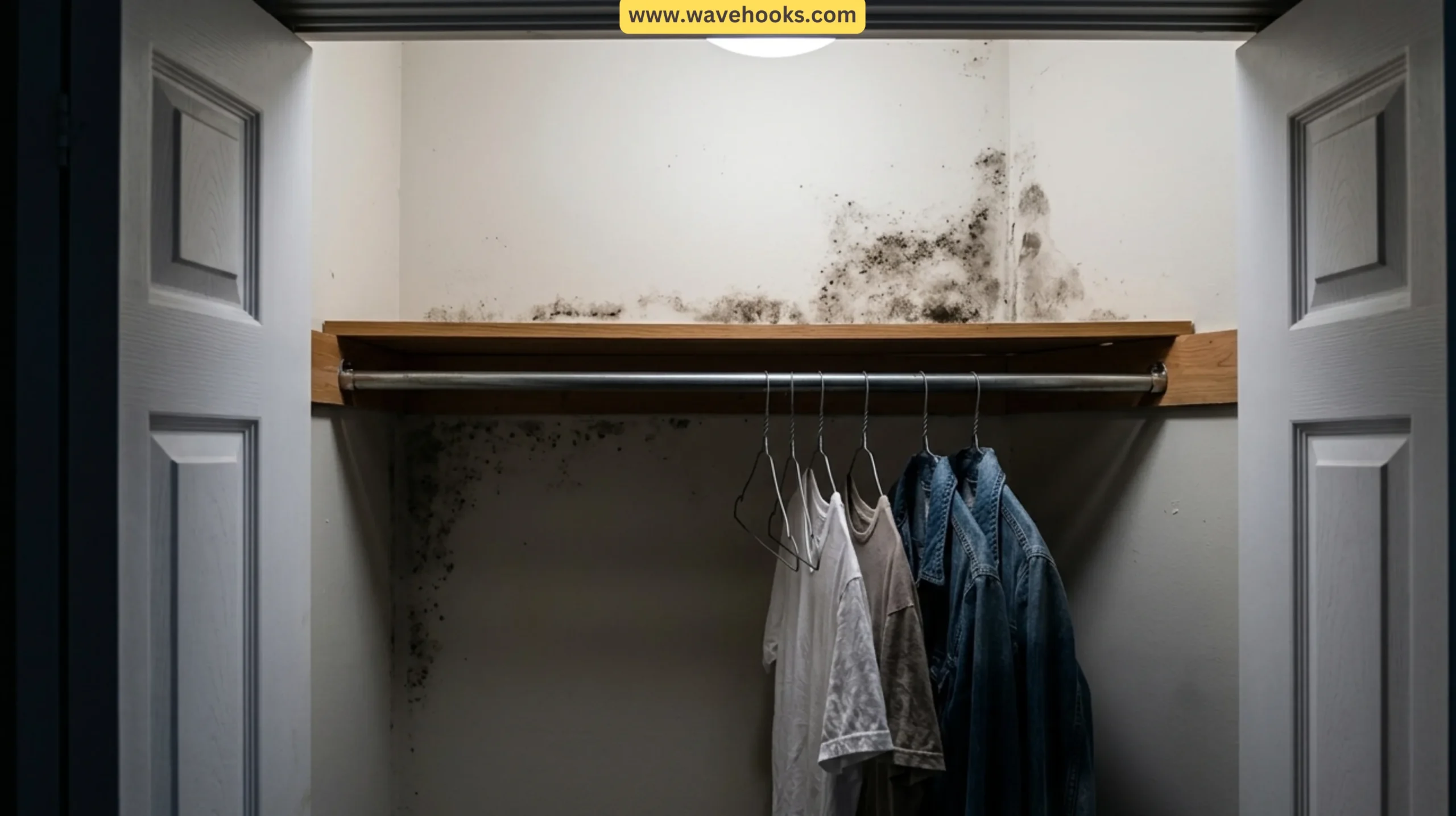
While poor ventilation is the primary driver, there are several key indoor humidity causes that work together to make closets consistently damp.
Identifying which ones apply to your home is half the battle. Here are some common causes:
1. Everyday Human Activities
We produce a surprising amount of moisture just by living. Cooking, showering, breathing, and even doing laundry all add water vapor to your home’s air.
In fact, a single shower can add nearly 1 to 2 pints of moisture to the air. When that humid indoor air makes its way into your closet, it gets trapped and builds up.
Shared walls with bathrooms often contribute to a smelly shower area and humid closets. These are some of the reasons why closets get humid.
2. Hanging Damp or Slightly Wet Clothing
This is one of the most overlooked causes of indoor humidity. Many people hang clothes that are slightly damp back in the closet.
Maybe after a light sweat, a bit of rain, or pulling clothes out of the dryer just a few minutes too early.
That moisture doesn’t disappear. It evaporates into the enclosed closet space, raising the humidity level significantly.
Also Read 7 Answers To Why Do I Get Spots On My Clothes After Washing!
3. Exterior Wall Placement and Condensation
Take a moment to think about where your closet is physically located. Is your closet built against an exterior wall? If so, that’s a big red flag.
Exterior walls are exposed to the outdoor elements, including rain, cold, and heat.
During colder months, the warm air inside the closet meets the cold surface of the exterior wall, causing condensation.
That condensation is exactly why closets get humid more severely in homes built in humid climates or poorly insulated buildings.
Pro Tip:
Place silica gel packs or charcoal bags inside your closet to naturally absorb excess moisture and keep your clothes fresh, dry, and odor-free.
4. Hidden Plumbing Leaks Behind the Walls
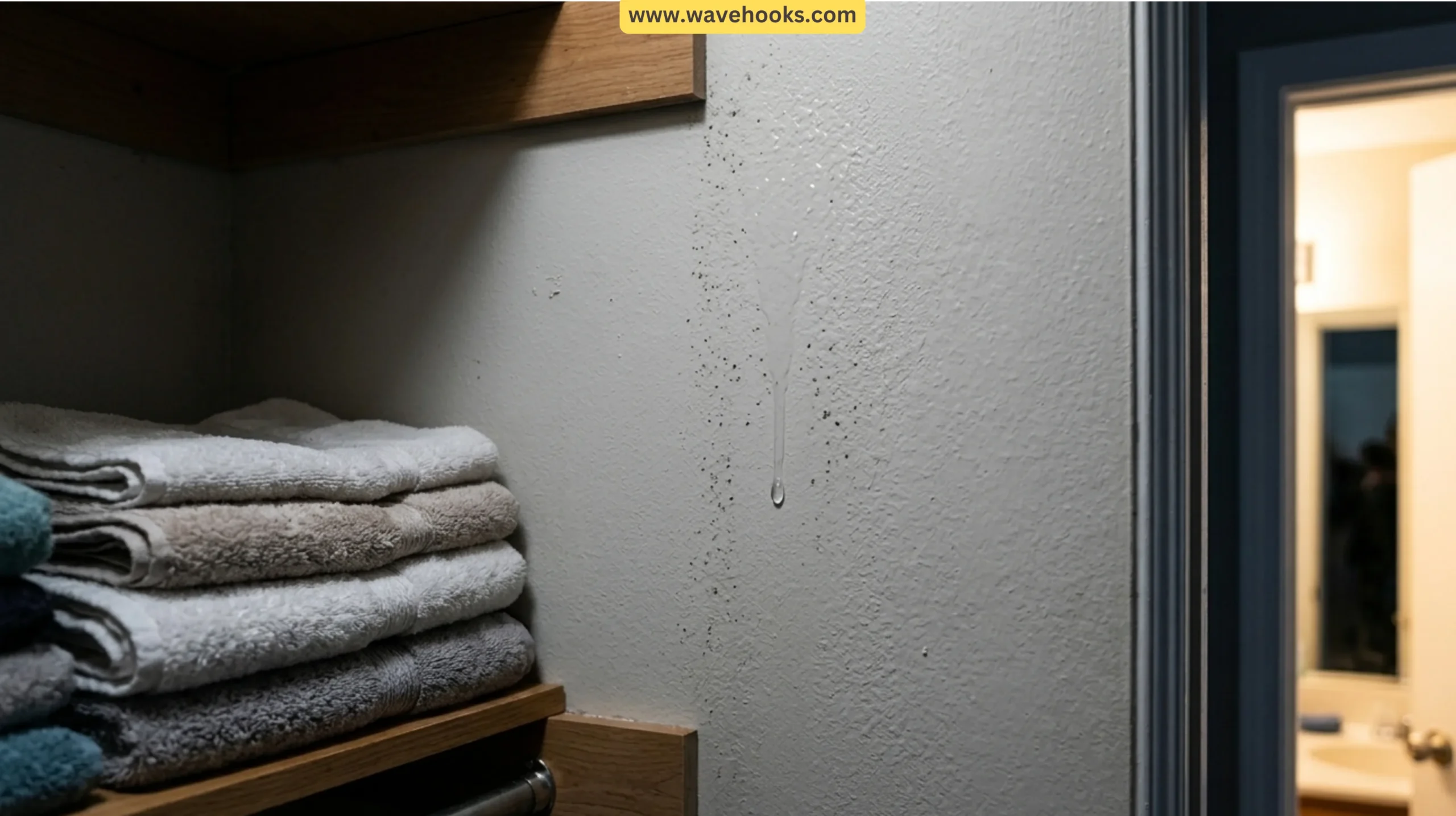
If your closet is located near a bathroom, kitchen, or laundry room, there could be hidden plumbing running behind the walls.
Even a small, slow leak can introduce significant moisture over time. You might not even see the leak directly.
You’ll just notice that no matter what you do, your closet always feels damp. A plumber’s inspection can rule this out quickly.
Also Read How To Deep Clean A Shower Drain Without Harsh Chemicals!
5. Seasonal Changes and Climate Shifts
Seasonal shifts are another major contributor to indoor humidity causes. Summer months bring hot, humid outdoor air that can seep into your home.
Even with air conditioning running, closets that are rarely directly cooled can trap warm, humid air.
In humid regions like coastal areas or tropical climates, this problem is much more severe and is a primary reason why closets get humid almost year-round.
6. Ground-Level and Basement Closets
If your closet is on the ground floor or in a basement, moisture can actually rise through the foundation. This process is called capillary action.
It allows water to move up through concrete and soil. Ground-level closets are particularly weak.
It’s one of the basic reasons why closets get humid in older homes without proper moisture barriers.
Also Read 16 Best DIY Solutions to Get Rid of Musty Smell in Basement!
7. Overcrowded Storage and Dense Clothing
When a closet is packed tightly with clothes, shoes, boxes, and bags, there’s no space for air to circulate between items, so moisture gets trapped in the fabric.
Natural materials like wool, cotton, and leather are hygroscopic, meaning they actively absorb moisture from the surrounding air.
When you have a closet full of these materials and humidity rises even slightly, those materials soak it up and hold it, making the overall problem significantly worse.
The Building Science Behind Why Closets Get Humid
Let’s look at this from a slightly more technical angle as to why closets get humid:
The Dew Point
The dew point is the temperature at which air becomes fully saturated with moisture and water begins to condense onto surfaces.
In a closet against an exterior wall, the wall surface temperature can drop below the dew point of the indoor air.
When that happens, condensation forms right inside your closet wall, invisible but damaging.
What Research Tells Us
Research published in the Journal of Building and Environment found that areas of low air circulation within residential spaces accumulate high moisture.
One study found that enclosed closets in humid climates maintain relative humidity levels 15 to 25 percentage points higher than the surrounding room.
That’s a dramatic difference and fully explains why closets get humid even when the rest of your home feels perfectly comfortable.
Don’t Make This Mistake:
Closing your closet tightly after cleaning can trap hidden moisture inside. This creates the perfect environment for mold and unpleasant odors to develop over time.
The Modern Construction Problem
Building science experts also point out that modern construction, while energy-efficient, can make this worse.
Tighter, better-sealed homes reduce energy costs but also trap moisture indoors. Moisture that escaped through small gaps and cracks is now locked inside.
This is one of the newer and increasingly recognized indoor humidity causes in housing, and makes understanding why closets get humid.
Also Read How To Organize A Small Apartment With No Closets Or Drawers?
Warning Signs Your Closet Has a Humidity Problem
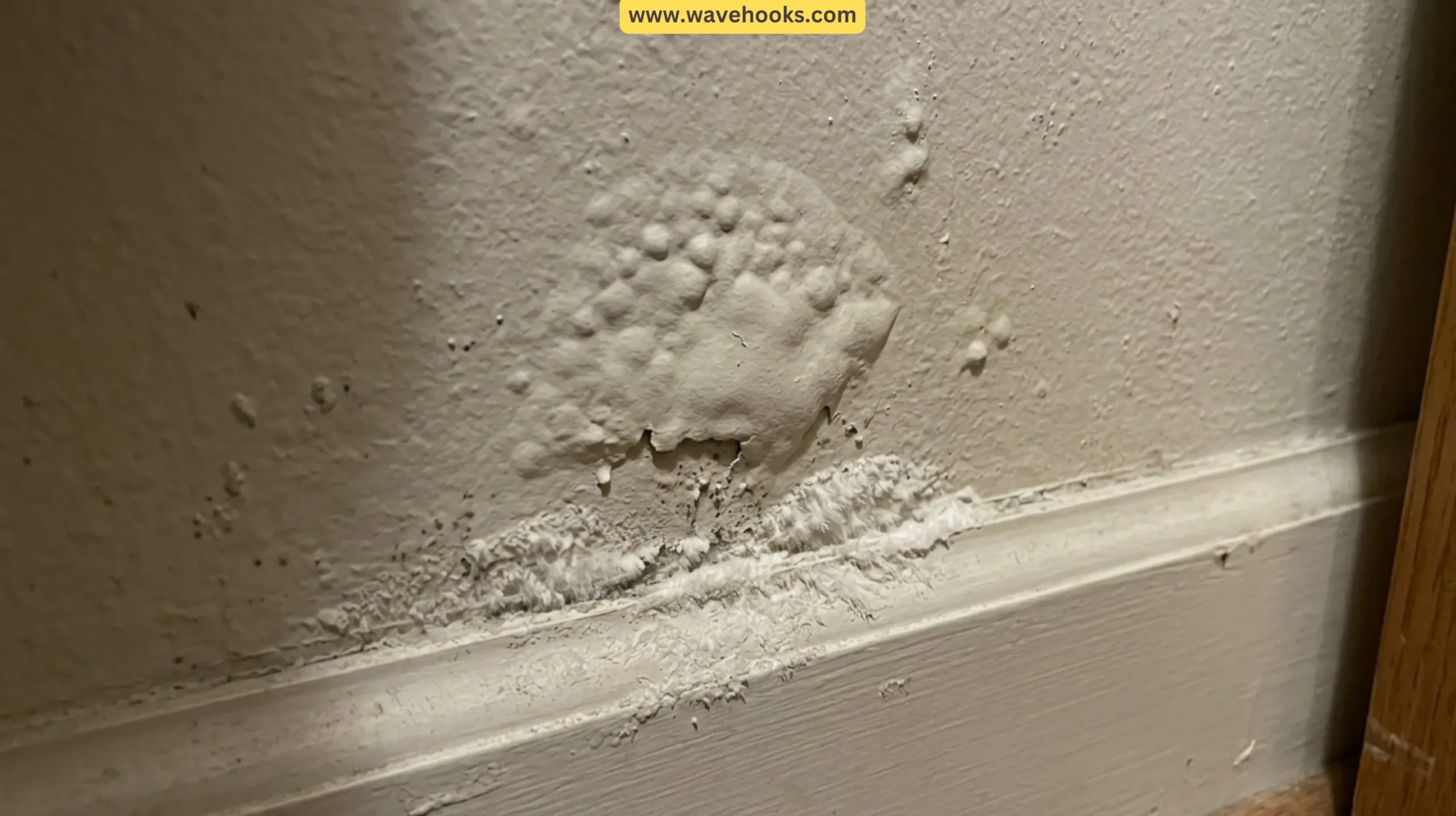
Before you start treating the problem, you need to confirm that humidity is actually your issue. Watch for these key signs:
- A persistent musty, earthy, or sour smell whenever you open the door.
- Visible mold or mildew spots appear as dark green, black, or white fuzzy patches.
- Clothes that feel slightly stiff, damp, or develop an odor even after washing.
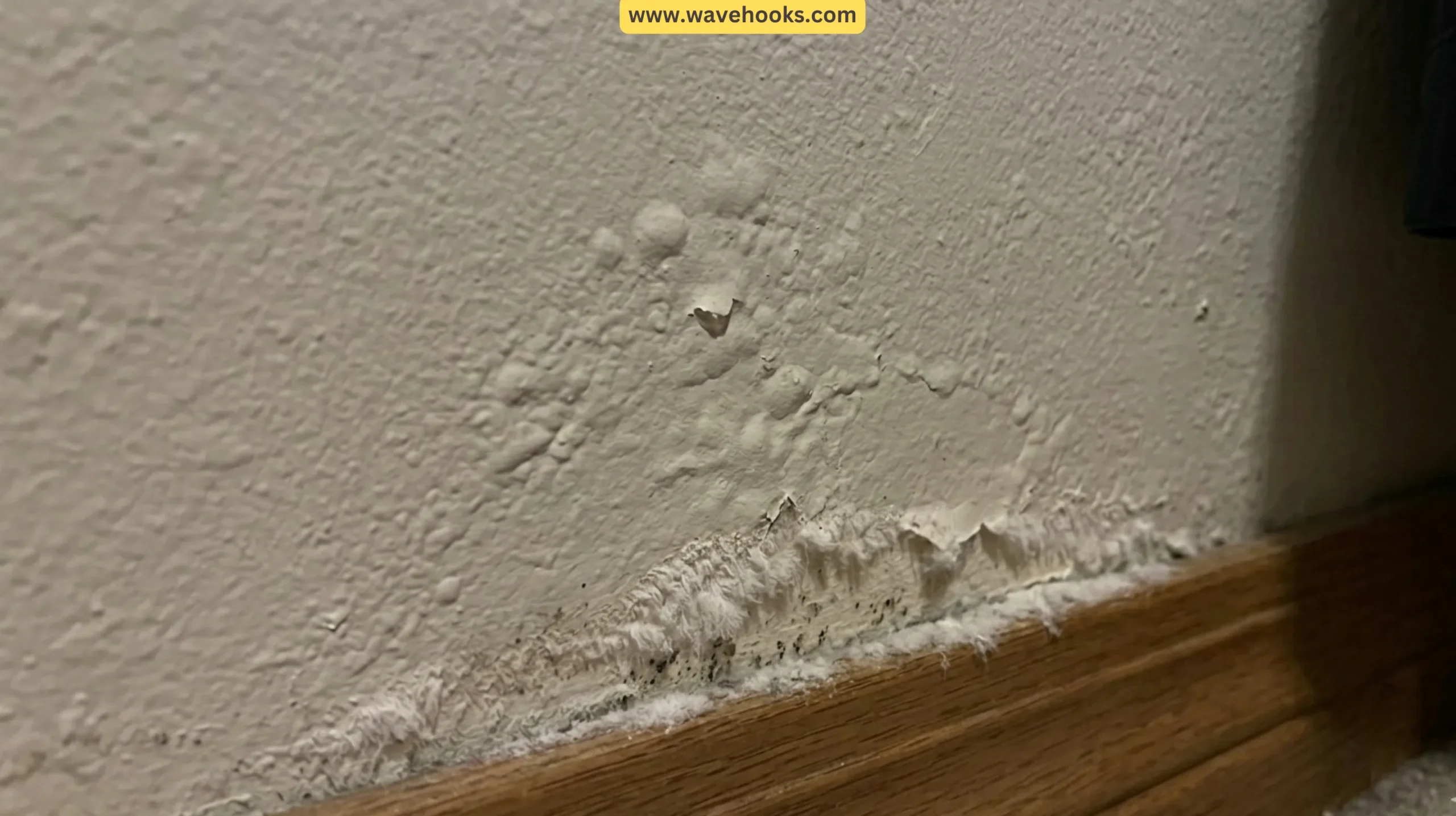
- White powdery deposits on walls or baseboards, known as efflorescence, indicate moisture migration.
- Wood shelves or flooring that appear warped, buckled, or discolored.
- Peeling paint or bubbling wallpaper on closet walls.
- Condensation or water droplets on walls, particularly in cooler months.
For a precise reading, pick up a hygrometer, a small digital device available at any hardware store. Place it in your closet for 24 hours.
If it consistently reads above 60% relative humidity, you have a confirmed humidity problem and now know exactly why closets get humid in your specific situation.
Damp Home Warning Signs And Humidity Problems That Start In Your Closet
Why closets get humid is often the first visible symptom of broader humidity home problems affecting the entire house. Closets concentrate damage faster than open rooms because of their sealed, low-circulation nature, making them the earliest warning system your home has.
Warning signs inside your wardrobe:
- A faint musty or earthy smell when you first open the door, even if nothing looks visibly wrong
- Clothes feel slightly stiff or carry a subtle damp scent after a normal wash and hang
- Tiny white or light gray spots on dark leather goods, shoes, or bags stored inside
- Wooden shelves feel cool and slightly damp to the touch, rather than dry
- Metal belt buckles, jewelry clasps, or curtain hooks showing early rust spots
- Condensation or water droplets appearing on the inside of the closet wall during cooler mornings
Warning signs spreading beyond the closet:
- Condensation appearing on interior walls, not just windows, indicates your home’s thermal envelope is failing to separate indoor and outdoor moisture levels.
- Peeling paint or bubbling wallpaper on walls signals moisture migrating through the building structure.
- Soft or springy areas on wooden floors suggest subfloor moisture absorption, a serious structural concern if left unaddressed.
- Persistent unexplained respiratory symptoms, including coughing, sneezing, or worsening allergies at home but not elsewhere can indicate significant hidden mold presence originating from damp zones.
- Staining on ceilings or upper walls in yellow or brown ring shapes indicates a roof or upper-floor plumbing leak feeding moisture downward.
Use a hygrometer: Place a small digital hygrometer inside your closet for 24 hours. A reading consistently above 60 percent confirms that why closets get humid applies directly to your home and that active intervention is needed immediately. Readings between 50 and 60 percent are a warning zone requiring monitoring and preventive action.
Also Read: 10 Genius Tips On How To Organize Your Closet This Fall!
Which Closets Are Most at Risk?
Not all closets face equal risk. Here’s how different types stack up when it comes to why closets get humid:
Bedroom closets carry a moderate risk. Daily use and clothing storage are factors, but interior bedroom closets are generally better buffered from outdoor elements.
Bathroom-adjacent closets carry a high risk. Steam from daily showers travels aggressively through door gaps and shared walls.
Basement closets carry the highest risk. They have ground moisture, cooler temperatures, and zero ventilation. This is why they need the most aggressive intervention.
Ground floor closets on exterior walls also sit at elevated risk, particularly in climates with significant temperature swings or high annual rainfall.
Also Read How To Clean Mold In Shower Grout With Hydrogen Peroxide!
Simple Closet Airflow Ideas That Fix Why Closets Get Humid In Any Size Wardrobe
Improving air circulation is the most fundamental fix for why closets get humid. Without consistent airflow, no moisture absorber or freshener provides a permanent solution, moisture simply keeps accumulating faster than any passive product can remove it.
Louvered doors are the single most impactful structural upgrade available. The horizontal slats allow continuous passive air exchange between the closet and room without electricity or maintenance. If replacing the door is not possible, adhesive ventilation strips at the top and bottom of the existing door frame create passive airflow channels at minimal cost.
A small USB or battery-powered mini fan placed on a low shelf running on a timer for 20 to 30 minutes daily actively disrupts the stagnant air pocket that explains why closets get humid so reliably. This single addition dramatically reduces moisture buildup even in the most poorly ventilated closets.
Perforated or mesh shelf liners replace solid liners and allow air to circulate under folded clothing stacks rather than trapping moisture between fabric and surface, a simple swap that makes a measurable difference.
For small closets specifically:
- Use slim velvet hangers instead of bulky plastic ones to create visible gaps between garments.
- Roll t-shirts and casual wear upright in drawers instead of flat stacking, which blocks all airflow between layers.
- Keep the closet floor completely clear; shoes and boxes stored densely on the floor block the natural convection airflow that would otherwise carry moisture upward and out.
- Store only actively used items in small closets. Rotating seasonal clothing out frees the physical space air needs to move through every section of the wardrobe.
Room-level airflow improvements that indirectly reduce why closets get humid include running a ceiling fan on low continuously, practicing daily cross-ventilation by opening windows on opposite sides of the room for 15 minutes, and ensuring bathroom and kitchen exhaust fans vent fully to the exterior rather than into ceiling cavities.
Also Read: 7 Answers To Why Do I Get Spots On My Clothes After Washing!
Best Solutions to Stop Your Closet From Getting Humid
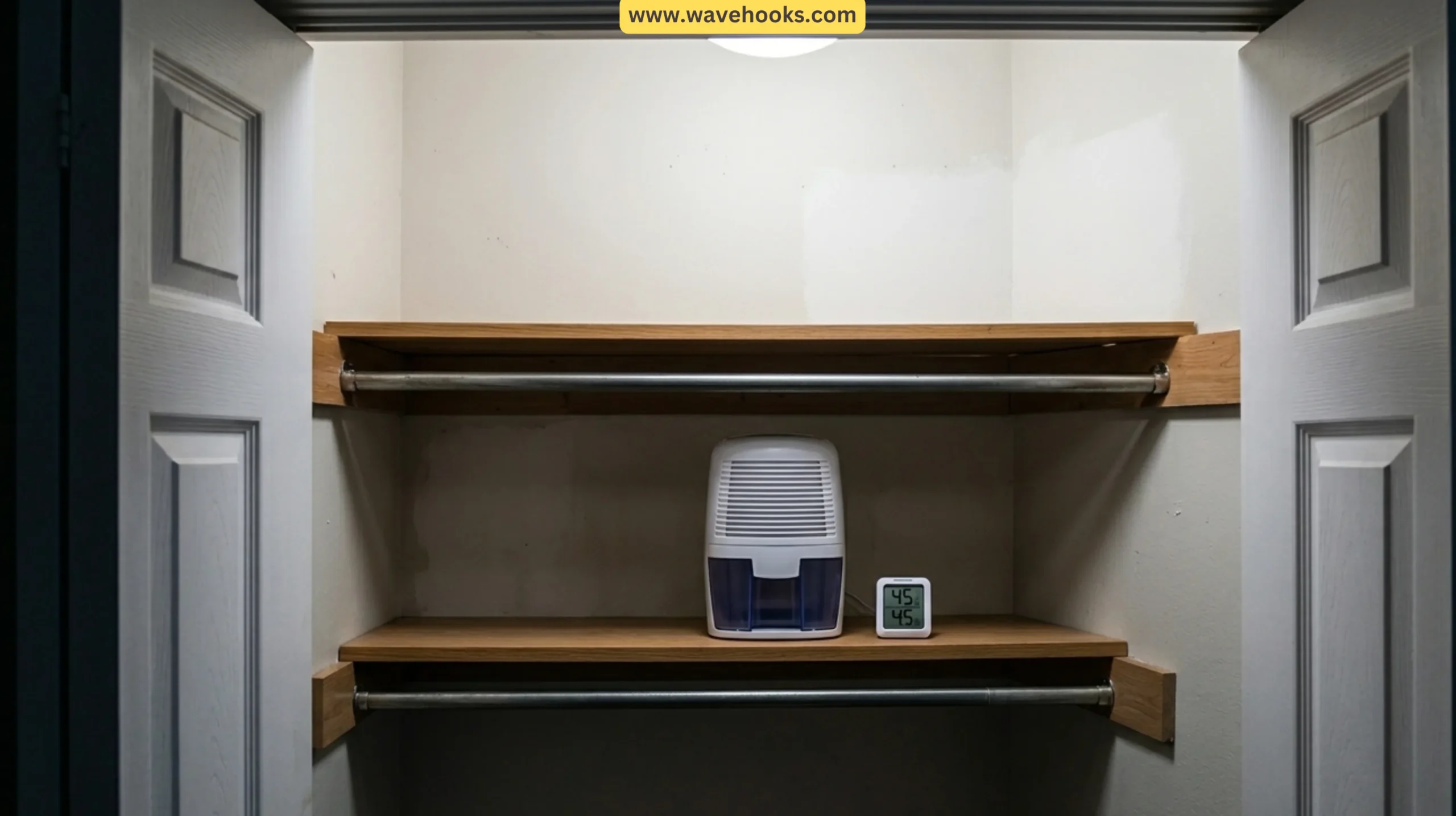
Now that you fully understand why closets get humid, here’s exactly what you can do about it.
1. Use a Compact Dehumidifier
A small plug-in dehumidifier designed for confined spaces is one of the most effective tools available.
These units actively pull moisture from the air, collect it in a removable reservoir, and can drop your closet’s humidity to safe levels within hours.
Models designed for small spaces are quiet, energy-efficient, and available at an affordable cost.
2. Add Passive Moisture Absorbers
Products like calcium chloride-based absorbers, such as DampRid, activated charcoal bags, and silica gel packets work without any electricity.
They draw moisture passively out of the air and are perfect for smaller closets or spaces without convenient power access.
Replace or recharge them every one to three months, depending on your environment.
3. Open Your Closet Door Every Day
This is one of the most underrated zero-cost solutions. Simply open your closet for 15 to 20 minutes every day.
It allows fresh, drier air from the main room to circulate inside and carry away trapped moisture.
Combined with other measures, this single habit directly addresses one of the core reasons why closets get humid in the first place.
4. Only Store Fully Dry Clothing
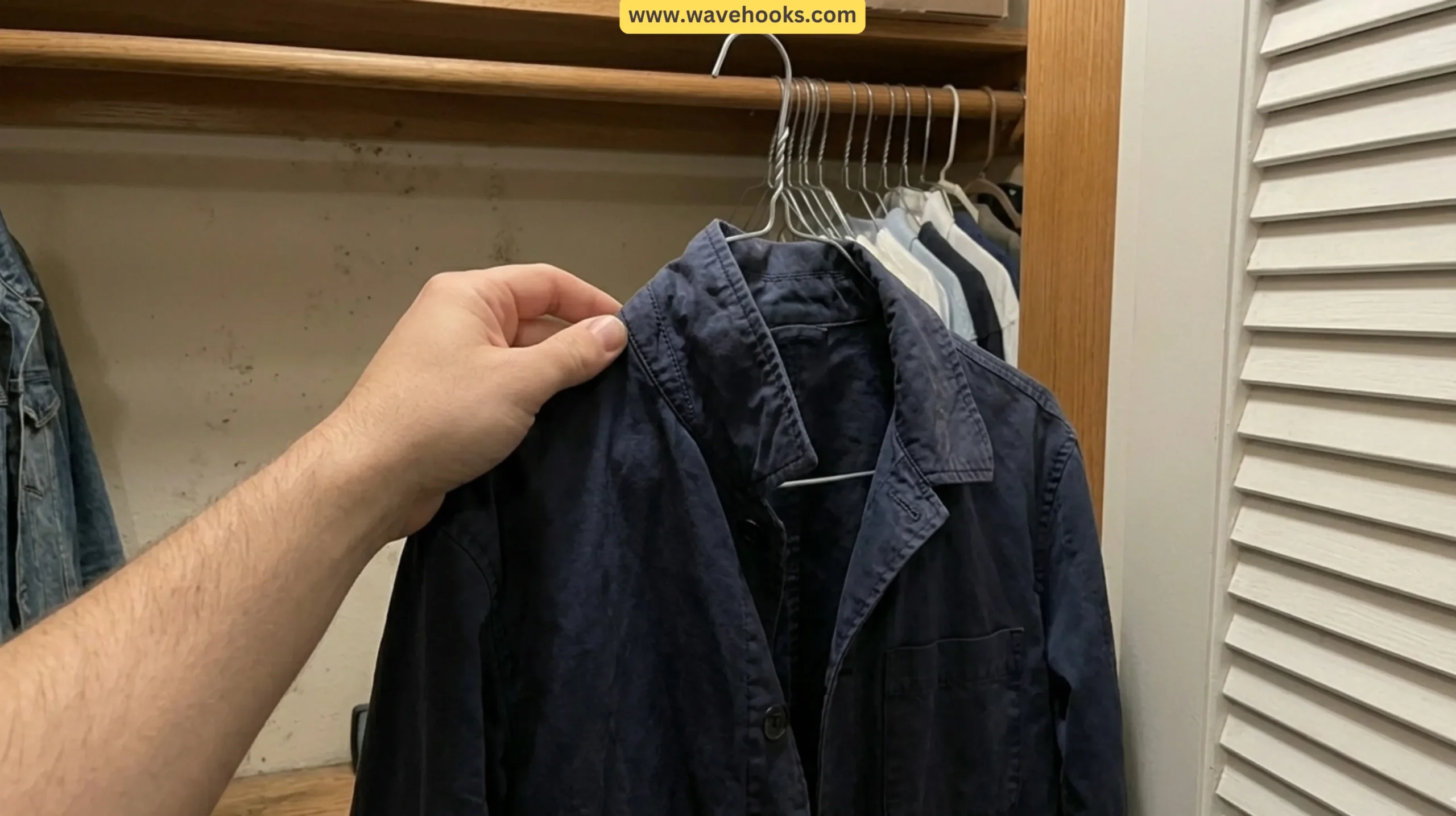
Never hang clothes that are even slightly damp. If clothes need to air out after wearing, let them do so outside the closet first.
This one change directly eliminates one of the most common indoor humidity causes specific to closets and costs you absolutely nothing.
Also Read: Wall Hooks In Home Decor: My 6 Top Hacks For Instant Style!
5. Improve Ventilation With Doors or Vents
If structurally possible, replace your solid closet door with a louvered door, adding ventilation strips at the top and bottom of the frame.
Airflow is the enemy of moisture buildup, and addressing it directly tackles why closets get humid at their root.
6. Insulate Exterior Walls
Adding insulation behind closet walls that face the outside prevents the cold surface condensation responsible for why closets get humid in colder climates.
This is a more involved renovation but delivers lasting results in both comfort and moisture control.
7. Reduce Clutter and Declutter Regularly
Decluttering your closet to allow better air circulation between items is a simple, free step. Donate, store elsewhere, or rotate seasonal items to prevent overpacking.
More open space means better airflow and significantly less trapped moisture.
Also Read How To Declutter Your Home In 15 Minutes A Day: 10 Expert Tips!
8. Inspect for Leaks Every Season
Make it a seasonal habit to check the walls, floor, and baseboards of any closet near plumbing. Look for soft drywall, water stains, or discoloration.
Catching a slow leak early is exponentially less expensive than dealing with full mold remediation later.
How To Reduce Humidity In Closet And Best Moisture Absorber Home Remedies That Actually Work
Knowing why closets get humid is step one, knowing how to reduce humidity in a closet efficiently is step two. Here are the most proven methods ranked by effectiveness, followed by the best home remedies that work without electricity or expensive products.
Ranked methods to reduce closet humidity:
1. Fix the moisture source first. No product outperforms fixing a plumbing leak, sealing a condensation-prone exterior wall, or addressing foundation moisture. This is the highest-impact action available and the only permanent solution to why closets get humid at its root.
2. Install a compact plug-in dehumidifier. Active dehumidification directly removes water vapor from the air and is the fastest way to reduce humidity in a closet to safe levels. Units designed for small enclosed spaces are available affordably and drop humidity to safe levels within hours.
3. Switch to a louvered closet door. Passive continuous ventilation prevents moisture from accumulating in the first place, making it the most sustainable long-term structural fix for why closets get humid.
4. Open the closet door daily. Free, takes 15 seconds, and directly disrupts the sealed humid microclimate. Simply opening your closet for 15 to 20 minutes every day allows fresh drier room air to circulate inside and carry trapped moisture away.
5. Only store fully dry clothing. Eliminating damp clothing as a moisture input costs nothing and directly removes one of the primary reasons why closets get humid in the first place.
Also Read: How To Get Campfire Smell Out Of Clothes – Top 7 Hacks!
Best moisture absorber home remedies:
Calcium Bentonite Clay bags absorb moisture and are fully compostable after use. They work particularly well in smaller wardrobes and drawers and are available in health stores and online.
Chalk sticks placed in a bundle on a shelf absorb a surprising amount of ambient moisture. Replace every two months. Available in every stationery shop at minimal cost.
Dry uncooked rice in an open bowl absorbs moisture from surrounding air passively. Less powerful than activated charcoal but effective in mild humidity environments and available in every kitchen at zero additional cost.
Zeolite mineral bags are a naturally occurring volcanic mineral with exceptional moisture and odor absorption. Non-toxic, compostable, and rechargeable by placing in direct sunlight. One of the most underrated home remedies for why closets get humid consistently.
Also Read: How To Get Ink Out Of Clothes Fast – Just 5 Minutes!
Anti Humidity Home Tips And Closet Mold Prevention That Protects Your Entire House
Why closets get humid is rarely an isolated problem — it is usually a symptom of broader humidity conditions affecting the entire home. These anti humidity home tips combined with targeted closet mold prevention create a whole-house moisture strategy that protects every room.
Anti humidity tips for every room:
Kitchen: Always run your exhaust fan during cooking and for 10 minutes after. A single boiling pot adds over a pint of moisture to kitchen air in under 20 minutes, that moisture migrates directly into adjacent enclosed spaces.
Bathroom: Run the exhaust fan for at least 20 minutes after every shower, not just during it. Post-shower residual steam continues releasing moisture for 15 to 20 minutes after the water stops running.
Bedroom: Keep bedroom humidity between 40 and 50 percent using a bedside hygrometer. Human respiration releases approximately one liter of water vapor overnight into a sealed bedroom — a major hidden contributor to why closets get humid in bedroom wardrobes.
Laundry area: Never dry clothing indoors on racks without running ventilation simultaneously. Air-drying laundry indoors without airflow raises room humidity by up to 30 percentage points in under two hours.
Basement: Install a dedicated basement dehumidifier set to maintain 50 percent relative humidity continuously. Basements are the highest-risk area in any home due to ground contact and minimal ventilation.
Also Read: How To Get Fish Oil Out Of Clothes Without A Stain!
Closet mold prevention tips:
- Paint closet walls with a mold-resistant primer before applying a standard finish coat. These primers contain antimicrobial compounds that inhibit mold spore adhesion to wall surfaces.
- Place a permanent hygrometer inside the closet and check it weekly. Maintaining readings consistently below 50 percent creates conditions where mold cannot grow, regardless of spore presence.
- Apply diluted white vinegar to wooden shelves and baseboards seasonally. Vinegar’s acetic acid content creates an inhospitable surface environment for mold spores.
- Declutter aggressively. Overpacked closets have no air circulation pathways, which is one of the most direct reasons why closets get humid severely enough to support mold growth.
- Add insulation to exterior closet walls in colder climates to prevent condensation forming on cold wall surfaces, one of the most common mold initiation points in residential homes.
Never store slightly damp clothes in your closet. Even a small amount of moisture can raise humidity levels and lead to mold growth within days.
Wardrobe Mold Fix Step By Step And How To Stop Why Closets Get Humid From Causing It Again
If mold is already present in your wardrobe, addressing it correctly is critical. An incomplete wardrobe mold fix allows full regrowth within weeks — which is why the cleaning process must be thorough and the underlying cause of why closets get humid must be corrected simultaneously.
Step 1 — Safety first. Put on an N95 mask and rubber gloves before starting. Mold spores are respiratory irritants and must not be inhaled during cleaning.
Step 2 — Empty completely. Remove all clothing, shoes, and stored items. Take everything outside and inspect each item individually for mold spots. Separate affected items from clean ones immediately.
Step 3 — Treat affected clothing. Lightly misted mold on washable garments can be treated with white vinegar before machine washing at maximum safe temperature. Heavily affected items with deep mold penetration into fabric fibers should be discarded.
Step 4 — Clean all surfaces. Mix one cup of white vinegar with one liter of warm water. Scrub all internal surfaces including walls, shelves, floor, and inside of the door with a stiff brush. Allow to dry fully then repeat.
Step 5 — For persistent or heavy mold. Apply a 3 percent hydrogen peroxide solution as a second treatment. Allow to sit for 10 minutes, then scrub and wipe clean thoroughly.
Step 6 — Dry completely. Run a fan directed into the open wardrobe for several hours until all surfaces are bone dry. Do not return any clothing until the interior is completely dry.
Step 7 — Fix the root cause. Without addressing why closets get humid in your specific wardrobe — whether through plumbing leaks, poor ventilation, exterior wall condensation, or overcrowding — mold will return within weeks regardless of how thoroughly you cleaned.
Step 8 — Apply permanent prevention. Paint with mold-resistant primer, install louvered ventilation, place moisture absorbers, and monitor with a hygrometer going forward to ensure humidity stays consistently below 50 percent.
Also Read: How To Get Oil Smell Out Of Clothes In Just One Wash!
10 Natural Tricks That Stop Why Closets Get Humid And Keep Them Smelling Fresh All Year
A musty closet is almost always a humidity problem, not just an odor problem. Each of these natural tricks directly targets why closets get humid by absorbing moisture, improving airflow, and eliminating odor at the source — no chemicals, no electricity, and no ongoing costs.
1. Activated Charcoal Pouches. Activated charcoal is one of the most powerful natural answers to why closets get humid. It absorbs both moisture and odor simultaneously from the surrounding air. Place 200 to 300 grams in a breathable bag on any shelf. Recharge by leaving it in direct sunlight for two to three hours. Each pouch lasts up to two to three years before needing replacement.
2. Baking Soda Bowl Baking soda neutralizes acidic odor molecules while passively absorbing surrounding moisture, a two-in-one solution for why closets get humid. Place an open bowl or small container on a middle shelf where airflow is most active. Replace every 30 days for consistent results. It costs almost nothing and works quietly without any attention between replacements.
3. Cedar Blocks and Hangers Cedar wood contains natural oils that regulate mild humidity, actively repel moths and insects, and release a clean, pleasant scent. It is one of the oldest natural solutions for why closets get humid in enclosed wardrobe spaces. Place blocks on shelves and swap plastic hangers for cedar hangers. Lightly sand the surface every six months to refresh the natural oils.
4. Rock Salt in a Breathable Bag. Coarse rock salt is hygroscopic, meaning it pulls moisture directly out of the surrounding air, addressing why closets get humid passively and continuously. Fill a small mesh or fabric bag and place it in a corner or on the floor. When the salt feels damp or clumps together, dry it in direct sunlight for several hours and reuse it indefinitely at zero ongoing cost.
5. Silica Gel Packs Silica gel is one of the most efficient natural moisture absorbers available for tackling why closets get humid in smaller enclosed spaces. Colored-bead versions are especially useful; they turn from blue to pink when fully saturated, giving you a clear visual signal to recharge. Place in an oven at 120°C for one hour to restore full absorption capacity and reuse repeatedly.
6. Dried Lavender Sachets Dried lavender is a natural antimicrobial that addresses why closets get humid by repelling moisture-loving insects while releasing a light floral scent that keeps fabrics smelling clean for weeks. Tuck sachets between folded clothing, hang them from rails, or place them in shoe compartments. Replace every two to three months or when the scent fades noticeably in the enclosed space.
7. White Vinegar Spray White vinegar’s acetic acid content kills odor-causing bacteria and mold spores on contact, directly treating the surfaces most affected by why closets get humid. Mix one part vinegar with two parts water and lightly mist wooden shelves, walls, and baseboards. Allow them to dry completely before returning clothes. The vinegar smell dissipates within minutes, leaving surfaces fresh and inhospitable to mold regrowth.
8. Essential Oil Cotton Balls A few drops of tea tree, eucalyptus, or lavender essential oil on a cotton ball creates a natural antimicrobial and moisture-resistant environment inside the closet. Tea tree oil is particularly effective because it contains terpinen-4-ol, a compound proven to inhibit mold growth, directly countering why closets get humid, which causes damage to fabric. Replace every two weeks for continuous protection.
9. Zeolite Mineral Bags Zeolite is a naturally occurring volcanic mineral with exceptional moisture absorption and odor neutralization properties, one of the most underrated solutions for why closets get humid. It is non-toxic, fully compostable, and completely rechargeable by placing it in direct sunlight for a few hours. Increasingly available in health stores and online, zeolite bags last for years with regular recharging.
10. Dry Coffee Grounds. Unused dry coffee grounds absorb strong odors and trace moisture from enclosed spaces, making them a surprisingly effective and zero-cost remedy for why closets get humid in smaller wardrobes. Place in an open breathable container or wrapped loosely in a paper towel on a shelf. Replace every three to four weeks. Works especially well in shoe compartments and small drawer spaces where odors concentrate most.
Also Read: How To Get Kerosene Out Of Clothes Fast In 15 Minutes!
Why Your Wardrobe Smells Damp And How To Stop Clothes Absorbing Moisture Odor
If your wardrobe smells damp or your clothes carry a musty odor even after washing, humidity is the direct cause. This is one of the most damaging consequences of why closets get humid — and it affects your clothing at a fiber level, not just on the surface.
Why clothes absorb moisture smell: Natural fibers like cotton, wool, linen, silk, and leather are hygroscopic — they actively pull moisture out of surrounding air and hold it deep in their fibers. Once moisture sits long enough, mold and mildew begin growing on the fabric itself, producing that recognizable damp smell even on freshly washed clothes.
Why wardrobe smells get worse during humid weather: During summer and monsoon months, outdoor humidity regularly exceeds 80 to 90 percent in tropical and coastal climates. Your wardrobe, being a sealed enclosure with poor airflow, traps this moisture-laden air with nowhere to escape. Seasonal spikes are one of the most predictable reasons why closets get humid and why wardrobe odors intensify at certain times of year.
Step-by-step damp smell fix:
- Empty the wardrobe completely and wipe every surface with diluted white vinegar. Allow to dry fully with the door open for several hours.
- Identify the moisture source — check walls for condensation, floors for dampness, and adjacent walls for hidden plumbing leaks. Treating the smell without fixing the source only provides temporary relief.
- Run a fan directed into the open wardrobe for two to three hours before returning clothing.
- Place activated charcoal pouches or DampRid inside before restoring items.
- Use cedar hangers going forward as a permanent low-maintenance moisture regulator.
Prevention habits:
- Never return even slightly damp or worn clothing to a closed wardrobe. Air fully outside the closet first.
- Store seasonal clothing in breathable fabric bags, never sealed plastic which traps condensation.
- Add silica gel packets between folded items in drawers and storage boxes.
- Keep a small open container of baking soda on a shelf and replace monthly.
- During peak humid months keep the wardrobe door slightly ajar and swap moisture absorbers monthly instead of every three months.
Also Read: How To Organize My Closet Without Buying Anything (It Works!)
How To Store Clothes Without Them Smelling And Prevent Mold From Damaging Your Wardrobe
Long-term clothing storage is where why closets get humid causes the most serious and often irreversible damage. Clothes stored in a humid environment absorb moisture continuously, leading to mold growth, fiber breakdown, and permanent odors.
How humidity damages clothes: Above 60 percent relative humidity, mold can begin colonizing fabric within 24 to 48 hours. Natural fibers swell, weaken, and develop micro-tears that shorten garment lifespan significantly. Leather develops white mold blooms and permanent cracking. Elastic fibers in waistbands and cuffs lose tension permanently. Fabric dyes oxidize faster, causing patchy fading and gray or yellow staining that cannot be reversed.
Preparation before storage: Wash every garment thoroughly before putting it away. Body oils, sweat residues, and food particles attract mold and accelerate why closets get humid damage significantly. Ensure everything is completely bone dry before folding — even trace residual moisture concentrates over months of sealed storage into serious mold conditions.
Correct storage containers: Use breathable fabric storage bags or acid-free boxes for natural fiber items. Avoid sealed plastic bins unless you add silica gel packets inside. Even small amounts of residual moisture become concentrated and damaging inside a sealed container over months of storage.
Active prevention inside storage:
- Place activated charcoal sachets between folded clothing layers.
- Add cedar chips to any box or drawer storing woolens and delicates.
- Include two to three silica gel packets per storage box, replacing every six months.
- Store in the driest area of your home, avoid basements and ground-floor exterior closets where why closets get humid is most severe.
If mold has already appeared: Take affected garments outside immediately. Never brush dry mold indoors as this releases spores into the air. Treat with undiluted white vinegar or 3 percent hydrogen peroxide solution before washing at the highest safe temperature for that fabric. Heavily penetrated items should be discarded.
Also Read: How To Organize A Small Apartment With No Closets Or Drawers?
The Real Cost of Ignoring Closet Humidity
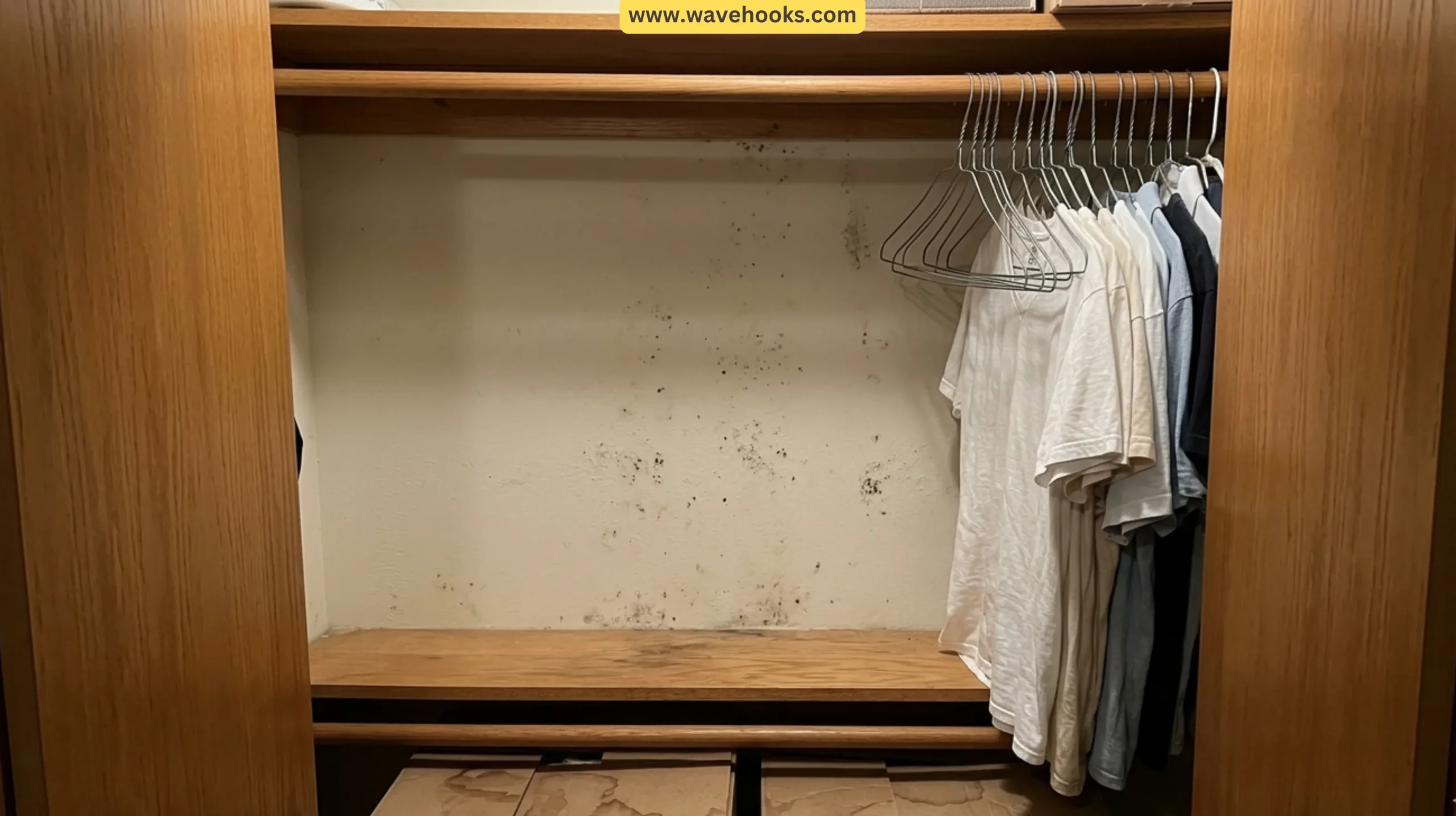
Studies showed that the average cost of professional mold remediation in the United States ranges from $500 to $6,000, depending on the extent of damage.
For severe cases involving structural damage, drywall replacement, or flooring repair, costs can climb significantly higher.
Beyond finances, mold exposure is linked to respiratory irritation, allergic reactions, worsening asthma, and serious infections in children and elderly people.
Understanding and acting on why closets get humid is not just a home maintenance choice, but it’s a health decision that deserves your attention.
Also Read: 25 Top Spring Cleaning Checklist 2026 For A Spotless Home!
Conclusion: Why closets get humid
If you’ve read through this entire guide, you now have a thorough, research-backed understanding of why closets get humid and every contributing factor behind it.
Understanding why closets get humid is the knowledge that puts you in control.
You’re now fully equipped to protect your closet, your clothes, your home, and your health.
Don’t wait for mold to appear. Act now, and you’ll never have to deal with that musty smell again.
Frequently Asked Questions about why closets get humid
1. Why does my closet smell musty even when I can’t see any mold?
A musty odor is the first warning sign of elevated humidity and hidden mold growth. Mold commonly develops inside wall cavities, behind shelving, and under flooring before becoming visible. The smell comes from microbial volatile organic compounds (MVOCs) released during mold activity.
2. Can indoor plants near my closet increase the humidity inside it?
Yes, absolutely. Plants release water vapor through a process called transpiration and can contribute meaningfully to the indoor humidity in nearby spaces. You don’t need to remove your plants, just avoid placing large collections directly adjacent to closets with poor ventilation, especially those on exterior walls.
3. Is closet humidity a year-round problem or only in summer?
It’s a year-round concern, just for different reasons. Summer brings hot, humid outdoor air and reduced ventilation. Winter causes cold wall condensation. Spring and fall bring rapid outdoor humidity swings. Each season presents its own indoor humidity causes, making year-round monitoring with a hygrometer and consistent preventive habits the most effective long-term approach.
Also Read 10 Summer Cleaning Tips That Makes Your Home Shine Well!